
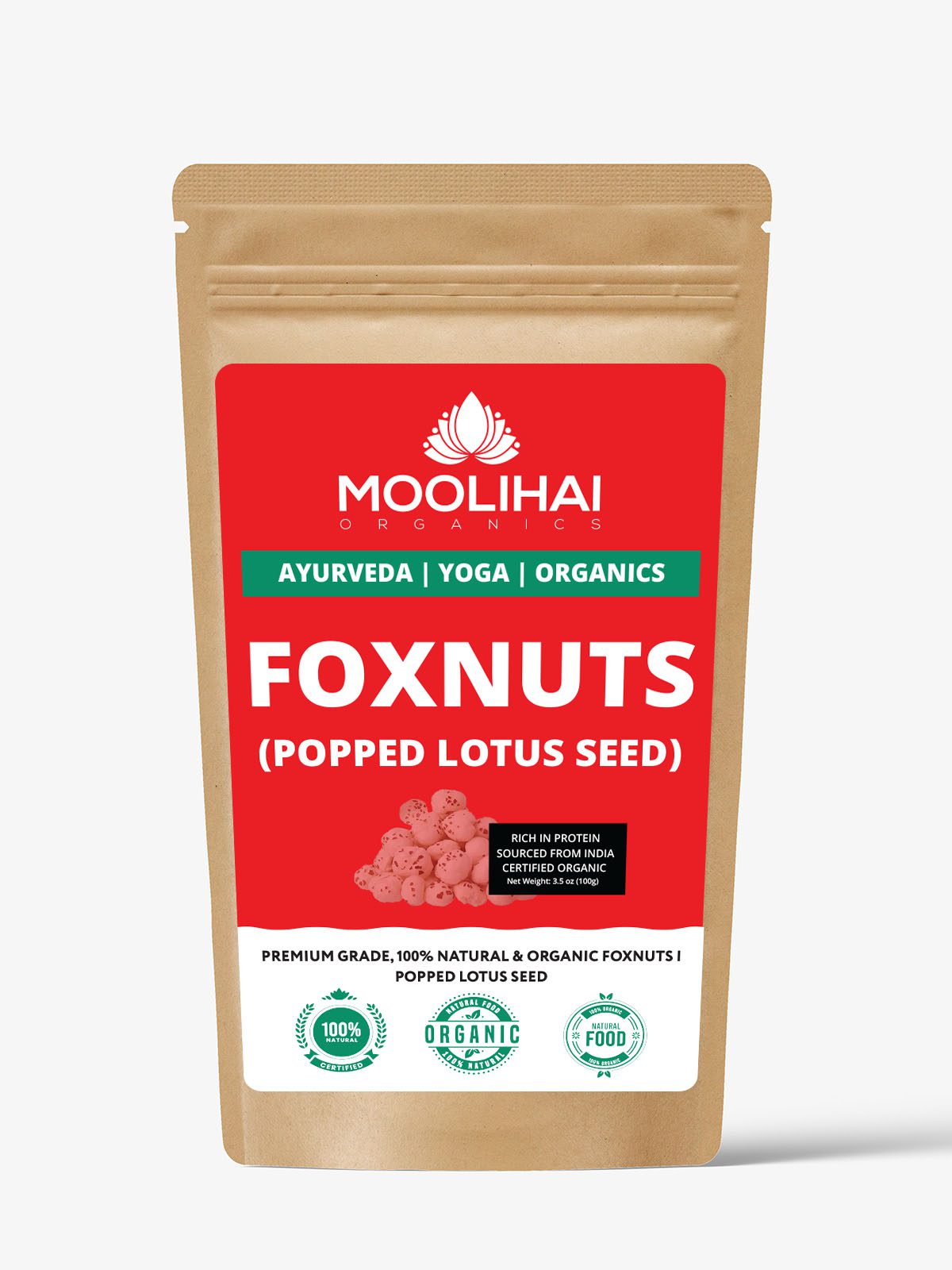
Organic Foxnuts | Popped Lotus Seed | Makhana
Origin: India The Fox Nut is rich in natural protein that is ideal food for Vegetarians and Vegans.
Euryale Ferox · Popped Lotus Seeds · Organic · Vegan · Gluten Free
Makhana — India’s Ancient Snack That the Wellness World Just Discovered
Indians have been eating makhana for centuries — roasted in ghee with salt and turmeric, ground into kheer for festivals, popped and eaten plain during Navratri fasting when almost nothing else is allowed. Now the rest of the world is catching on. Foxnuts (popped lotus seeds from the Euryale ferox water lily) are high in protein, rich in calcium and magnesium, low in sodium, low in fat, and naturally gluten-free. They have the crunch of popcorn, the lightness of rice puffs, and a nutritional profile that puts both to shame. Eat them roasted as a snack. Toss them in curry. Grind them into kheer or payasam. Use them during religious fasting when grain-based foods are off limits. Organic, from India, available in three pack sizes.
Organic · Natural
High Protein · Low Sodium
Vegan · Gluten Free
Ships via DHL / UPS
Where Makhana Comes From
Makhana grows in still, shallow ponds and lakes — primarily in the state of Bihar in eastern India, which produces over 80% of the world’s supply. The Euryale ferox plant is an aquatic lily with massive floating leaves (up to a metre across) covered in thorns. The seeds develop underwater in spiny fruit pods, are harvested by divers who wade chest-deep into muddy ponds, and then popped using a traditional dry-roasting method that puffs the hard seed into the light, crunchy white ball you recognise as makhana. The entire process — from pond to popped seed — is done by hand. No machines, no factories. Bihar’s makhana farmers have been doing this the same way for generations, and Makhana received a GI (Geographical Indication) tag from the Indian government recognising Bihar as its authentic origin.
What’s Inside a Handful of Makhana
High Protein
~9g per 100g — rare for a plant snack
Calcium
Bone and teeth health
Magnesium
Muscle, nerve, energy function
Potassium
Electrolyte balance, blood pressure
Low Sodium
Heart-friendly, BP-friendly
Low Fat
Light snack without the guilt
Gluten Free
Safe for celiac and gluten-sensitive
Antioxidants
Kaempferol — anti-inflammatory flavonoid
Why Makhana Is More Than a Snack
Blood Pressure and Heart Health
The combination of high potassium, high magnesium, and low sodium is exactly what cardiologists recommend for blood pressure management. Potassium relaxes blood vessel walls and counteracts the effect of dietary sodium. Magnesium supports healthy heart rhythm and vascular function. Most snack foods are loaded with sodium — makhana is one of the very few crunchy, satisfying snacks that delivers the opposite mineral profile. For people managing hypertension or anyone watching their sodium intake, replacing chips, namkeen, or salted nuts with plain or lightly seasoned makhana is one of the simplest dietary swaps with a measurable cardiovascular benefit.
Kidney Support
In Ayurveda, makhana is classified as having “Kashaya Rasa” (astringent taste) and is traditionally prescribed for kidney and urinary tract support. The low sodium content reduces the filtration burden on the kidneys. The astringent properties are believed to tone the kidney tissue and support normal urinary function. Modern research on Euryale ferox has identified compounds with nephroprotective (kidney-protecting) properties. For people with kidney concerns, the low-sodium, high-mineral profile makes makhana a kidney-friendlier snack than almost any alternative on the market.
Plant-Based Protein Source
At approximately 9g of protein per 100g, makhana delivers a meaningful protein contribution for a plant-based food — especially one that’s eaten as a snack rather than a main course. The protein in lotus seeds contains essential amino acids including leucine, isoleucine, and valine (branched-chain amino acids important for muscle repair). For vegetarians, vegans, and anyone looking to increase protein intake without meat or dairy, makhana is a practical addition to the diet. Roast it, add it to trail mix, grind it into flour for protein-enriched dosa or roti batter, or toss it into stir-fries for added protein and crunch.
Weight Management and Satiety
Makhana is low in calories relative to its volume — a large bowl of roasted makhana contains fewer calories than a small bag of potato chips, yet it provides more crunch, more protein, and more satiety. The protein and fibre content slows digestion and keeps you feeling full longer. For people trying to manage weight, the biggest challenge is usually snacking — the hours between meals when cravings hit. Makhana fills that gap with something crunchy and satisfying that doesn’t derail the calorie budget. It’s become the go-to diet snack in Indian fitness communities for exactly this reason.
Five Ways to Use Makhana
Roasted Snack — Ghee, Salt, Turmeric
The classic. Heat a teaspoon of ghee (Moolihai’s Organic Cow Ghee works perfectly) in a pan. Toss in makhana and roast on medium heat for 4–5 minutes, stirring constantly, until they turn crispy and slightly golden. Sprinkle with salt, turmeric, and a pinch of black pepper. Eat warm. This is the version that has replaced chips in millions of Indian households. The crunch is addictive, the ghee gives richness without heaviness, and the turmeric adds colour and anti-inflammatory benefit. For a spicier version, add red chili powder and chaat masala.
Makhana Kheer / Payasam
The festival dessert. Roast makhana lightly in ghee, then grind coarsely. Simmer in milk (or Moolihai’s Coconut Milk Powder reconstituted) with sugar or jaggery, cardamom, and saffron. Garnish with chopped cashews and raisins. This is a traditional North Indian dessert served during Diwali, Janmashtami, and other festivals. The ground makhana thickens the kheer naturally and adds a subtle nutty flavour. For a South Indian payasam version, use jaggery and coconut milk instead of sugar and dairy milk.
Makhana Curry / Sabzi
Roast makhana lightly, then add to a tomato-onion gravy or a creamy cashew-based sauce. The foxnuts absorb the gravy and become soft, chewy, and flavourful — similar to how paneer absorbs curry. Makhana matar (foxnuts with peas in a spiced gravy) is a popular North Indian dish. Use Moolihai’s spice powders — clove, fennel, onion powder — to build the masala base. The result is a protein-rich vegetarian main course that’s gluten-free and works for fasting days when paneer might not be available.
Fasting / Vrat Food
During Hindu fasting periods — Navratri, Ekadashi, Maha Shivaratri, Karwa Chauth — grains and many regular foods are prohibited. Makhana is one of the few approved foods across most fasting traditions because it’s a seed, not a grain. Roasted makhana with rock salt (sendha namak) is the standard fasting snack. Makhana kheer made with milk and sugar is an approved fasting dessert. For families living abroad who observe vrat, having a reliable supply of makhana shipped from India means one less compromise during religious observance.
Trail Mix, Granola, and Salad Topping
Roasted makhana adds crunch to trail mixes (combine with almonds, cashews, dried cranberries, and dark chocolate chips), breakfast granola bowls, and salad toppings. It’s a lighter, lower-calorie alternative to croutons or fried noodles on salads. For a sweet version, toss roasted makhana in melted jaggery or dark chocolate for a caramel corn-style treat. The neutral flavour absorbs whatever seasoning you add — savoury, sweet, spicy, or herbal — making it one of the most versatile snack bases available.
What You’re Getting
100g / 250g / 450g
Three pack sizes
Popped Lotus Seeds
Euryale ferox — foxnuts / makhana
India
Origin
Organic
No chemicals, no additives
Gluten Free
Not a grain — aquatic seed
Vegan
Plant-based protein source
Raw or Roasted
Eat straight or cook into dishes
Fasting Approved
Navratri, Ekadashi, and other vrat days
Ships Worldwide
USA
5–7 Days
FREE OVER $99
UK
5–7 Days
FREE OVER $99
Canada
5–7 Days
FREE OVER $99
Ships worldwide via DHL/UPS. Shipping info →
Common Questions
Closely related but technically different. Makhana/foxnuts come from Euryale ferox, a species of prickly water lily. “Lotus seeds” in the strict botanical sense come from Nelumbo nucifera (the sacred lotus). In common usage — and on most product labels including this one — the terms are used interchangeably because the seeds are very similar in appearance, nutritional profile, and culinary use. What you’re getting in this pack are popped Euryale ferox seeds — the same makhana sold in every Indian grocery store, used in kheer, roasted as snacks, and eaten during fasting. The naming can be confusing, but the product is the same traditional makhana you know.
These are already popped — meaning the hard seed has been heat-processed into the light, puffed white ball. You can eat them straight from the pack without any cooking. They’re mild, slightly crunchy, and have a subtle nutty taste. Most people prefer them roasted because the dry-roasting in ghee or oil transforms the texture from soft-crunchy to deeply crispy and brings out a richer, more toasted flavour. But if you’re snacking on the go or during a fast, eating them raw (unroasted) from the bag is perfectly fine and nutritionally equivalent.
Makhana sits in a grey zone for strict keto. It’s relatively high in carbohydrates (~65g per 100g, mostly starch), which means unlimited snacking will exceed most keto carb limits. However, in moderate portions (a small handful, ~20–30g), the carb load is manageable within a keto framework, and the high protein and low fat make it a cleaner carb source than most alternatives. It works better for low-carb or moderate-carb diets than strict ketogenic protocols. If you’re counting macros tightly, measure your portions. If you’re doing a relaxed low-carb approach, makhana is a much better snack choice than chips, crackers, or bread-based snacks.
Yes — makhana is one of the most widely accepted fasting foods across Hindu traditions. It’s approved during Navratri, Ekadashi, Maha Shivaratri, Karwa Chauth, and most other vrat observances because it’s a seed from an aquatic plant, not a grain or a legume (which are typically restricted during fasts). Roasted in ghee with rock salt (sendha namak — the only salt allowed during many fasts) is the standard preparation. Makhana kheer with milk and sugar is an approved fasting dessert. For NRI families observing vrat abroad where Indian grocery options are limited, having makhana shipped directly from India removes one of the common compromises.
Makhana absorbs moisture quickly and goes soft if exposed to humid air. Store in an airtight container — a glass jar with a good seal or a zip-lock bag with the air pressed out. Keep in a cool, dry place away from the stove and direct sunlight. Once roasted, they stay crispy for 2–3 weeks in a sealed container. Unroasted (straight from the pack), they keep for several months if stored airtight. If they’ve gone soft, re-roast in a dry pan on low heat for 3–4 minutes — the crunch returns. Don’t refrigerate — the fridge introduces moisture that makes them soggy faster.
*This is a food product — organic popped foxnuts (Euryale ferox). Health benefits described are based on the known nutritional profile of makhana and traditional Ayurvedic usage. Not intended to diagnose, treat, cure, or prevent any disease including hypertension or kidney disease. If you have kidney disease, consult your nephrologist about appropriate dietary choices — while makhana is low in sodium, it does contain potassium and phosphorus which may need to be monitored in advanced kidney disease. Allergen information: foxnuts are an aquatic seed; cross-reactivity with other food allergies is rare but possible. Manufactured in a facility that may process nuts and other allergens. Individual dietary needs vary.
| Weight | .25 kg |
|---|---|
| Weight |
Be the first to review “Organic Foxnuts | Popped Lotus Seed | Makhana”
You must be logged in to post a review.
Related products

Reviews
There are no reviews yet.