

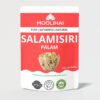
Orchis latifolia · Salep Orchid Dried Fruit · A+ Food Grade Raw Herb
The Himalayan Orchid Root That Unani and Ayurvedic Physicians Have Prescribed for Vitality for Over 2,000 Years
Salab Misri (சாலாமிசிரி பழம்) is not a casual wellness supplement — it is one of the most sought-after medicinal orchid roots in traditional Indian medicine. Harvested from high-altitude orchids growing between 3,000 and 4,000 metres in the Western Himalayas, this rare dried tuber has been classified as a Vrishya (restorative) herb in Ayurveda and a premier aphrodisiac and nervine tonic in the Unani system. Rich in glucomannan — a bioactive polysaccharide — Salab Misri is traditionally used to support male vitality, strengthen the nervous system, soothe gastrointestinal irritation, and promote rejuvenation in convalescing patients. Moolihai sources A+ food-grade raw dried fruit, hand-selected for purity and potency.
Himalayan Sourced
Wild-harvested from 3,000–4,000m altitude orchids
A+ Food Grade
Hand-selected premium quality raw dried fruit
Unani & Ayurvedic Heritage
Documented in classical pharmacopoeias for centuries
Ships Worldwide
Free shipping to USA, UK & Canada over $99
Understanding the Herb
What Is Salab Misri (Salep Orchid)?
Salab Misri — also known as Salamisiri Palam (Tamil), Salampanja (Hindi), Salep (English), and the “Adam and Eve Root” in Western herbal traditions — is the dried tuber of Orchis latifolia, a terrestrial orchid belonging to the Orchidaceae family. The plant is a perennial herb growing 50–70 cm tall, with erect, broadly lanceolate leaves arranged along a fleshy stem and distinctive dull purple flowers arranged in dense cylindrical spikes. It is native to the Western Himalayas and Kashmir, and also cultivated across parts of Europe, Turkey, and South Asia.
What makes Salab Misri exceptional is its tuber — a paired, palmately lobed root structure that contains a unique starch-like polysaccharide called glucomannan. This compound, along with phenolic acids and other bioactive constituents, gives the tuber its remarkable demulcent, restorative, and tonic properties. In the Unani system, Salab Misri holds a place of honour as a Muqawwi-e-Bah (sexual tonic) and Muqawwi-e-Asab (nervine tonic). In Ayurveda, it is classified as a Vrishya (aphrodisiac) and Rasayana (rejuvenative) herb — placing it among the most valued medicinal substances in both systems.
The Moolihai product is the raw dried fruit (tuber) in its whole, unprocessed form. This allows you to prepare it traditionally — grinding into powder for milk tonics, decoctions, or incorporating into formulations exactly as Unani and Ayurvedic texts prescribe. The A+ food grade designation means every piece has been hand-sorted for size, colour, and purity, with no adulterants or fillers.
Known Across Cultures
Names of Salab Misri Around the World
This orchid tuber has been traded across civilisations for centuries, earning names in nearly every language of the Indian subcontinent, the Middle East, and Europe. Its wide nomenclature reflects its universal reputation as a vitality herb.
Tamil
சாலாமிசிரி பழம் (Salamisiri Palam)
Hindi
सालमपंजा (Salampanja), सालब मिश्री (Salab Mishri)
Telugu
సలామిసిరి పండు (Salamisiri Pandu)
Malayalam
സലാമിസിരി ഫലം (Salamisiri Phalam)
Sanskrit
Munjataka, Vrishya Mool
English
Salep, Salop, Salmond Sugar, Salep Orchid
Arabic / Unani
Khusaa al-Tha’lab, Qaatil Akheehi, Salab
Western Herbal
Adam and Eve Root, Early Purple Orchid, Dog Stones
Traditional & Therapeutic Uses
8 Documented Benefits of Salab Misri
Salab Misri’s therapeutic profile spans two major traditional medicine systems — Unani and Ayurveda — with emerging scientific validation for several of its key properties. Here are its most important documented uses.
Male Vitality & Aphrodisiac
This is Salab Misri’s primary traditional indication. Unani physicians have classified it as a Muqawwi-e-Bah — a sexual tonic of the highest order. It is traditionally used to enhance libido, improve sexual stamina, and support ejaculatory function. Ayurvedic texts similarly classify it as Vrishya, meaning it promotes reproductive health and vigor. The glucomannan and phenolic acid content are believed to support hormonal balance and improve blood circulation to reproductive organs. It is commonly prescribed in combination with other Unani herbs like Safed Musli and Ashwagandha for comprehensive male vitality support.
Nervine Tonic & Stress Adaptation
In the Unani system, Salab Misri is classified as a Muqawwi-e-Asab — a strengthener of the nervous system. It is traditionally used for patients experiencing nervous debility, chronic fatigue, mental fog, and stress-related exhaustion. The adaptogenic properties attributed to the orchid tuber help the body maintain equilibrium under physical and psychological stress. This makes it particularly valued for geriatric patients and those recovering from prolonged illness, where nervous system restoration is critical for full recovery.
Respiratory Support
The anti-inflammatory properties documented in Salab Misri make it traditionally useful for respiratory conditions. Unani and Ayurvedic practitioners have long prescribed it for chronic cough, chest congestion, shortness of breath, and as an adjunct therapy for tuberculosis (phthisis). The demulcent quality of the glucomannan creates a soothing coating in the respiratory tract, reducing irritation and helping to clear mucus. For respiratory support, it is traditionally combined with warm milk and honey — try pairing it with Moolihai’s Ginger Infused Honey for an enhanced throat-soothing effect.
Gastrointestinal Healing
Salab Misri’s demulcent action is one of its most clinically significant properties. The glucomannan polysaccharide forms a protective, gel-like coating on the intestinal lining that allays irritation, soothes inflammation, and promotes healing. This makes it a traditional treatment of choice for chronic diarrhoea, dysentery, bilious fevers, and general gastrointestinal distress. Unani physicians specifically note its restorative function during convalescence — when the digestive system needs gentle, nutritive support rather than harsh intervention. The starch content also provides slow-release energy that nourishes without taxing weakened digestion.
Physical Strength & Rejuvenation
As a Rasayana (rejuvenative) herb in Ayurveda, Salab Misri is prescribed for overall strength building, stamina enhancement, and recovery from debilitating illness. It is particularly valued for aged patients because of its exceptional nutritive value — the tuber essentially functions as a concentrated, bioactive food that delivers sustained energy alongside its medicinal compounds. In traditional Indian wrestling culture (Pehlwani), Salab Misri milk was a standard tonic given to athletes for strength and endurance. This application continues today among those seeking natural alternatives to synthetic performance supplements.
Bone & Joint Support
The anti-inflammatory properties of Salab Misri extend to musculoskeletal health. Traditional practitioners recommend it for patients experiencing joint pain, general inflammation, and weakness in the limbs — particularly in older adults. When combined with anti-inflammatory herbs like Moolihai’s Boswellia Serrata Extract Powder, it forms a comprehensive traditional protocol for joint wellness. The nutritive, strengthening action of the glucomannan complements Boswellia’s direct anti-inflammatory mechanism, addressing both the symptom and the underlying weakness.
Cardiovascular & Cholesterol Support
Scientific studies on Orchis mascula (a closely related species) have demonstrated antihypertensive and antidyslipidemic activity — meaning the orchid compounds may help manage blood pressure and unhealthy cholesterol levels. Glucomannan itself is well-studied as a cholesterol-lowering compound in other plant sources. Traditional Unani texts describe Salab Misri as strengthening the heart and improving circulation. While more research specific to Orchis latifolia is needed, the combination of traditional use and emerging science makes this a promising area of benefit.
Immune & Antioxidant Defence
Salab Misri is described in traditional texts as a potent source of antioxidants that gradually strengthen the immune system and help the body eliminate accumulated toxins. The phenolic acid content provides free radical scavenging activity, while the overall nutritive profile supports the body’s natural defence mechanisms during periods of illness, recovery, or seasonal vulnerability. Regular use as a tonic is traditionally believed to build cumulative immune resilience — an approach consistent with the Ayurvedic concept of Ojas (vital immune essence) building over time rather than providing instant effects.
Preparation Methods
How to Use Salab Misri Dried Fruit
Since this is raw dried tuber, you’ll need to prepare it before consumption. Here are the traditional methods — from simple to advanced.
Classic Salab Misri Milk Tonic
Grind the dried tuber into a fine powder using a mortar and pestle or spice grinder. Add ½ to 1 teaspoon of the powder to a glass of warm milk and stir thoroughly. Sweeten with honey or sugar to taste. Drink once daily — traditionally taken at night before bed for vitality and nervous system support. For enhanced effect, add a pinch of saffron and a few crushed almonds. This is the most common traditional preparation and the one most frequently prescribed by Unani physicians.
Honey-Powder Paste (Unani Method)
Mix ½ teaspoon of freshly ground Salab Misri powder with an equal amount of raw honey — Moolihai’s Marthandam Honey pairs exceptionally well here. Consume this paste directly, followed by a glass of warm milk. This method is specifically recommended in Unani texts for sexual health and reproductive support. The honey acts as a yogavahi (bio-enhancer), improving the absorption and delivery of the orchid’s active compounds into the bloodstream.
Decoction for Digestive & Respiratory Relief
Soak 2–3 small pieces of the dried tuber in a cup of water overnight. In the morning, gently simmer the soaked pieces in the same water for 10–15 minutes until a slightly viscous liquid forms — this is the glucomannan releasing into the water. Strain and drink warm. This decoction method extracts the demulcent compounds most effectively and is the traditional preparation for chronic diarrhoea, gastrointestinal irritation, and respiratory congestion. Add a squeeze of lemon and honey if desired.
Traditional Formulation Base
In classical Unani and Ayurvedic practice, Salab Misri is rarely used alone — it is typically combined with complementary herbs for synergistic effect. Grind into powder and combine with Ashwagandha, Safed Musli, Shatavari, or Kaunch Beej for a comprehensive vitality formulation. For a simpler daily tonic, blend the powder with Moolihai’s Moringa Seed Powder — both are traditionally classified as strength-building, restorative herbs. Always consult a qualified Ayurvedic or Unani practitioner for personalised formulation guidance.
Customer Experience
What Our Customers Say
I’ve used this dry fruit for almost a year now. Recently I bought it from the Moolihai store. I’ve really admired their quality of product and well-done packing method. It is an original quality Salamisiri fruit.
Thanks for the good quality things at decent prices.
Got it on time.
Product Details
At a Glance
Net Weight
100 gms (3.5 oz)
Form
Raw dried fruit (whole tuber) — grind before use
Origin
Western Himalayas, India — wild-harvested
Grade
A+ Food Grade, hand-selected
Key Compound
Glucomannan (starch-like polysaccharide), phenolic acids
Botanical Name
Orchis latifolia (Orchidaceae)
Medical Systems
Unani (Muqawwi-e-Bah), Ayurveda (Vrishya, Rasayana)
Agriculture
90% wild-harvested, 100% organic, no chemical processing
Delivery
Worldwide Express Shipping
Every order ships directly from Tamil Nadu, India via premium carriers. Typical delivery takes 5–7 business days.
United States
5–7 business days via DHL/UPS Express
United Kingdom
5–7 business days via DHL/FedEx Express
Canada
5–7 business days via UPS/DHL Express
Common Questions
Frequently Asked Questions
This is one of the most common points of confusion in the herbal market. Salab Misri and Salam Panja are both orchid tubers from the same Orchidaceae family, but they come from different species and have distinct physical characteristics. Salab Misri (Orchis latifolia) produces rounded, oval tubers with a smooth exterior, while Salam Panja (Dactylorhiza hatagirea) produces hand-shaped, palmate tubers — “panja” literally means “palm/hand” in Hindi. Both are used as aphrodisiacs and nervine tonics in Unani and Ayurvedic medicine, and their therapeutic profiles overlap significantly. However, Salab Misri is traditionally considered the superior grade for internal consumption and vitality formulations, while Salam Panja is sometimes preferred for topical applications. The Moolihai product is genuine Salab Misri (Orchis latifolia) — not Salam Panja — and is A+ food grade, hand-selected for quality. Be cautious of sellers who use the names interchangeably, as the two are often confused in retail markets.
Adulteration is a significant problem in the Salab Misri market because of its rarity and high value. Common adulterants include starchy root tubers from unrelated plants, synthetic glucomannan fillers, and even plastic-coated imitations. Authentic Salab Misri dried tubers have a distinctive yellowish-brown exterior with a slightly translucent, horny texture when cut. Fresh tubers have a characteristic faint seminal smell noted in pharmacopoeial texts. When soaked in water, genuine tubers swell and become mucilaginous — releasing their glucomannan — while fake tubers remain hard or dissolve unevenly. Moolihai’s A+ food grade designation means every batch is visually inspected, and the product is sourced from verified Himalayan harvesters with an established supply chain. If you’ve purchased Salab Misri elsewhere and it lacks the mucilaginous quality when soaked, it may not be genuine.
Traditional Unani and Ayurvedic texts recommend ½ to 1 teaspoon (approximately 3–5 grams) of Salab Misri powder daily, typically taken with warm milk at night. For vitality and sexual health purposes, consistent daily use for 4–6 weeks is traditionally advised before assessing results — this is not an instant-effect herb but rather a cumulative restorative that builds strength over time. For digestive support, the decoction method may produce more immediate relief within a few days. For nervous debility and general rejuvenation, practitioners typically recommend a course of 2–3 months. As with all traditional medicines, individual responses vary based on constitution, overall health, and lifestyle factors. It is strongly advisable to consult a qualified Unani or Ayurvedic practitioner for personalised dosage guidance, particularly if you have pre-existing health conditions or are taking medications.
While Salab Misri is most widely known for its male vitality applications, it is absolutely not restricted to men. In traditional medicine, it is prescribed to women for several conditions: as a general strength-building tonic during post-partum recovery, for menstrual cramp relief (its anti-inflammatory and demulcent properties help soothe uterine discomfort), and as a nutritive supplement for women experiencing fatigue and debility. The nervine tonic, digestive healing, respiratory support, and immune-building benefits apply equally to both genders. Pregnant and breastfeeding women should consult their healthcare provider before use, as with any herbal supplement. For women specifically seeking hormonal and reproductive wellness support from the Ayurvedic tradition, Shatavari is the more commonly prescribed primary herb, but Salab Misri can complement it as a general restorative.
Salab Misri is generally considered safe when taken in traditional doses. However, because it contains glucomannan — a compound known to affect blood sugar levels and cholesterol — individuals taking diabetes medications, blood sugar-lowering drugs, or cholesterol-lowering statins should consult their physician before use, as it may enhance the effects of these medications. Its demulcent, mucilaginous nature can also slow the absorption of other oral medications, so it’s advisable to take Salab Misri at least 1–2 hours apart from any pharmaceutical drugs. People with known orchid allergies should avoid use. Pregnant and breastfeeding women should consult a healthcare provider. If you are scheduled for surgery, discontinue use at least two weeks beforehand, as glucomannan may affect blood sugar regulation during recovery.
Raw Salab Misri tubers are naturally low in moisture content, which makes them quite shelf-stable when stored correctly. Keep them in an airtight container in a cool, dry, dark place — a kitchen cupboard away from the stove is ideal. Avoid exposure to humidity, as the glucomannan content makes the tubers hygroscopic (they absorb moisture from the air), which can lead to softening and eventual mould. Do not refrigerate unless you live in a very hot, humid climate. Stored properly, the dried tubers maintain their potency for 12–18 months. Once ground into powder, use within 2–3 months for maximum freshness, or store the powder in an airtight jar in the refrigerator. It’s best to grind only what you need for a week at a time to preserve the volatile bioactive compounds.
Disclaimer: This product has not been evaluated by the FDA, AYUSH, or any other regulatory authority. It is not intended to diagnose, treat, cure, or prevent any disease. The information provided is based on traditional Unani and Ayurvedic texts and is for educational purposes only. Individual results may vary. Consult a qualified healthcare practitioner before use, especially if you are pregnant, breastfeeding, taking medications, or have a pre-existing medical condition. Do not use as a substitute for professional medical advice.




Mangesh Dhere –
I’ve used this dry fruit for almost a year now. Recently I bought it from the Moolihai store. I’ve really admired their quality of product and well-done packing method. It is an original quality Salamisiri fruit.
Pratik Prasad Gupta –
Thanks for the good quality things at decent prices.
Kevin –
Got it on time.