
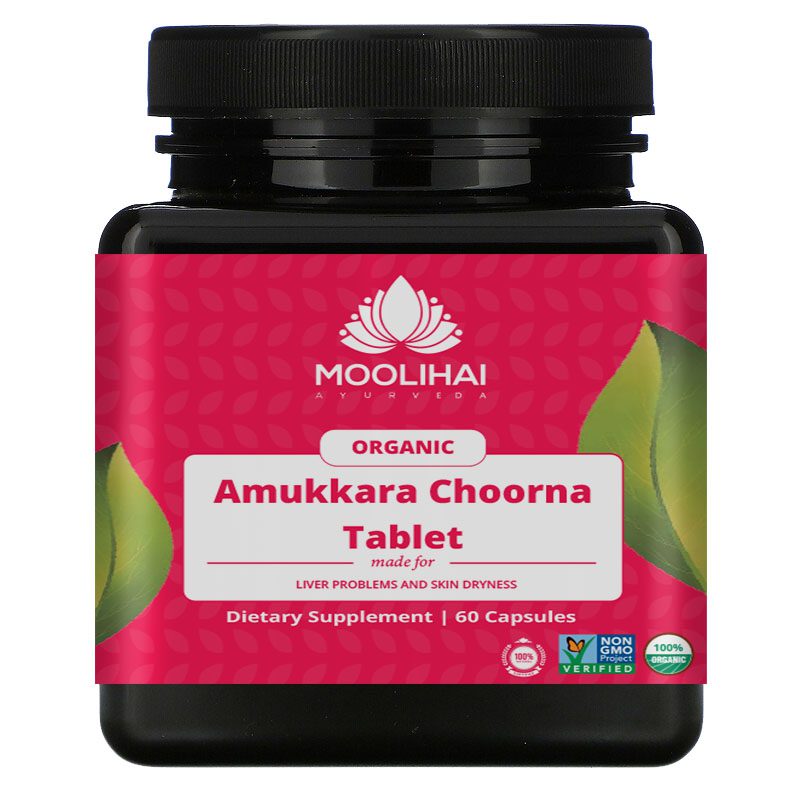
Ashwagandha Latte Tablets- Amukkara Choorna Tablets – Withania Somnifera Tablets
19.99$
- Quantity: 60 Nos
- Origin: India
Amukkara Choorna tablet is one of the traditional formulations in Siddha medicine that is used to treat various diseases, such as Insomnia, wheezing, anemia, and spasm as well as arthritic disorders.
Out of stock
Shipping All Over The World
We've upgraded our shipping! All orders now arrive within 7 days to the USA, UK, and Canada via UPS Express and DHL Express.
Quality Guarantee
Our Products are 99.9% Pure and Stocks are fresh. They pass through multiple quality checks before they are delivered to you.
Lowest Prices & Wholesale Orders
We offer the lowest prices for organic products. If you would like to buy in bulk, get in touch with us.
Secure Payments
Pay Securely using paypal, stripe and other secure payment providers.
8-Herb Siddha Formulation · Ashwagandha + Trikatu + Aromatics · Tablet Form
Amukkara Choorna Tablet — Not Just Ashwagandha. Eight Herbs Working Together.
Most ashwagandha supplements on the market contain one ingredient: ashwagandha. This tablet contains eight. Amukkara Choorna is a classical Siddha medicine formulation — not a modern supplement invention — where Withania somnifera (Ashwagandha / Amukkara) is combined with Sukku (dry ginger), Thipili (long pepper), Milagu (black pepper), Lavangam (cinnamon), Sirunagapoo (Mesua ferrea), Elam (cardamom), and Sarkkarai (unrefined cane sugar as a natural binder). Each herb has a specific role in the formula: ashwagandha provides the adaptogenic, nervine, and strengthening action; the Trikatu trio (ginger, long pepper, black pepper) enhances bioavailability and digestion; cinnamon and cardamom add warming, carminative support; and Mesua ferrea contributes its own anti-inflammatory and nervine properties. In Siddha medical texts, this formulation is prescribed for insomnia, wheezing, anaemia, muscle spasms, and arthritic joint disorders. Convenient tablet form — take with water or dissolve in warm milk for a traditional latte.
Classical Siddha Formula
8 Synergistic Herbs
Built-in Bioavailability Enhancers
Ships via DHL / UPS
What’s Inside Each Tablet
Ashwagandha — The Core Adaptogen
Withania somnifera (Amukkara / அமுக்கரா) is the primary active herb in this formulation. Its withanolides modulate the HPA axis (the body’s central stress response system), lowering chronically elevated cortisol, supporting natural sleep cycles, building physical endurance, and strengthening the nervous system. In Siddha medicine, Amukkara is classified as a Rasayana (rejuvenative) — given to patients recovering from illness, chronic fatigue, insomnia, and nervous exhaustion. Moolihai also sells Ashwagandha Tea (pure root powder for brewing) as a separate product — the tea delivers ashwagandha alone, while this tablet delivers ashwagandha enhanced by seven supporting herbs.
Trikatu — The Bioavailability Engine
Three of the eight ingredients form Trikatu — the classical Ayurvedic/Siddha trio of Sukku (dry ginger / Zingiber officinale), Thipili (long pepper / Piper longum), and Milagu (black pepper / Piper nigrum). Trikatu is not in this formula for flavour — it’s here because piperine (from black pepper) and piperlonguminine (from long pepper) dramatically increase the bioavailability of other herbal compounds by inhibiting hepatic and intestinal metabolism. In plain language: without Trikatu, a significant portion of ashwagandha’s active compounds would pass through your digestive system without being absorbed. With Trikatu, absorption increases substantially. Ginger adds its own anti-inflammatory, anti-nausea, and digestive-stimulating properties. This is the same bioavailability principle behind taking turmeric with black pepper — applied here to ashwagandha.
The Aromatics — Warming, Calming, Digestive
Lavangam (Cinnamon / Cinnamomum zeylanicum): Warming, blood sugar-stabilising, anti-inflammatory. Adds a pleasant spiced flavour when the tablet is dissolved in milk. Elam (Cardamom / Elettaria cardamomum): Carminative (prevents gas and bloating), digestive, and mood-lifting. In Siddha formulations, cardamom is added to prevent the digestive discomfort that concentrated herbal tablets can sometimes cause. Sirunagapoo (Mesua ferrea / Ironwood flower): A less commonly known but highly valued Siddha ingredient — anti-inflammatory, nervine, and traditionally used for arthritis and respiratory conditions. It complements ashwagandha’s action on joints and the nervous system. Sarkkarai (unrefined cane sugar): Serves as a natural binding agent for the tablet and adds a mild sweetness that makes the formulation palatable, especially when dissolved in warm milk as a latte.
What This Formulation Is Prescribed For
Insomnia
Ashwagandha calms the HPA axis, promotes natural sleep
Wheezing & Asthma
Anti-inflammatory + bronchodilatory support
Anaemia
Iron-supporting, blood-building Rasayana
Muscle Spasms
Nervine + anti-spasmodic action
Arthritic Disorders
Joint inflammation, stiffness, pain
Chronic Fatigue
Rebuilds energy reserves after illness or exhaustion
Nervous Exhaustion
Stress recovery, cognitive support
Post-Illness Recovery
Siddha Rasayana for convalescence
Two Ways to Use These Tablets
Swallow with Water — Quick and Simple
Take 1–2 tablets twice a day, before meals. Swallow with a glass of warm water. The Trikatu in the formula handles bioavailability enhancement internally, so you don’t need to add anything extra. Taking before meals allows the digestive-stimulating herbs (ginger, long pepper, cardamom) to prepare the gut for food while the ashwagandha and other compounds absorb on a relatively empty stomach. Morning dose for daytime energy and stress resilience, evening dose for sleep preparation and overnight recovery.
Dissolve in Warm Milk — The Ashwagandha Latte
This is the traditional method and the reason the product is called “Ashwagandha Latte Tablets.” Crush or dissolve 1–2 tablets in a cup of warm milk (dairy or plant-based — Moolihai’s Coconut Milk Powder reconstituted works well). Stir until dissolved. The cinnamon, cardamom, and unrefined sugar in the formula flavour the milk naturally, creating a spiced, lightly sweet ashwagandha latte without adding anything else. Drink in the evening as a bedtime ritual — the warm milk + ashwagandha + warming spices combination is one of the oldest and most effective natural sleep preparations in Siddha tradition.
Ships Worldwide
USA
5–7 Days
FREE OVER $99
UK
5–7 Days
FREE OVER $99
Canada
5–7 Days
FREE OVER $99
Ships worldwide via DHL/UPS. Shipping info →
Common Questions
Two different products with different compositions. Ashwagandha Tea ($19.00) is 100g of pure ashwagandha root powder — single ingredient, brewed in water, consumed as a daily tea. It delivers ashwagandha alone. Amukkara Choorna Tablets are an 8-herb Siddha formulation where ashwagandha is combined with Trikatu (ginger, long pepper, black pepper for enhanced absorption), cinnamon, cardamom, and Mesua ferrea. The formulation is designed for specific conditions — insomnia, wheezing, anaemia, arthritis, muscle spasms — rather than general wellness. The Trikatu component means the ashwagandha in these tablets is absorbed significantly better than ashwagandha taken alone. If you want pure ashwagandha for general stress and sleep support, the tea is simpler. If you want a targeted Siddha formulation with built-in bioavailability enhancement and broader therapeutic indications, the tablets are the stronger choice.
The Sarkkarai (unrefined cane sugar) serves two practical functions. First, it acts as a natural binding agent that holds the tablet together without synthetic excipients — many commercial tablets use cellulose, magnesium stearate, or other manufactured binders. Second, in Siddha pharmacology, unrefined sugar is used as an “Anupana” (vehicle) that improves palatability and aids absorption of certain herbal compounds. The amount per tablet is very small — a fraction of a gram. If you’re diabetic or on a strict no-sugar protocol, consult your doctor, but for most people the sugar content per dose is nutritionally insignificant.
Ashwagandha has demonstrated effects on thyroid hormones (T3, T4, TSH) in clinical studies — it may increase thyroid hormone production, which could alter the dose of thyroid medication you need. If you take levothyroxine or any thyroid medication, consult your endocrinologist before starting this formulation. The interaction is clinically meaningful enough that it requires medical supervision, not a casual experiment. For people with hypothyroidism who are not on medication, ashwagandha’s thyroid-supporting properties may be beneficial — but this should still be monitored by a healthcare provider. For hyperthyroidism or Graves’ disease, ashwagandha-containing products should be avoided.
No. Ashwagandha is contraindicated during pregnancy — it has documented abortifacient properties at medicinal doses. This formulation also contains long pepper and other herbs that are not recommended during pregnancy. Do not take Amukkara Choorna Tablets during pregnancy. After delivery, ashwagandha is traditionally used to support postpartum recovery and rebuilding — but discuss the timing with your doctor, especially if breastfeeding, as the multiple herbs in this formulation may pass into breast milk.
Sleep improvement tends to come first — many people notice easier sleep onset within 1–2 weeks of consistent evening use. Stress resilience and energy improvements build over 2–4 weeks as cortisol levels gradually normalise. Joint pain and arthritis relief (the anti-inflammatory and anti-spasmodic effects) takes longer — 4–8 weeks of daily use for noticeable reduction in stiffness and pain. Anaemia recovery is the slowest, requiring consistent use alongside adequate dietary iron over 6–12 weeks. The Trikatu component accelerates results compared to taking ashwagandha alone because the absorption enhancement means more of the active compounds reach your bloodstream per dose.
Yes — and the combination addresses complementary pathways. Amukkara Choorna works primarily through adaptogenic (stress/HPA axis), nervine (nervous system), and Rasayana (rejuvenative) mechanisms. Turmeric Curcumin works primarily through anti-inflammatory (NF-κB/COX-2 inhibition) and antioxidant mechanisms. For someone dealing with arthritis or chronic inflammatory conditions alongside fatigue and poor sleep, the two formulations together cover more ground than either one alone. Take them at different times — Amukkara Choorna before meals, Turmeric Curcumin with meals (because curcumin is fat-soluble). Both contain bioavailability enhancers (Trikatu in Amukkara, which you’d pair with black pepper for curcumin anyway), so they’re naturally compatible.
*Amukkara Choorna Tablet is a traditional Siddha herbal formulation. The conditions listed (insomnia, wheezing, anaemia, spasm, arthritic disorders) are traditional Siddha indications — this product has not been evaluated by the FDA or Indian Medical Association and is not intended to diagnose, treat, cure, or prevent any disease. Contraindicated during pregnancy — ashwagandha has documented abortifacient properties. May affect thyroid hormone levels — consult your endocrinologist if you take thyroid medication. May interact with sedatives, immunosuppressants, and blood sugar-lowering medications. Contains unrefined cane sugar as a natural binder. Consult your healthcare provider before use if you take prescription medications or have chronic health conditions. Individual results vary.
| Weight | .075 kg |
|---|
Be the first to review “Ashwagandha Latte Tablets- Amukkara Choorna Tablets – Withania Somnifera Tablets”
You must be logged in to post a review.
Related products


Reviews
There are no reviews yet.