
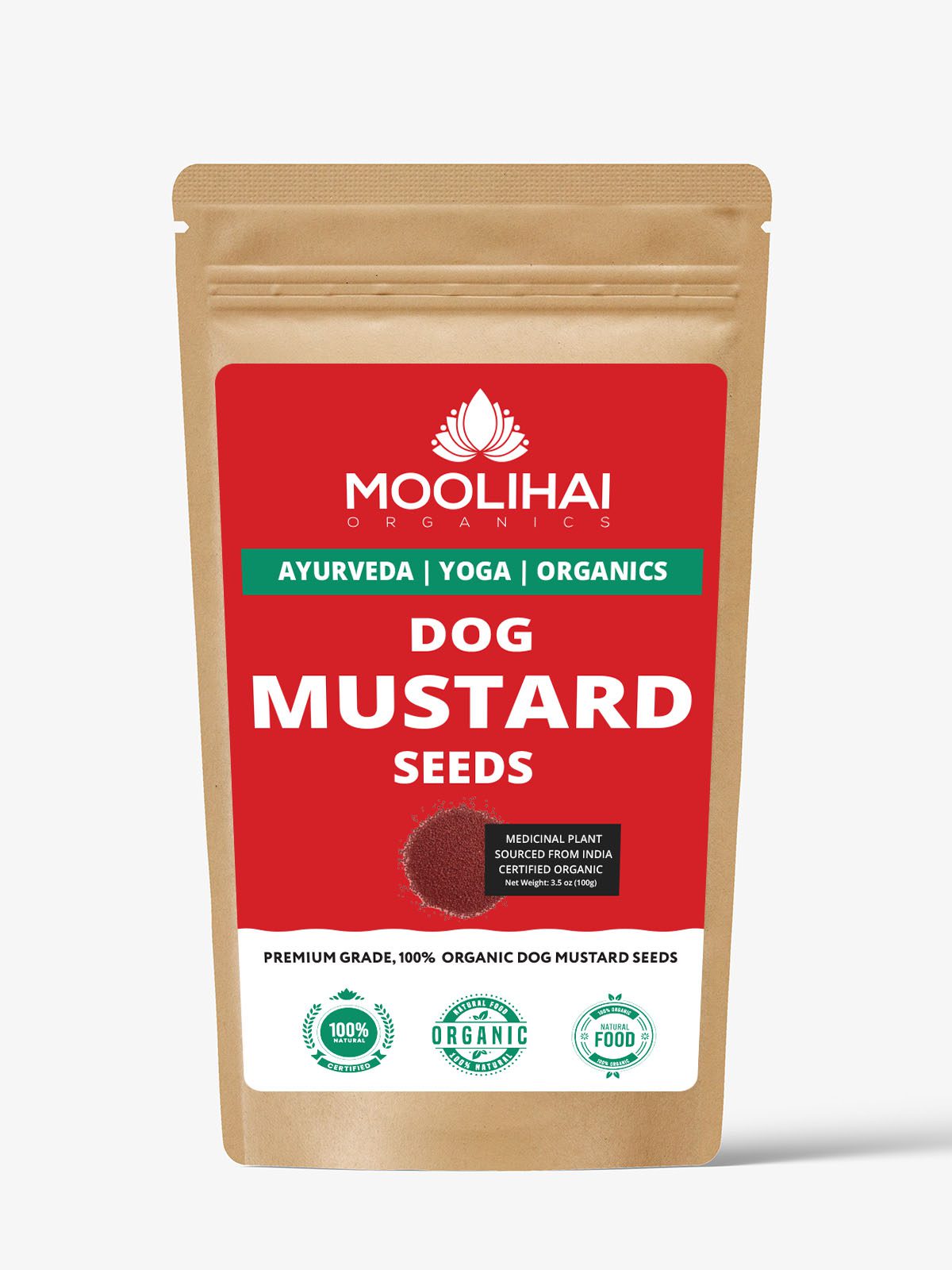
Erucastrum Gallicum · Naai Kadugu · Dog Mustard Seeds · 100g / 250g / 450g
The Rare Siddha Herb for Nerves, Skin & Memory — Used in Tamil Medicine for Centuries, Almost Impossible to Find Online
Naai Kadugu is one of those Siddha ingredients that most people outside Tamil Nadu have never heard of — and yet it occupies an important place in classical Siddha pharmacology for conditions that modern medicine still struggles with: nerve damage, chronic skin disorders, memory loss, and varicose conditions. The name translates literally as “Dog Mustard” (Naai = dog, Kadugu = mustard) — a reference to the plant’s resemblance to common mustard but with distinctive pale yellow flowers and slender four-sided seed pods. In Siddha medicine, Naai Kadugu is classified as a “Naadi Marundhu” — a nerve medicine — with specific therapeutic action on the nervous system, skin tissue, and respiratory tract. The seeds contain glucosinolates, isothiocyanates, and sulphur compounds similar to (but distinct from) common mustard, giving them potent anti-inflammatory, antimicrobial, and neuroprotective properties. This is a raw, dried seed — not a processed extract or capsule — sold in its traditional whole form exactly as Siddha practitioners have used it for generations. It’s categorised under Puja Packages because Naai Kadugu is also used in traditional Tamil rituals and spiritual practices for its purifying properties.
Classical Siddha Herb
Raw Dried Seeds · No Additives
Medicinal + Ritual Use
Ships via DHL / UPS
The “Other Mustard” — A Siddha Nerve Medicine Hiding in Plain Sight
Naai Kadugu (Erucastrum gallicum) belongs to the Brassicaceae family — the same botanical family as common mustard, broccoli, cauliflower, and cabbage. But while its Brassica cousins became global food crops, Dog Mustard followed a different path: it remained a medicinal plant, valued in Siddha and folk medicine traditions for its specific therapeutic actions rather than its culinary uses. The plant is a small annual herb with branching stems, clusters of pale yellow flowers (lighter than the bright yellow of common mustard), and slender four-sided seed pods containing tiny, round, dark brown seeds. It grows wild across South India, often on disturbed ground, roadsides, and field margins — which is why it’s sometimes overlooked as a “weed” by people who don’t recognise its medicinal value. In Siddha pharmacology, the seeds are the primary medicinal part. They contain glucosinolates — sulphur-containing compounds that break down into isothiocyanates (the same class of compounds that make mustard and wasabi pungent). These isothiocyanates have documented anti-inflammatory, antimicrobial, antioxidant, and — crucially — neuroprotective properties. The Siddha classification of Naai Kadugu as a “Naadi Marundhu” (nerve medicine) aligns with modern research showing that certain isothiocyanates cross the blood-brain barrier and exert protective effects on neural tissue.
The Chemistry Behind the Traditional Uses
The pharmacological activity of Naai Kadugu is driven primarily by its glucosinolate-isothiocyanate system — the same defence chemistry that gives all Brassicaceae plants their pungent, spicy character. When the seeds are crushed, ground, or chewed, an enzyme called myrosinase converts the stored glucosinolates into biologically active isothiocyanates. These isothiocyanates are responsible for the majority of the therapeutic effects attributed to Dog Mustard in Siddha medicine. Key activities include: potent NF-κB inhibition (the master inflammatory signalling pathway — also the target of many modern anti-inflammatory drugs), antimicrobial activity against both bacteria and fungi (relevant to skin conditions like ringworm and dermatitis), antioxidant effects that protect neural tissue from oxidative damage, and counter-irritant properties that increase local blood flow when applied topically (the same warming/rubefacient effect used in mustard plasters). Additionally, the seeds contain significant levels of erucic acid, oleic acid, and essential fatty acids, along with protein (20–25% by weight), minerals (calcium, magnesium, iron, zinc), and B-vitamins. The sulphur compounds also give Naai Kadugu its traditional use in purification rituals — sulphur-containing substances have been used in many cultures worldwide for cleansing and fumigation.
What Siddha Practitioners Use It For
Nerve Health & Neuroprotection
The primary Siddha classification of Naai Kadugu is as a nerve medicine (Naadi Marundhu). It has been traditionally prescribed for conditions involving nerve damage, nerve pain (neuralgia), numbness, tingling, and impaired nerve function. The isothiocyanates in the seeds have documented neuroprotective effects — they reduce neuroinflammation, protect against oxidative damage to neural tissue, and may support nerve regeneration. In Siddha practice, the seeds are typically prepared as a paste or decoction and used both internally and externally for nerve-related complaints. Modern neuroscience research on Brassicaceae isothiocyanates (particularly sulforaphane from broccoli) has confirmed significant neuroprotective activity, lending scientific credibility to the traditional Siddha use.
Skin Conditions — Psoriasis, Ringworm, Dermatitis
Naai Kadugu has a strong traditional reputation for treating chronic and stubborn skin conditions. In Siddha medicine, it is used for psoriasis (Sedhi Noi), ringworm (Padai), dermatitis, and other inflammatory skin disorders. The mechanism combines antimicrobial activity (killing fungal and bacterial pathogens responsible for ringworm and infected dermatitis), anti-inflammatory action (reducing the immune-mediated inflammation that drives psoriasis and eczema), and counter-irritant effects (increasing blood flow to affected areas, which accelerates healing and toxin clearance). The seeds are typically ground into a paste with water, buttermilk, or sesame oil and applied topically to affected skin. For widespread skin conditions, internal consumption under practitioner guidance complements the external application.
Memory & Cognitive Support
The Siddha use of Naai Kadugu for memory loss (Maranthi) and cognitive decline is one of its most intriguing traditional applications. The neuroprotective isothiocyanates in the seeds cross the blood-brain barrier — a selective membrane that blocks most substances from entering brain tissue — and exert direct antioxidant and anti-inflammatory effects on neurons. Chronic neuroinflammation and oxidative stress are now recognised as primary drivers of age-related cognitive decline and neurodegenerative conditions. While clinical trials specifically on Naai Kadugu for memory are limited, the broader research on Brassicaceae isothiocyanates and brain health is substantial and supportive. In Siddha practice, Naai Kadugu is often combined with other nootropic (brain-supporting) herbs like Brahmi (Vallarai) and Vasambu (Calamus) for enhanced cognitive benefit.
Hair & Scalp Treatment
The antimicrobial and blood-flow-enhancing properties of Naai Kadugu make it useful for scalp conditions — dandruff, fungal infections, scalp psoriasis, and conditions that cause hair thinning. As a counter-irritant (similar to mustard oil), it increases blood circulation to the scalp when applied topically, delivering more oxygen and nutrients to hair follicles. The sulphur compounds also contribute to keratin production — sulphur is a key structural element of the keratin protein that forms hair. In traditional use, the seeds are ground into a fine paste, mixed with coconut or sesame oil, and applied as a scalp mask before washing. This can be combined with Moolihai’s Neelibringadi Thailam or Bhringraj Oil for a comprehensive hair treatment protocol.
Respiratory Relief — Cough, Asthma, Headache
Like other mustard-family plants, Naai Kadugu has traditional application for respiratory conditions. The pungent isothiocyanates act as natural expectorants — they thin mucus, open airways, and stimulate productive coughing to clear congestion. In Siddha medicine, the seeds are used for chronic cough, asthma (Swasakasam), and sinus headaches. The counter-irritant effect — applied as a chest poultice or inhaled as steam — creates a warming sensation that dilates bronchial passages. This is the same pharmacological principle behind mustard plasters and chest rubs that were standard medical practice worldwide until the mid-20th century. For headaches, a paste applied to the forehead and temples provides warming, blood-flow-enhancing relief.
Muscular Pain & Varicose Conditions
The counter-irritant (rubefacient) effect of Naai Kadugu — increasing local blood flow when applied to the skin — makes it effective for muscular pain, joint stiffness, and varicose conditions. When a paste of ground Naai Kadugu seeds is applied to sore muscles or stiff joints, the isothiocyanates penetrate the skin and trigger vasodilation (blood vessel widening) in the underlying tissue. This increased blood flow brings fresh oxygen, removes metabolic waste products (like lactic acid), and reduces inflammation-mediated pain. For varicose ulcers — a notoriously difficult-to-heal condition caused by poor venous circulation — the blood-flow-enhancing and antimicrobial properties of Naai Kadugu provide dual benefit: improved local circulation + infection prevention.
Traditional Preparation Methods
Topical Paste — For Skin & Muscle Conditions
Grind the seeds into a fine paste using a mortar and pestle or a small grinder, adding a small amount of water, buttermilk, or sesame oil to form a smooth, spreadable consistency. Apply the paste directly to the affected area — skin conditions (psoriasis patches, ringworm, dermatitis), sore muscles, stiff joints, or varicose areas. Leave for 15–30 minutes, then wash off with lukewarm water. Important: Naai Kadugu paste is a counter-irritant — it will produce a warming, tingling sensation on the skin. This is normal and therapeutic. However, do NOT apply to broken skin, open wounds, or sensitive areas (eyes, mucous membranes). If the burning sensation becomes uncomfortable, wash off immediately. Always do a small patch test on the inner forearm before applying to larger areas.
Internal Use — Under Practitioner Guidance Only
For nerve health, memory support, respiratory conditions, and systemic skin disorders, Siddha practitioners may prescribe Naai Kadugu for internal consumption — typically as a finely ground powder mixed with honey, warm water, or as part of a multi-herb Siddha formulation (Koottu Marundhu). The dosage is small — these are potent seeds, and excessive consumption can cause gastrointestinal irritation. We strongly recommend consulting a qualified Siddha practitioner (Siddha Vaithiyar) before taking Naai Kadugu internally. Self-medication with potent Siddha herbs without practitioner guidance is not advisable. The practitioner will determine the appropriate dose, duration, and combination based on your specific condition, constitution (Udal Thathuvam), and any existing medications.
Scalp & Hair Mask
Grind the seeds into a fine powder and mix with sesame oil or coconut oil (approximately 1 teaspoon of Naai Kadugu powder per 2 tablespoons of oil). Apply to the scalp, massaging gently in circular motions. The counter-irritant effect will produce a mild warming sensation — this is the blood-flow enhancement working. Leave for 20–30 minutes, then wash out with a mild shampoo. For a comprehensive Siddha hair treatment, alternate this with Moolihai’s Neelibringadi Thailam (for anti-greying and hair growth) and Moolihai’s Bhringraj Oil (for maximum follicle stimulation). This three-oil rotation provides diverse herbal compounds to the scalp from different sources.
Ritual & Purification Use
In Tamil culture, Naai Kadugu is used in traditional rituals, puja ceremonies, and spiritual cleansing practices. The sulphur-containing compounds in the seeds produce a distinctive, pungent aroma when burned or heated — and this fumigation has been used for centuries to purify spaces, drive away insects, and create an atmosphere conducive to prayer and meditation. The seeds may be scattered, burned on charcoal, or included in puja packages alongside other ritual materials. This dual medicinal-and-spiritual identity is common in Tamil Siddha culture, where the boundary between physical health and spiritual wellbeing is understood as permeable and interconnected. Moolihai categorises this product under Puja Packages to honour this traditional dual use.
Names & Classification
Tamil
நாய் கடுகு (Naai Kadugu)
English
Dog Mustard
Botanical
Erucastrum gallicum
Family
Brassicaceae (Mustard/Crucifer family)
Medical System
Siddha Medicine
Siddha Classification
Naadi Marundhu (Nerve Medicine)
Plant Part Used
Seeds (dried)
Key Compounds
Glucosinolates, Isothiocyanates
What You’re Getting
100g / 250g / 450g
Three size options
Raw Dried Seeds
Whole, unprocessed form
India
Origin
Siddha Raw Material
Practitioner-grade herb
No Additives
Pure dried seeds, nothing added
Dual Use
Medicinal + Ritual/Puja
0.25 kg
Product weight
Practitioner Guidance
Consult Siddha doctor for internal use
Ships Worldwide
USA
5–7 Days
FREE OVER $99
UK
5–7 Days
FREE OVER $99
Canada
5–7 Days
FREE OVER $99
Ships worldwide via DHL/UPS. Shipping info →
Common Questions
They’re botanical relatives but distinct species with different uses. Common mustard (Brassica nigra, B. juncea, Sinapis alba) is primarily a culinary spice — used in cooking, pickling, and condiment-making worldwide. It contains glucosinolates, but the profile is optimised for flavour and pungency. Naai Kadugu (Erucastrum gallicum) is a different species within the same Brassicaceae family — it has a distinct glucosinolate profile that produces different isothiocyanates with specific therapeutic actions on the nervous system, skin, and respiratory tract. Siddha practitioners do not consider them interchangeable. You cannot substitute common mustard for Naai Kadugu in Siddha formulations and expect the same therapeutic result. The plant also looks different: paler yellow flowers, more slender seed pods, and a different growth habit. If your Siddha practitioner prescribes Naai Kadugu, ensure you’re getting the correct species — which is exactly what Moolihai provides.
We strongly advise against self-medication with Naai Kadugu for internal use. While the seeds have a long history of safe use in Siddha medicine, they are potent — the isothiocyanates can irritate the gastrointestinal tract at incorrect doses, and there may be interactions with medications you’re already taking. A qualified Siddha practitioner (Siddha Vaithiyar) or an Ayurvedic doctor will assess your specific condition, constitution, and medication profile before prescribing the appropriate dose, preparation method, and duration. For topical use — skin pastes, muscle poultices, scalp masks — the safety profile is more straightforward: do a patch test, don’t apply to broken skin, wash off if the warming sensation becomes uncomfortable, and keep away from eyes and mucous membranes. Topical application is generally safe for self-use with basic precautions.
In Tamil culture, Naai Kadugu occupies a dual role — it’s both a medicinal herb and a ritual ingredient. The sulphur-containing compounds in the seeds produce a pungent, purifying smoke when the seeds are burned or heated on charcoal during puja ceremonies and spiritual cleansing rituals. This fumigation practice has ancient roots: sulphur-based purification is found across Hindu, Buddhist, and folk traditions throughout South and Southeast Asia. In Tamil villages, Naai Kadugu is often burned in homes to “cleanse” the atmosphere — which has a practical dimension as well, since the pungent smoke is an effective insect repellent. Moolihai categorises it under Puja Packages to serve customers who purchase it for ritual use, but the seeds are exactly the same for medicinal or ritual purposes — there’s no difference in the product itself.
Naai Kadugu paste produces a warming, tingling sensation on the skin — this is the counter-irritant (rubefacient) effect and is the intended therapeutic mechanism. It’s the same sensation you’d feel from a mustard plaster or a warming muscle balm. For most people, this is a comfortable, therapeutic warmth. However, sensitivity varies: fair or thin skin is more sensitive than darker or thicker skin, and the sensation intensifies the longer the paste remains on the skin. First time use: Apply a small amount to the inner forearm for 5 minutes as a patch test. If the warmth is tolerable and no allergic reaction occurs (hives, excessive redness, swelling), proceed with application to the intended area. Do NOT apply to: broken skin, cuts, rashes that are already inflamed, the face (unless specifically directed by a practitioner), genitals, or eyes. If the sensation becomes painful rather than warm, wash off immediately with cool water and apply a soothing oil (coconut oil works well).
Store the dried seeds in an airtight container in a cool, dark, dry place. Moisture is the primary enemy — if the seeds absorb humidity, they may begin to sprout or develop mould. A glass jar with a tight-fitting lid or a resealable zip-lock bag with the air squeezed out works well. Keep away from direct sunlight, which degrades the glucosinolate content over time. Properly stored, dried Naai Kadugu seeds retain their potency for 12–24 months. The seeds should remain hard, dry, and have a mild pungent smell when crushed. If they feel soft, look discoloured, or have lost their pungency, they’ve degraded and should be replaced. Grind the seeds fresh for each use rather than pre-grinding a large batch — the isothiocyanates are volatile and begin to evaporate once the seeds are crushed.
*Disclaimer: Naai Kadugu (Dog Mustard Seeds) is a traditional Siddha medicinal herb. The therapeutic uses described are based on classical Siddha medical texts and traditional practitioner experience. This product has not been evaluated by the United States Food and Drug Administration, European Medicines Agency, or Indian Medical Association. It is not intended to diagnose, treat, cure, or prevent any disease. Consult a qualified Siddha practitioner before internal use. Do not self-medicate for serious conditions including nerve disorders, psoriasis, memory loss, or cancer. Topical application may cause skin warming/irritation — perform a patch test before use. Do not apply to broken skin, eyes, or mucous membranes. Not recommended during pregnancy or breastfeeding without practitioner guidance. Keep out of reach of children. Individual results may vary.
Reviews
There are no reviews yet.