

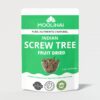
Dried Indian Screw Tree Fruit (Valampuri Kaai) | Indian Screw Tree Seeds, Maror phali, Helicteres isora Seeds
13.99$
Botanical Name: Helicteres Isora Origin: India Valampuri Kaai has the ability to quickly cure skin-related infections such as skin rashes, irritation, skin dryness, and itching.
Helicteres isora · வலம்புரி காய் · Indian Screw Tree Fruit
The Spiral-Shaped Fruit That Siddha Practitioners Reach for First When Digestion Goes Wrong — From Chronic Diarrhoea to Blood Sugar Management
Valampuri Kaai is one of the most visually distinctive herbs in the Siddha pharmacy — a spiral, screw-shaped dried fruit that looks almost like a twisted seashell, and whose medicinal potency is as remarkable as its appearance. The fruit of Helicteres isora (Indian Screw Tree) has been used for centuries across Siddha, Ayurvedic, and Unani traditions as a primary remedy for persistent diarrhoea, digestive disorders, and skin infections. In recent decades, modern pharmacological research has uncovered another dimension to this ancient fruit — significant anti-diabetic and blood-sugar-modulating activity that has made Helicteres isora one of the most actively studied Indian medicinal plants for metabolic health. Moolihai’s Valampuri Kaai is naturally harvested from mature Indian Screw Trees, carefully dried in whole fruit form to preserve the full spectrum of bioactive compounds including cucurbitacin B, isoflavonoids, rosmarinic acid, and a complex of tannins and saponins. This is a serious traditional medicine herb with a growing body of modern scientific validation.
Scientifically Studied Herb
100% Natural Whole Fruit
Naturally Dried · No Chemicals
Ships via DHL/UPS/FedEx
What Is Valampuri Kaai (Indian Screw Tree)?
The Indian Screw Tree (Helicteres isora) is a sub-deciduous shrub or small tree belonging to the Sterculiaceae family, native to the tropical and subtropical forests of India, Sri Lanka, and Southeast Asia. It typically grows to 2-5 metres in height with a grey-striped bark, simple serrated leaves that are rough on top and softly furred underneath, and clusters of striking red-petalled flowers. But the part that gives this plant its name — and its fame — is the fruit.
The fruit of Helicteres isora is unlike anything else in the plant kingdom. It starts as a straight, cylindrical green-brown pod, but as it ripens, the five individual carpels twist around each other in a dramatic clockwise spiral — creating a shape that looks remarkably like a seashell, a corkscrew, or in Tamil, a Valampuri (sacred right-turning conch shell). This distinctive spiral form is so visually striking that the tree has earned names referencing it in every language: “Screw Tree” in English, “Maror Phali” (twisted pod) in Hindi, and “Valampuri Kaai” (conch-shell fruit) in Tamil. Beyond its appearance, the fruit is a pharmacological powerhouse. Modern analysis has identified over 40 bioactive compounds including cucurbitacin B (a potent anti-inflammatory triterpenoid), isoflavonoids, rosmarinic acid, betulinic acid, and a complex of tannins, flavonoids, and saponins. This chemical richness has made Helicteres isora one of the most actively researched Indian medicinal plants — particularly for its anti-diabetic potential, where multiple animal studies and preliminary human data have shown promising blood-sugar-lowering effects.
8 Benefits of Valampuri Kaai
From stopping stubborn diarrhoea to modulating blood sugar to clearing skin infections — this spiral fruit addresses a remarkably potent range of conditions.
Chronic Diarrhoea & Dysentery
This is Valampuri Kaai’s most established traditional application — Siddha and Ayurvedic practitioners have relied on it for centuries as a primary remedy for persistent diarrhoea that has not responded to simpler treatments. The fruit’s high tannin content creates a powerful astringent effect on the intestinal lining, reducing excessive fluid secretion and slowing down overactive bowel motility. The antimicrobial compounds simultaneously target the pathogens that commonly cause infectious diarrhoea and dysentery. Traditional preparations involve making a decoction from the crushed dried fruit and administering it in measured doses until symptoms resolve. This dual action — astringent tightening of the gut lining plus antimicrobial pathogen clearance — makes Valampuri Kaai more effective than either action alone for stubborn digestive complaints.
Blood Sugar Management
This is where modern science has added a dramatic new chapter to Valampuri Kaai’s story. Multiple pharmacological studies have demonstrated that Helicteres isora fruit extracts exhibit significant hypoglycaemic (blood-sugar-lowering) activity in both animal models and preliminary human investigations. The proposed mechanisms include inhibition of alpha-glucosidase and alpha-amylase enzymes (which slow carbohydrate digestion and glucose absorption), enhancement of insulin secretion from pancreatic beta cells, and improvement of insulin sensitivity in peripheral tissues. While full-scale human clinical trials are still ongoing, the breadth and consistency of preclinical evidence has made this one of the most promising Indian medicinal plants for Type 2 diabetes research. This is a strong-disclaimer application — never replace prescribed diabetes medication with herbal supplements without your doctor’s explicit guidance.
Digestive Disorder Treatment
Beyond acute diarrhoea, Valampuri Kaai is traditionally prescribed for a broader range of digestive problems caused by irregular eating habits, food contamination, and weakened digestive function. The fruit’s bitter compounds stimulate digestive enzyme secretion, its carminative properties help expel gas, and its astringent tannins tone the intestinal lining — creating a comprehensive restorative effect on a compromised digestive system. Siddha practitioners classify it as a Grahi herb — one that “holds” and firms up loose stools while simultaneously strengthening the underlying digestive function. This makes it particularly valuable after episodes of food poisoning or prolonged illness where the gut has been damaged and needs functional restoration, not just symptom suppression.
Skin Infection & Dermatitis Relief
Valampuri Kaai has a documented traditional use for skin-related complaints — rashes, irritation, dryness, itching, and mild dermatitis. The fruit’s antimicrobial and anti-inflammatory compounds work both internally (when consumed as a decoction) and externally (when applied as a paste to affected skin). The tannins help reduce inflammation and create an antimicrobial barrier on the skin surface, while the flavonoids and rosmarinic acid soothe the inflammatory response that causes itching and redness. For persistent skin complaints, Siddha practitioners often recommend both internal consumption and external application simultaneously for maximum effect. Combining Valampuri Kaai paste with a few drops of Moolihai’s Tea Tree Essential Oil can enhance the antimicrobial action for stubborn skin infections.
Antioxidant & Hepatoprotective
Laboratory research on Helicteres isora has revealed potent antioxidant activity — the fruit’s flavonoids, rosmarinic acid, and phenolic compounds neutralise free radicals and protect cells from oxidative damage. Of particular interest is the herb’s hepatoprotective (liver-protecting) activity: animal studies have shown that Helicteres isora extracts can protect liver cells from damage caused by toxic substances, and may support the liver’s natural regenerative processes. In Siddha medicine, the liver is considered the seat of Pittham (fire humour) and central to overall metabolic health — so a herb that protects and supports liver function is considered foundational to treating many chronic conditions including skin problems, digestive weakness, and metabolic disorders.
Hernia Management Support
One of Valampuri Kaai’s more unusual traditional indications is its use in managing hernia — particularly in elderly patients. While the exact mechanism is not well-defined in modern terms, traditional Siddha practitioners attribute this to the herb’s ability to strengthen connective tissue and muscular walls, combined with its anti-inflammatory action that may reduce the discomfort associated with hernia protrusion. This is a supportive traditional application, not a cure — hernias that are large, painful, or increasing in size require surgical evaluation. However, as a complementary measure to reduce discomfort and support tissue integrity, Valampuri Kaai has maintained a consistent presence in traditional hernia management formulations for centuries.
Antimicrobial & Antiparasitic
Helicteres isora fruit extracts have demonstrated broad-spectrum antimicrobial activity against both gram-positive and gram-negative bacteria, as well as several fungal species in laboratory testing. The tannins, flavonoids, and cucurbitacin compounds create an inhospitable environment for microbial growth, which explains the fruit’s traditional effectiveness against infectious diarrhoea, skin infections, and wound contamination. Traditional Siddha texts also document antiparasitic use — the fruit has been prescribed in deworming formulations, particularly for intestinal parasites in tropical regions where such infections are common. This broad antimicrobial profile makes Valampuri Kaai a versatile infection-fighting herb in the traditional practitioner’s toolkit.
Anti-Inflammatory & Analgesic
Cucurbitacin B — one of the signature compounds in Helicteres isora — is a triterpenoid with well-documented anti-inflammatory activity. It works by modulating pro-inflammatory cytokines and inhibiting inflammatory enzyme pathways. Combined with rosmarinic acid (another potent anti-inflammatory found in the fruit), betulinic acid, and the herb’s flavonoid complex, Valampuri Kaai delivers a multi-compound anti-inflammatory effect. Traditional practitioners have used it for inflammatory conditions of the gut, skin, and joints. The analgesic (pain-relieving) properties, while milder than dedicated pain herbs, provide complementary comfort for patients dealing with inflammatory pain. For enhanced anti-inflammatory support, combining with Moolihai’s Boswellia Serrata Extract Powder may provide synergistic benefits through complementary pathways.
Names for Indian Screw Tree
Every name for this herb references its extraordinary twisted shape — a testament to how visually unforgettable this medicinal fruit is.
Tamil
வலம்புரி காய் (Valampuri Kaai)
Hindi
मरोड़ फली (Maror Phali) · Aint
Sanskrit
Avartani · Mrighashringi
Malayalam
Valampiri · Idal Muri
Telugu
Nulitaddi · Gubataddi
Kannada
Yellunde · Mulugade
Botanical
Helicteres isora (Sterculiaceae)
English
Indian Screw Tree · East Indian Screw Tree
How to Use Valampuri Kaai
The dried spiral fruit can be prepared in several ways depending on the targeted condition. Consult a qualified Siddha or Ayurvedic practitioner for condition-specific dosages.
Fruit Decoction (Kashayam)
Break or crush 2-3 dried Valampuri Kaai fruits and add to 2 cups of water. Bring to a boil, then reduce heat and simmer for 10-15 minutes until the liquid is reduced by about half. Strain thoroughly through a fine cloth or strainer. Drink ¼ to ½ cup of this decoction warm, once or twice daily as directed by your practitioner. This is the primary traditional preparation for diarrhoea, digestive disorders, and general internal use. The decoction extracts the water-soluble tannins, flavonoids, and other active compounds effectively. The taste is astringent and mildly bitter — adding a small piece of Moolihai’s Sukku Karupatti (Dry Ginger Palm Jaggery) can make it more palatable while adding complementary digestive benefits.
Powdered Fruit with Warm Water
Grind dried Valampuri Kaai fruits into a fine powder using a heavy mortar or spice grinder — the spiral fruits are tough, so a powerful grinder works best. Take ¼ to ½ teaspoon of the powder mixed into warm water or with a teaspoon of Moolihai’s Marthandam Honey, once or twice daily. This is a convenient alternative to preparing a fresh decoction each time, and it delivers the full spectrum of both water-soluble and water-insoluble compounds. Grind small batches (1-2 weeks’ supply) at a time to maintain potency, and store in a tightly sealed glass jar away from light and moisture.
External Paste for Skin Complaints
For skin rashes, irritation, itching, or mild dermatitis, grind a small amount of Valampuri Kaai into a fine powder and mix with enough water, coconut oil, or rose water to form a smooth paste. Apply to the affected area and leave for 20-30 minutes before rinsing off. The tannins create an astringent, antimicrobial layer on the skin that helps reduce inflammation and fight infection. For enhanced effect, combine with a few drops of Moolihai’s Tea Tree Essential Oil (for antibacterial boost) or Moolihai’s Lavender Essential Oil (for soothing inflamed skin). Apply 2-3 times daily for persistent skin issues, and continue for at least 1-2 weeks for cumulative benefit.
Cold Infusion (Overnight Soak)
For a gentler extraction that preserves heat-sensitive compounds, crush 2-3 dried fruits and soak in 1 cup of room-temperature water overnight (8-12 hours). Strain in the morning and drink on an empty stomach. This cold infusion method extracts the flavonoids and some tannins without the heat degradation of a decoction, and some practitioners prefer it for long-term metabolic and blood sugar support applications. The taste is milder than the decoction. This method is ideal for those who prefer a less concentrated, slower-acting preparation for daily maintenance use rather than acute treatment.
Valampuri Kaai at a Glance
Available Sizes
100g · 250g · 450g
Form
Whole Dried Spiral Fruit
Origin
India
Certification
FSSAI Certified
Key Compounds
Cucurbitacin B · Rosmarinic Acid · Tannins
Plant Family
Sterculiaceae
Processing
Naturally Harvested · Sun-Dried
Diet
Vegan · No Additives · No Chemicals
Ships Worldwide from Tamil Nadu
Every order is carefully packed and dispatched from our facility in Tamil Nadu, India via premium express carriers.
United States
5-7 Business Days
United Kingdom
5-7 Business Days
Canada
5-7 Business Days
Valampuri Kaai FAQ
This is the most important question to address directly and honestly. Yes, Helicteres isora has shown promising blood-sugar-lowering activity in multiple laboratory and animal studies — the evidence is genuine and has made it one of the most actively researched Indian medicinal plants for diabetes. The proposed mechanisms include alpha-glucosidase and alpha-amylase enzyme inhibition (slowing carbohydrate digestion), improved insulin secretion, and enhanced insulin sensitivity. However — and this is critical — you should never reduce or stop prescribed diabetes medication based on herbal supplement use without your doctor’s explicit guidance. Diabetes is a serious metabolic condition where uncontrolled blood sugar causes organ damage. Valampuri Kaai may be used as a complementary support alongside your prescribed treatment, but it is not a proven replacement for pharmaceutical diabetes management. If you want to explore this herb for blood sugar support, discuss it with your endocrinologist or diabetologist first, and monitor your blood glucose levels closely.
The distinctive spiral shape is purely botanical — it results from the way the five carpels (segments) of the fruit twist around each other as they mature, creating a right-handed helical structure. The shape is not directly related to its medicinal properties, but it is what makes this fruit instantly recognisable and impossible to confuse with any other herb. The Tamil name “Valampuri Kaai” literally means “right-turning conch-shell fruit,” referencing the sacred right-turning conch (Valampuri Shankh) in Hindu tradition — a connection that has given the fruit auspicious cultural significance beyond its medicinal value. The Hindi name “Maror Phali” means “twisted pod.” When you receive your dried Valampuri Kaai from Moolihai, you’ll immediately see the spiral structure — each fruit is a compact, woody, screw-shaped pod about 3-5 cm long. This distinctive form also makes quality verification easy: genuine Helicteres isora fruit always has this unmistakable spiral twist.
Dried Valampuri Kaai fruits are indeed quite tough and woody — this is normal and desirable, as the hard structure protects the active compounds during storage. To prepare them, you have several options. For a decoction (most common), break or crush 2-3 fruits with a heavy mortar and pestle — you don’t need to grind them finely, just crack them open. Add to water and boil as described in the usage section. For powdering, you’ll need a heavy-duty spice grinder or a traditional stone mortar — a light blender will struggle with these. Grind in small batches and sift to remove any fibrous bits. For a cold infusion, simply crush the fruits and soak overnight in water. The decoction method is fastest and extracts the most compounds, but all three methods are traditionally used. Start with the amount your practitioner recommends and never exceed the suggested dose.
There is insufficient modern clinical data to confirm the safety of Helicteres isora during pregnancy, and traditional texts recommend caution. Given that the fruit has documented effects on blood sugar metabolism and intestinal motility, it is prudent to avoid internal consumption during pregnancy unless specifically prescribed by a qualified Siddha or Ayurvedic practitioner who is aware of your pregnancy. The same caution applies during breastfeeding — while there is no documented evidence of harm, the active compounds could theoretically pass into breast milk, and the safety profile for nursing infants has not been established. External application (as a skin paste for rashes) is generally considered safer than internal consumption during these periods, but should still be discussed with your healthcare provider.
The most important potential interaction is with diabetes medications — since Helicteres isora has demonstrated blood-sugar-lowering activity, combining it with prescribed hypoglycaemic drugs (metformin, sulfonylureas, insulin) could theoretically cause blood sugar to drop too low (hypoglycaemia). If you are on diabetes medication and wish to use Valampuri Kaai, you must inform your doctor and monitor your blood glucose levels more frequently. Similarly, because the fruit has astringent and gut-modulating properties, it may affect the absorption of other oral medications if taken simultaneously — as a general precaution, separate Valampuri Kaai consumption from other medications by at least 2 hours. People on blood-thinning medications should also consult their doctor, as some compounds in Helicteres isora may have mild effects on clotting parameters. For most other medications, standard-dose use of Valampuri Kaai as a traditional herb has not been associated with documented interactions.
Dried Valampuri Kaai fruits are naturally robust — their woody, compact structure provides excellent protection against degradation. Store them in an airtight glass jar or sealed container in a cool, dry place away from direct sunlight and moisture. In their whole, unground form, properly stored fruits retain medicinal potency for 18-24 months or longer. The tough outer structure acts as a natural barrier against oxidation. Once ground into powder, the exposed surface area degrades faster, so grind only small batches (1-2 weeks’ supply at a time) and store powder in a tightly sealed container. You can assess quality by examining the spiral structure — it should be firm, intact, and have a mildly astringent, woody smell when crushed. If the fruits have become soft, mouldy, or completely odourless, discard and replace with a fresh batch.
Important Disclaimer: Statements regarding this product have not been evaluated by the FDA or Indian Medical Association. This product is not intended to diagnose, treat, cure, or prevent any disease — including diabetes. Do not discontinue or modify prescribed diabetes medication based on herbal supplement use without your doctor’s explicit guidance. Blood sugar references are based on preclinical research and traditional use, not confirmed human clinical trials. Individual results may vary. Consult a qualified healthcare professional before use, especially if you have diabetes, are pregnant, breastfeeding, or taking prescription medications.
| Weight | .25 kg |
|---|---|
| Weight |
Be the first to review “Dried Indian Screw Tree Fruit (Valampuri Kaai) | Indian Screw Tree Seeds, Maror phali, Helicteres isora Seeds”
You must be logged in to post a review.
Related products


Reviews
There are no reviews yet.