
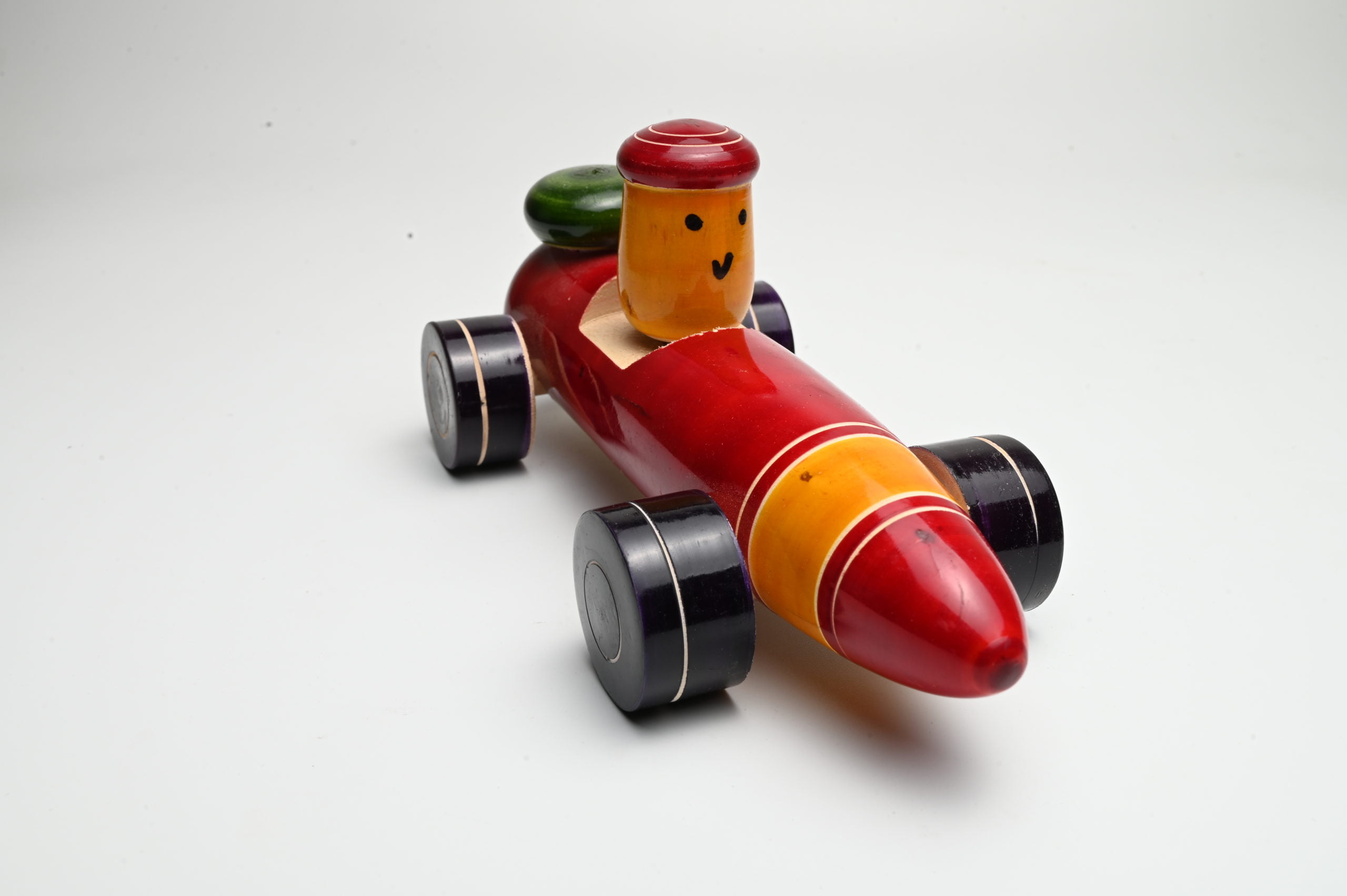
Wooden Racing Car for Kids – Handmade – Wood Toy Car – Wood Plane Shape Toy Car for Kids – Red/yellow/black Kids Toy Car – Pull Push Car Toy for Toddlers – Multicolor
9.00$
Shipping All Over The World
We've upgraded our shipping! All orders now arrive within 7 days to the USA, UK, and Canada via UPS Express and DHL Express.
Quality Guarantee
Our Products are 99.9% Pure and Stocks are fresh. They pass through multiple quality checks before they are delivered to you.
Lowest Prices & Wholesale Orders
We offer the lowest prices for organic products. If you would like to buy in bulk, get in touch with us.
Secure Payments
Pay Securely using paypal, stripe and other secure payment providers.
Handmade in India · Lathe-Turned Solid Wood · Lacquer Finish · Removable Driver · Ages 3+
A Real Artisan Toy — Handcrafted Wooden Racing Car with Driver, Turned on a Traditional Lathe
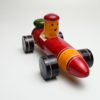
This is not a factory-stamped plastic toy that ends up in landfill within weeks. It’s a handcrafted wooden racing car — lathe-turned from solid wood by Indian artisans using techniques passed down through generations, then hand-painted in glossy red, yellow, green, and deep purple-black lacquer with fine decorative pinstripes. The car features a bullet-shaped nose, four chunky turned wheels, and a removable wooden driver figure with a hand-painted smiley face sitting in an open cockpit. The driver lifts out for imaginative play and pops back in for racing. Every surface is smooth, rounded, and polished to a high-gloss finish — no sharp edges, no rough spots, no splinters. The lacquer work is in the tradition of India’s famous turned-wood toy heritage — the same craft that has made towns like Channapatna in Karnataka and Varanasi in Uttar Pradesh world-renowned for wooden toys. At 200g, it’s the perfect weight for small hands — substantial enough to feel real, light enough to push, race, and carry around. This is the kind of toy that gets played with for years, then kept on a shelf for decades.
Handcrafted by Indian Artisans
Eco-Friendly Solid Wood
Child-Safe Lacquer Paint
Ships via DHL / UPS
Lathe-Turned & Hand-Lacquered — A Living Indian Tradition
This racing car is made using traditional Indian wood-turning techniques that are centuries old. The process begins with a block of seasoned hardwood mounted on a hand-operated or pedal-powered lathe. The artisan turns the wood at speed while shaping it with hand tools — carving the bullet-shaped car body, the rounded driver figure, and each individual wheel from solid wood. No moulds, no CNC machines, no injection moulding. Each curve, taper, and contour is shaped by the artisan’s hands and eyes. Once turned, the pieces are sanded smooth and coated with traditional lac (shellac) — a natural, non-toxic resin secreted by lac insects — which is applied while the piece spins on the lathe. The lac melts from the friction heat and fuses with the wood surface, creating the characteristic glossy, jewel-like finish in vibrant reds, yellows, greens, and deep purple-blacks. The fine white pinstripes you see on the car are created by pressing a thin tool against the spinning piece — a technique that requires years of practice to master. This is the same craft tradition that earned Channapatna toys a GI (Geographical Indication) tag — India’s equivalent of a protected designation of origin. Every car that comes out of this process is slightly different, because every car is shaped by a human being, not stamped by a machine.
What Your Child Gains — Beyond Just Playing
Sensory-Rich Play
Wood is a sensory material that plastic cannot replicate. This car has weight (200g of solid wood — not hollow), warmth (wood absorbs body heat), texture (smooth lacquer over natural grain), and sound (the satisfying clack of wood on wood when it bumps into things). Children under 7 learn primarily through sensory interaction with their environment. Every time your child picks up this car, rolls it across a surface, or removes and replaces the driver figure, they’re receiving rich tactile feedback that strengthens neural connections in the brain’s somatosensory cortex. Montessori and Waldorf educators overwhelmingly prefer wooden toys for exactly this reason.
Fine Motor Development
Lifting the driver figure out of the cockpit and placing it back in requires pincer grip, hand-eye coordination, and precise finger control — the same fine motor skills needed for writing, drawing, buttoning clothes, and using utensils. Pushing the car across surfaces develops wrist strength and directional control. Racing it down ramps and catching it builds hand-eye tracking. These are not incidental play activities — they’re the physical foundations of academic readiness, disguised as fun.
Imaginative Play
A simple wooden car with a removable driver is an open-ended toy — it becomes whatever your child’s imagination needs it to be. Today it’s a Formula 1 racer. Tomorrow it’s an explorer driving through a jungle (the living room). Next week the driver is a superhero and the car is a rocket. Research from the American Academy of Pediatrics confirms that simple toys with minimal electronic features generate more creative, sustained, and developmentally beneficial play than complex toys that dictate how they should be used. The less a toy does, the more the child does.
Screen-Free Engagement
The average child aged 2–5 spends over 2 hours per day on screens. Paediatricians worldwide are raising alarms about the impact on attention spans, sleep quality, social development, and physical activity. Every minute spent pushing a wooden car across the floor, inventing race scenarios, or making engine sounds is a minute of active, embodied, imaginative play — the kind of play that builds brains. This toy doesn’t need charging, doesn’t have ads, doesn’t collect data, and doesn’t interrupt play with notifications. It just works.
Eco-Conscious Choice
This car is made from renewable wood, finished with natural lac (shellac), painted with non-toxic colours, and handcrafted without industrial energy consumption. When it eventually reaches the end of its very long life, it’s biodegradable — it returns to the earth instead of sitting in a landfill for 500 years like plastic. By choosing wooden toys, you’re also teaching your child — through the objects in their daily life — that beautiful, functional things can be made from natural materials by skilled human hands. That’s an environmental lesson no textbook can match.
Built to Last & Pass Down
Plastic toys crack, fade, and break — often within weeks. This solid wood car is built to survive years of daily play: drops from table height, crashes into furniture, outdoor adventures, and the general enthusiastic treatment that children give their favourite toys. Wood dents rather than shatters, so even after hard impacts, there are no dangerous sharp pieces. The lacquer finish is durable and wipes clean easily. Many families keep handcrafted wooden toys for decades — passing them from one child to the next, or displaying them on shelves as decorative objects long after the children have grown.
Every Detail, By Hand
Bullet-Nose Racing Body
The car body is turned from a single piece of solid wood into a sleek, elongated racing shape with a tapered bullet nose and a wider rear section. The red body is accented with a bright yellow nose cone section and fine white pinstripes — all applied on the spinning lathe by hand. The overall silhouette evokes vintage racing cars and retro rocket ships simultaneously, giving the toy a timeless aesthetic that appeals to children and adults alike. The glossy lacquer finish catches light beautifully and feels smooth and satisfying under the fingers.
Removable Driver with Smiley Face
Sitting in the open cockpit is a turned-wood driver figure — a round-headed character with a hand-painted smiley face and a green cap. The driver is removable: children can lift it out, hold it, play with it separately, and place it back in the cockpit. This simple removable element adds a whole dimension of play — the driver can “get out” of the car, explore the surroundings, get back in and drive off. It also practices the fine motor pincer grip every time the child picks it up and replaces it. The friendly painted face gives the toy personality and emotional warmth.
Four Chunky Turned Wheels
The wheels are individually turned from wood — thick, chunky, deep purple-black with decorative cream pinstripe rings. They’re wide and stable, so the car sits firmly on flat surfaces without tipping. The car rolls smoothly across floors, tables, ramps, and outdoor paths. The wheels are proportionally oversized compared to the body — a deliberate design choice that gives the car a bold, toy-like character and makes it easier for small hands to push along surfaces. The wheel-to-body proportion also makes it visually striking and fun to look at even when it’s just sitting on a shelf.
High-Gloss Lac Finish
The entire surface is coated with traditional lac (natural shellac) — applied on the spinning lathe in a technique unique to Indian wood-turning. Lac produces a deep, glossy, jewel-like finish that’s far more beautiful than spray paint or industrial lacquer. The colours are vivid and saturated: cherry red body, bright yellow accents, forest green driver cap, and deep purple-black wheels. Lac is a natural, non-toxic resin — it’s been used to finish children’s toys, kitchen utensils, and decorative objects in India for centuries. It’s food-safe, skin-safe, and completely free from the synthetic chemicals found in industrial paint finishes.
What You’re Getting
Racing Car + Driver
Removable turned-wood driver figure
Solid Turned Wood
Lathe-shaped from hardwood
Red / Yellow / Green / Black
Natural lac (shellac) finish
Ages 3+
Recommended age
200g (0.44 lb)
Solid wood weight
Made in India
Traditional artisan craft
Child-Safe
Non-toxic lac finish, no sharp edges
Eco-Friendly
Biodegradable, natural materials only
Ships Worldwide
USA
5–7 Days
FREE OVER $99
UK
5–7 Days
FREE OVER $99
Canada
5–7 Days
FREE OVER $99
Ships worldwide via DHL/UPS. Shipping info →
Common Questions
The car is finished with traditional lac (natural shellac) — a resin produced by lac insects, not a synthetic chemical paint. Lac has been used to finish children’s toys, food bowls, and kitchen utensils in India for centuries. It is non-toxic, food-safe, and free from lead, BPA, phthalates, and the synthetic chemicals found in industrial paints. The hand-painted facial features on the driver figure use non-toxic pigments. That said, this is a play toy designed for ages 3 and above — not a teething toy. If you have a child under 3, supervise play closely. The removable driver figure, while not small enough to be a choking hazard for most children, should be monitored with very young toddlers as with any toy with a removable part.
Yes — and it’s one of the best things about handmade toys. Each car is individually turned on a lathe and painted by hand by a human artisan. This means there will be slight, natural variations between individual pieces: the exact shade of red, the placement of pinstripes, the tilt of the driver’s painted smile, the depth of the lacquer gloss. No two cars are identical, just as no two handwritten letters are identical. This is the defining characteristic of handcrafted goods — and the opposite of machine-stamped uniformity. Your child’s car is genuinely one-of-a-kind. These variations are a mark of authenticity, not defects.
This is solid turned hardwood with a lac finish — significantly more durable than any plastic toy in its category. It will handle being pushed across floors, rolled down ramps, dropped from table height, taken outdoors, and generally subjected to the full force of a child’s enthusiasm. Wood dents rather than shatters — so even after hard impacts, there are no dangerous sharp broken pieces (unlike plastic, which can crack into sharp shards). The lac finish is reasonably resistant to scratches and wipes clean with a damp cloth. Over years of heavy use, the lacquer may develop a gentle patina of fine scratches and minor dents — this is the natural ageing of a well-loved wooden toy, and many people find it adds character. The car is not indestructible — deliberate, forceful impacts against hard surfaces could eventually crack the wood — but under normal play conditions, it will last for years.
Moolihai’s mission is to bring authentic, natural, artisan-made Indian products to families worldwide — and traditional wooden toys are part of the same cultural ecosystem as Ayurveda, Siddha, and organic farming. India has one of the richest wooden toy-making traditions in the world: the famous Channapatna toys of Karnataka (which hold a GI tag), the Kondapalli toys of Andhra Pradesh, the Varanasi wooden crafts of Uttar Pradesh, and the Aranmula toys of Kerala. These artisan communities produce toys using techniques, materials, and aesthetics that have been refined over hundreds of years. By offering these alongside herbal products, Moolihai supports Indian artisan livelihoods and gives families worldwide access to beautiful, meaningful, screen-free alternatives to mass-produced plastic.
One of the best. Handcrafted wooden toys have a gift quality that mass-produced plastic simply cannot match — the recipient (and their parents) can immediately see and feel the craftsmanship, the weight of real wood, and the glossy warmth of the lac finish. The bold red, yellow, green, and black colour scheme is visually striking. The removable driver adds a play element that children discover with delight. And unlike electronic toys that become obsolete or run out of batteries, a wooden racing car is timeless — it looks as good on a shelf as a decorative object as it does on the floor being raced at top speed. For eco-conscious parents, gifting a handmade wooden toy signals thoughtfulness and values. Perfect for birthdays, holidays, baby showers (for the shelf until the child is 3+), or as a “just because” gift that stands out from the pile of plastic.
| Weight | .2 kg |
|---|
Be the first to review “Wooden Racing Car for Kids – Handmade – Wood Toy Car – Wood Plane Shape Toy Car for Kids – Red/yellow/black Kids Toy Car – Pull Push Car Toy for Toddlers – Multicolor”
You must be logged in to post a review.


Reviews
There are no reviews yet.