
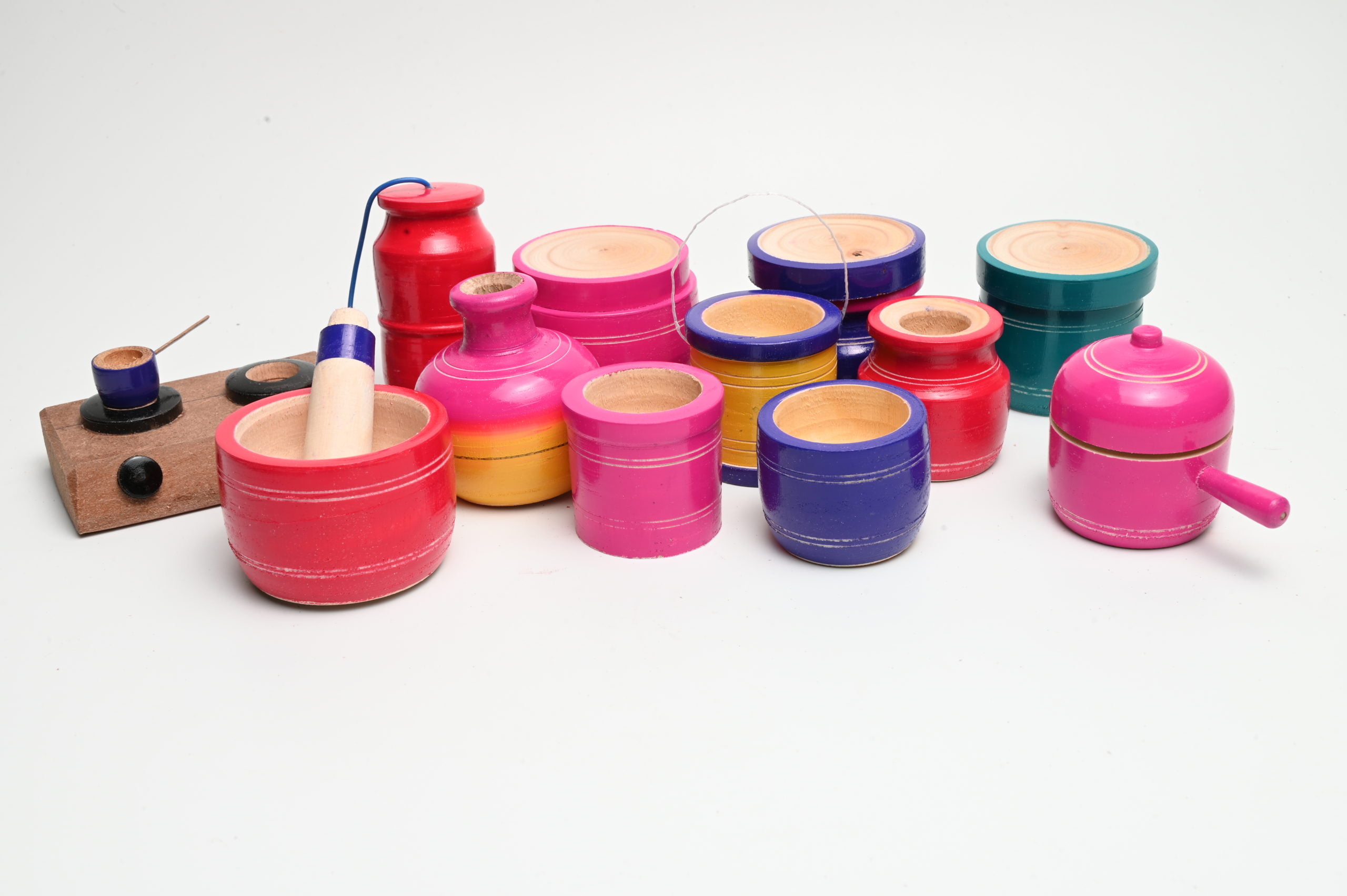
Mara Choppu Saman for Kids – Wooden Rural Kitchen Cooking Play Toy Set – Choppu Jaman – Soppu Saman for boys and girls – Eco-friendly Wooden Kids Kitchen Toy Set
24.00$
Shipping All Over The World
We've upgraded our shipping! All orders now arrive within 7 days to the USA, UK, and Canada via UPS Express and DHL Express.
Quality Guarantee
Our Products are 99.9% Pure and Stocks are fresh. They pass through multiple quality checks before they are delivered to you.
Lowest Prices & Wholesale Orders
We offer the lowest prices for organic products. If you would like to buy in bulk, get in touch with us.
Secure Payments
Pay Securely using paypal, stripe and other secure payment providers.
Mara Choppu Saman · Handcrafted Wooden Kitchen Set · Vegetable Dye Finish · Eco-Friendly
The Toy Every Tamil Kid Grew Up With — Now for Your Children, Wherever You Live
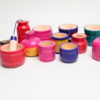
If you grew up in Tamil Nadu, you remember these. The tiny wooden stove. The miniature grinding stone. The little plates and pots painted in bright colours. Every girl — and plenty of boys — spent hours on the thinnai or veranda running an imaginary kitchen, imitating amma and paati, serving invisible rice and sambar to stuffed animals and siblings. This is Mara Choppu Saman (மர சொப்பு சாமான்) — the traditional Tamil wooden kitchen play set that has been a part of childhood in South India for generations. Carved from solid wood, finished with vegetable-based dyes that are completely safe for children, and designed as miniature replicas of actual rural Tamil kitchen equipment: a two-burner stove, mortar and pestle, tall water pot with rope handle, lidded cooking pots in multiple sizes, storage jars, a pan with handle, and open bowls — over 15 pieces in vibrant pink, red, purple, teal, and yellow. Buy it as a toy for your child. Display it during Navaratri Golu alongside your Marapachi Bommai. Put it on a shelf as a piece of Tamil cultural heritage. It works for all three.
Handcarved Solid Wood
Vegetable Dye — Child Safe
Multi-Piece Set
Ships via DHL / UPS
What Is Mara Choppu Saman?
Before plastic kitchens from toy stores, before battery-operated appliances from Amazon, Tamil children had Mara Choppu Saman — miniature wooden replicas of the actual kitchen tools their mothers and grandmothers used every day. The grinding stone (aattukal), the wood-fired stove (aduppu), the brass-style pots and pans, the serving plates and spoons — all carved by hand from solid wood and painted with natural colours. The play wasn’t just entertainment. It was how cooking knowledge passed between generations without a single recipe being written down. Children watched, imitated, and learned. The wooden pieces were sturdy enough to survive years of play and often passed down to younger siblings and cousins. For Tamil families living abroad, this set is a tangible connection to a childhood and a culture that can be hard to recreate outside India.
Inside the Set
Two-Burner Stove
Wood-fired aduppu with tiny pots on top
Mortar & Pestle
Red grinding bowl with wooden pestle
Water Pot (Paal Kudam)
Tall red pot with rope carry handle
Lidded Cooking Pots
Multiple sizes — pink, purple, teal, yellow
Storage Containers
Small lidded jars for rice, dal, spices
Pan with Handle
Pink cooking pan — for pretend frying
Open Bowls
Serving and mixing bowls in bright colours
15+ Pieces Total
Complete miniature kitchen in one set
Toy, Display, Heritage
Pretend Kitchen Play for Children
The primary use — and the reason this set has existed for generations. Children set up their miniature kitchen, assign roles, pretend to cook, serve, and eat. The play develops motor skills (handling small objects), social skills (role-playing, sharing, cooperating), and cultural knowledge (learning the names of kitchen equipment, understanding how food is prepared, imitating family routines). Unlike plastic toy kitchens, these wooden pieces have weight and texture that feel real in small hands. The vegetable-based dye coating is bright, attractive, and completely non-toxic — safe if a toddler puts a piece in their mouth.
Navaratri Golu Display
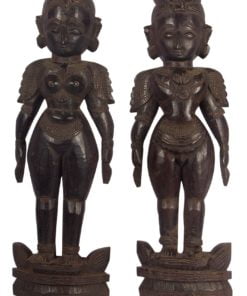
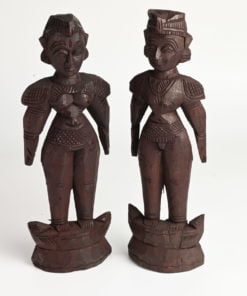
During Navaratri, South Indian homes set up Golu (Kolu/Gozhu) — a tiered display of dolls and figurines honouring Goddess Durga Devi. Mara Choppu Saman is a traditional component of this display, representing domestic life and the sanctity of the kitchen in Tamil culture. Placed alongside Marapachi Bommai (Moolihai sells the 11-inch wooden doll pair), the choppu saman completes a traditional Golu scene. For Tamil families in the USA, UK, Canada, and Australia, sourcing authentic Golu items is one of the biggest challenges of celebrating Navaratri abroad. Having a reliable source like Moolihai that ships these directly from Tamil Nadu matters.
Home Decor and Showcase Display
Many adults buy this set not as a toy but as a decorative piece. The miniature wooden kitchen items, with their bright vegetable-dye colours and handcrafted detailing, look beautiful arranged on a shelf, mantelpiece, or glass display case. For NRI (Non-Resident Indian) families, it’s a piece of Tamil Nadu sitting in your living room in New Jersey, London, or Toronto. It starts conversations. It reminds you of something specific — your grandmother’s kitchen, a particular afternoon, the smell of sambar from a tiny wooden pot that obviously didn’t contain any sambar at all. That’s the point.
Safe for Children
Vegetable Dye Coating
The bright colours on these pieces come from vegetable-based dyes — not synthetic paints, not lead-based coatings, not chemical finishes. This is the traditional colouring method used by Tamil toy-makers for generations. The dyes are derived from plant sources and are non-toxic. If a young child mouths or chews on a piece (as toddlers do), there is no risk of chemical ingestion. This makes the set fundamentally different from mass-produced plastic toy kitchens, which may contain BPA, phthalates, or other synthetic compounds in their materials and paint.
Solid Wood Construction
Each piece is carved from solid wood — not plywood, not MDF, not pressed particle board. Solid wood doesn’t splinter the way composite materials do, and it doesn’t contain the formaldehyde-based adhesives found in manufactured wood products. The pieces are sanded smooth, with no sharp edges or points. They’re sturdy enough for years of play without cracking, breaking, or wearing down. When a plastic toy breaks, it creates sharp edges and small pieces that become choking hazards. When a wooden piece gets old, it simply develops a patina.
Product Specs
Material
Solid wood, handcarved
Finish
Vegetable dye, multi-colour
Origin
Tamil Nadu, India
Weight
~400g (full set)
Age
Suitable for 3+ years
No Plastic
No synthetic materials
For Boys & Girls
Kitchen play is for everyone
Category
Wooden Toys
Ships Worldwide
USA
5–7 Days
FREE OVER $99
UK
5–7 Days
FREE OVER $99
Canada
5–7 Days
FREE OVER $99
Ships worldwide via DHL/UPS. Shipping info →
Common Questions
The set contains small pieces, so it’s best suited for children aged 3 and above who are past the stage of putting everything in their mouth. For children under 3, the pieces are a choking hazard — use adult supervision or keep the set as a display item until the child is older. For pretend kitchen play, children between 3 and 8 get the most use out of it. Older children and adults appreciate it as a cultural item, a display piece, or a Navaratri Golu component. There’s no upper age limit — many adults buy this set purely for nostalgia or home decor.
Yes. The colours are vegetable-based dyes — plant-derived, non-toxic, and free from lead, cadmium, or any heavy metals. This is the same colouring method Tamil toy-makers have used for centuries, long before synthetic paint existed. While the set isn’t intended to be chewed on, incidental mouthing (which happens with toddlers) poses no chemical risk. The wood itself is natural and untreated with any chemical sealant or varnish. If you’re buying this for a young child, the vegetable dye finish is one of the key reasons to choose traditional Tamil wooden toys over mass-produced plastic alternatives.
Absolutely — this is one of the traditional items placed on the Golu steps during Navaratri. The kitchen set represents grihasta dharma (the sanctity of domestic life) and the nourishing role of the household. It’s typically placed on the lower steps of the Golu alongside everyday-life figurines. For a complete traditional display, pair it with Moolihai’s Marapachi Bommai (wooden dolls, 11-inch pair) — the dolls represent the divine couple and are placed on the upper steps, while the choppu saman sits below, creating the traditional hierarchy of divine and domestic. Tamil families outside India often struggle to find authentic Golu items — Moolihai ships both the dolls and the kitchen set directly from Tamil Nadu.
No. The product title says “for boys and girls” and that’s deliberate. Kitchen play develops motor skills, social skills, creativity, and cultural knowledge regardless of gender. In traditional Tamil households, boys played with these sets too — the division of kitchen play as “girl only” is a more recent and narrow reading of the tradition. Professional chefs are overwhelmingly male. Teaching all children that cooking is a valuable, enjoyable skill — through play — sets them up better than restricting it. The set is colourful, fun, and engaging for any child who enjoys pretend play.
In nearly every way that matters. Materially: solid wood vs petroleum-based plastic. Colouring: vegetable dye vs synthetic paint (which may contain lead or phthalates in cheaper products). Durability: wood develops a patina and lasts decades; plastic cracks, fades, and ends up in a landfill. Cultural value: this is a replica of actual Tamil kitchen equipment with centuries of history; a plastic kitchen set is a generic toy with no cultural identity. Environmental impact: wood is biodegradable and sustainably sourced; plastic is not. Sensory experience: wood has weight, warmth, and texture that plastic cannot replicate. And finally — this set doesn’t need batteries, doesn’t make electronic sounds, and doesn’t require an app. The child’s imagination provides everything.
*This is a handcrafted wooden toy set. Contains small pieces — not recommended for children under 3 years without adult supervision due to choking hazard. Colours are vegetable-based dyes, non-toxic, free from lead and heavy metals. Each set is handmade and may vary slightly in size, shape, and colour from the product image — this is a characteristic of handcrafted items, not a defect. Wood is a natural material and may develop minor grain variations over time. Not intended for use with water or food — this is a play and display item only.
| Weight | .4 kg |
|---|
Be the first to review “Mara Choppu Saman for Kids – Wooden Rural Kitchen Cooking Play Toy Set – Choppu Jaman – Soppu Saman for boys and girls – Eco-friendly Wooden Kids Kitchen Toy Set”
You must be logged in to post a review.

Reviews
There are no reviews yet.