

Handmade in India · Lathe-Turned Solid Wood · Rattle Drum + Whistle · Non-Toxic Lac Finish · Ages 1+
Two Instruments in One Toy — The Traditional Indian Tik-Tik Rattle That’s Been Delighting Children for Generations
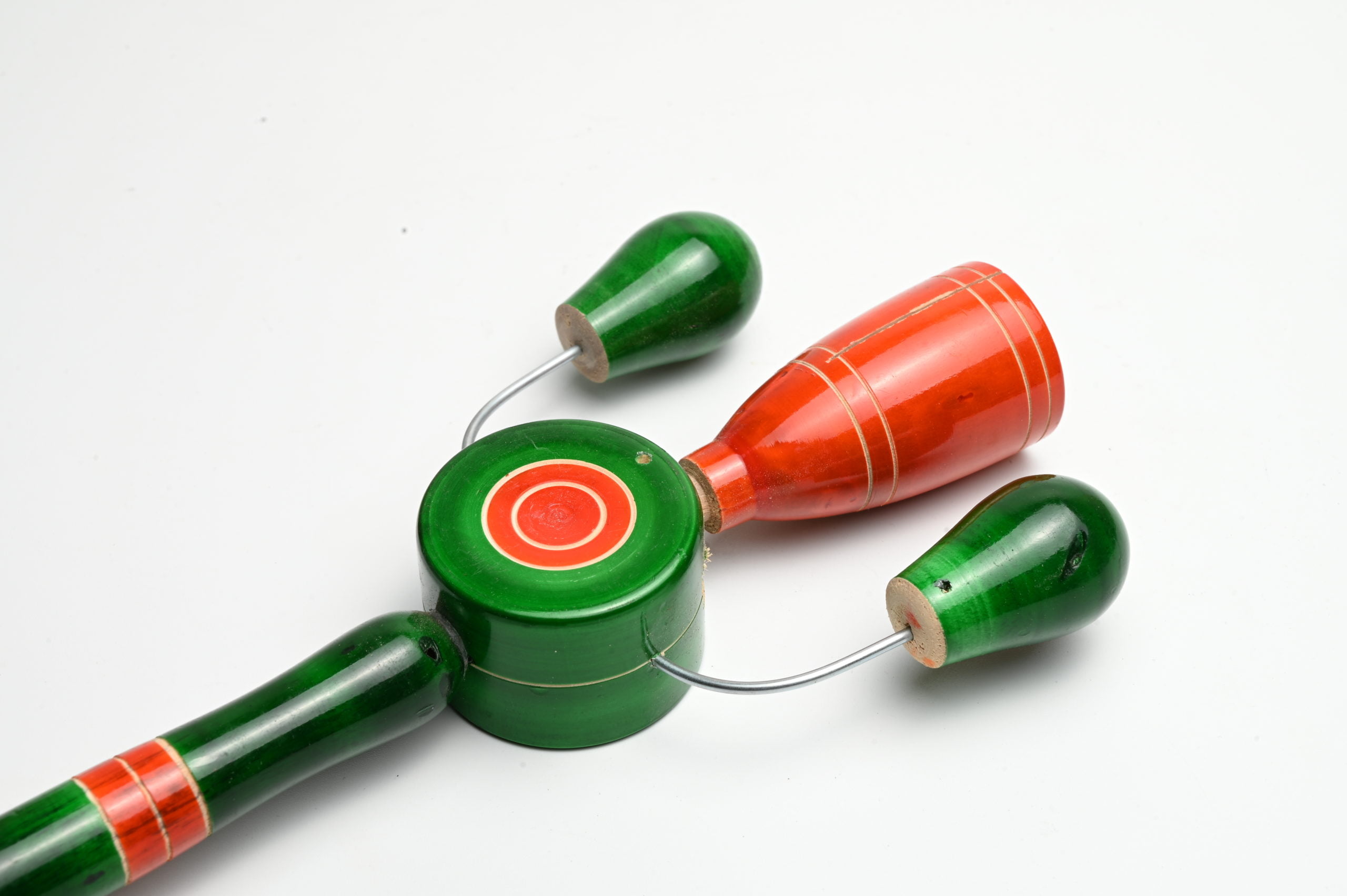
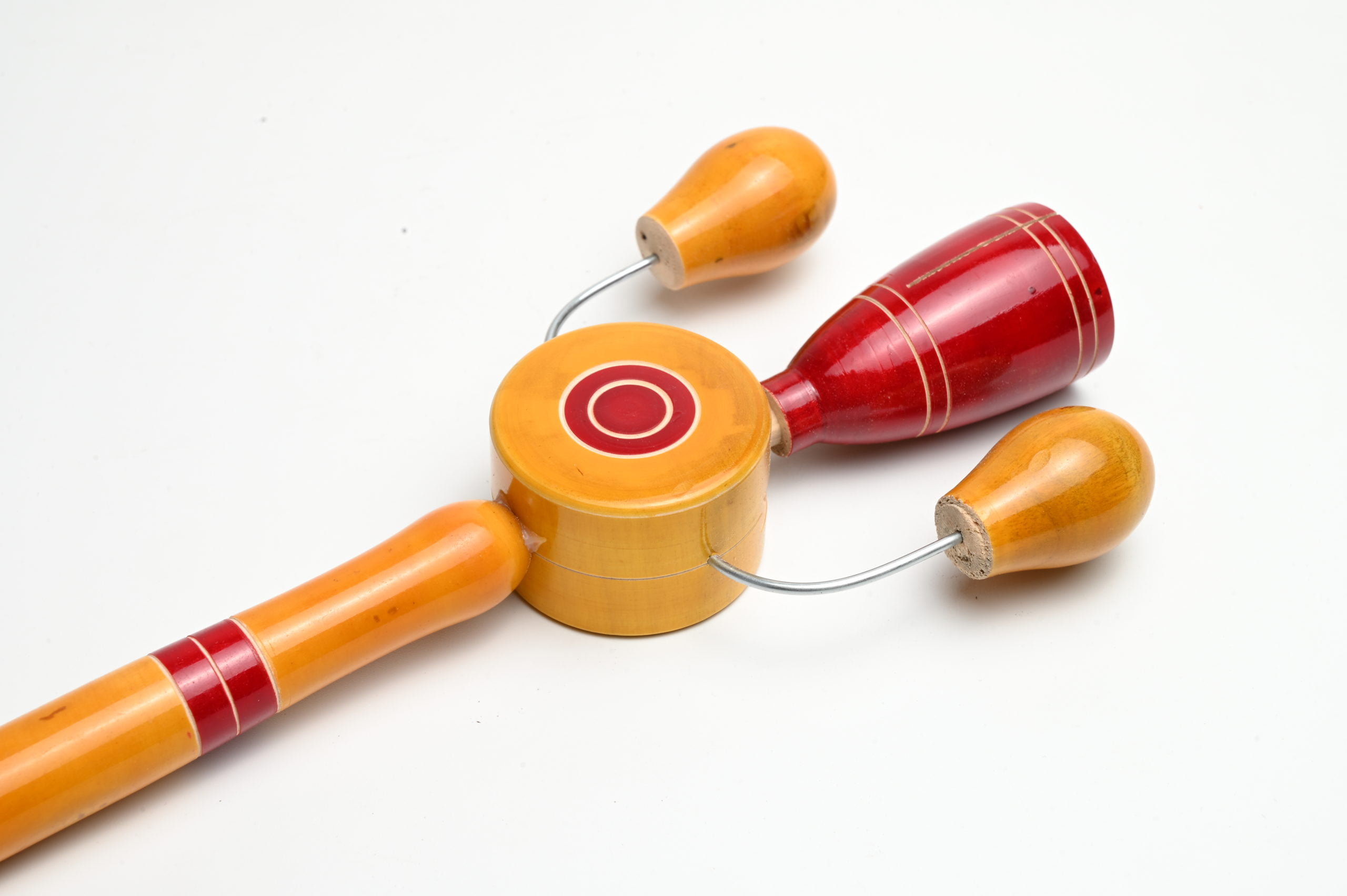
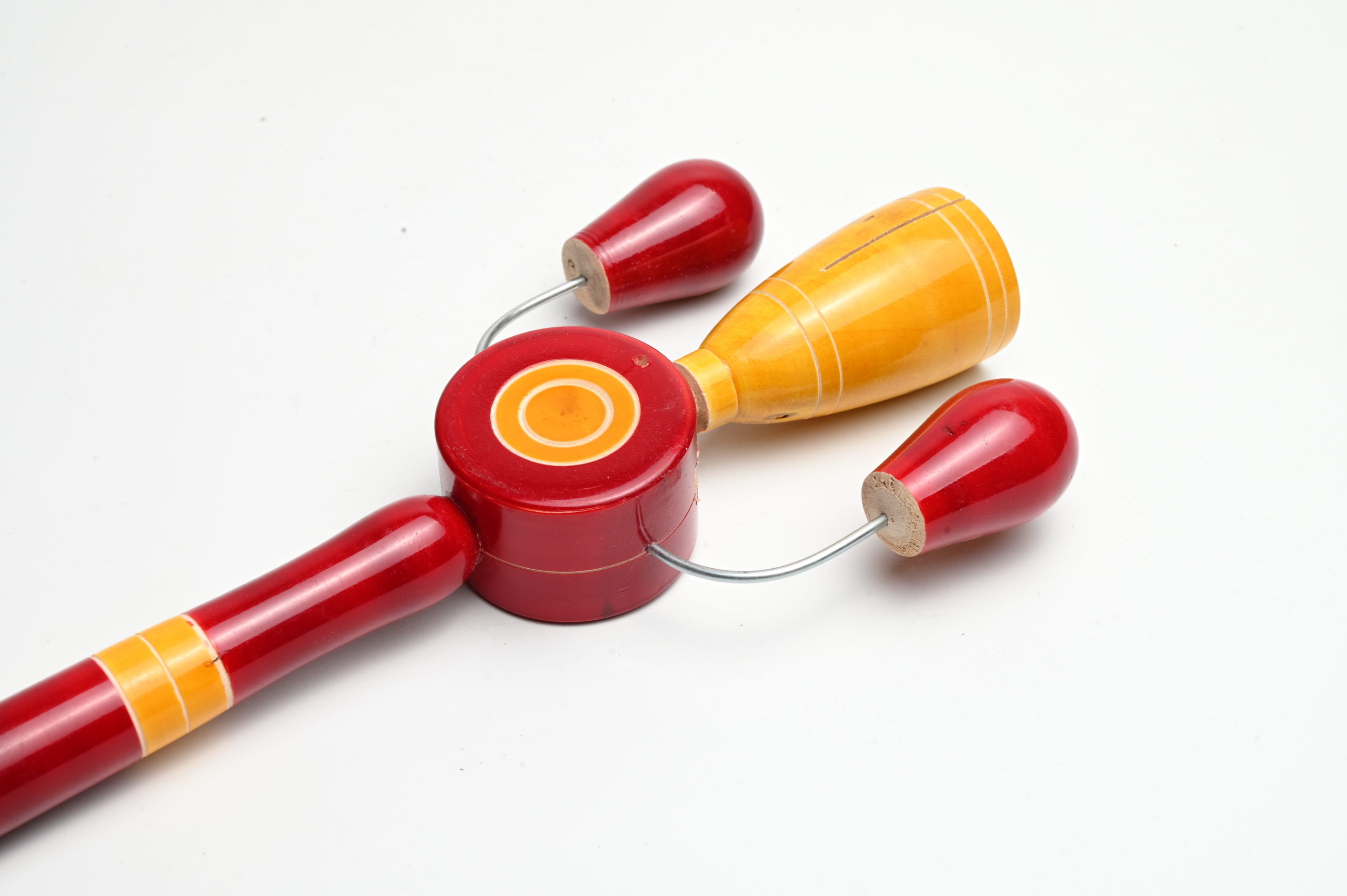
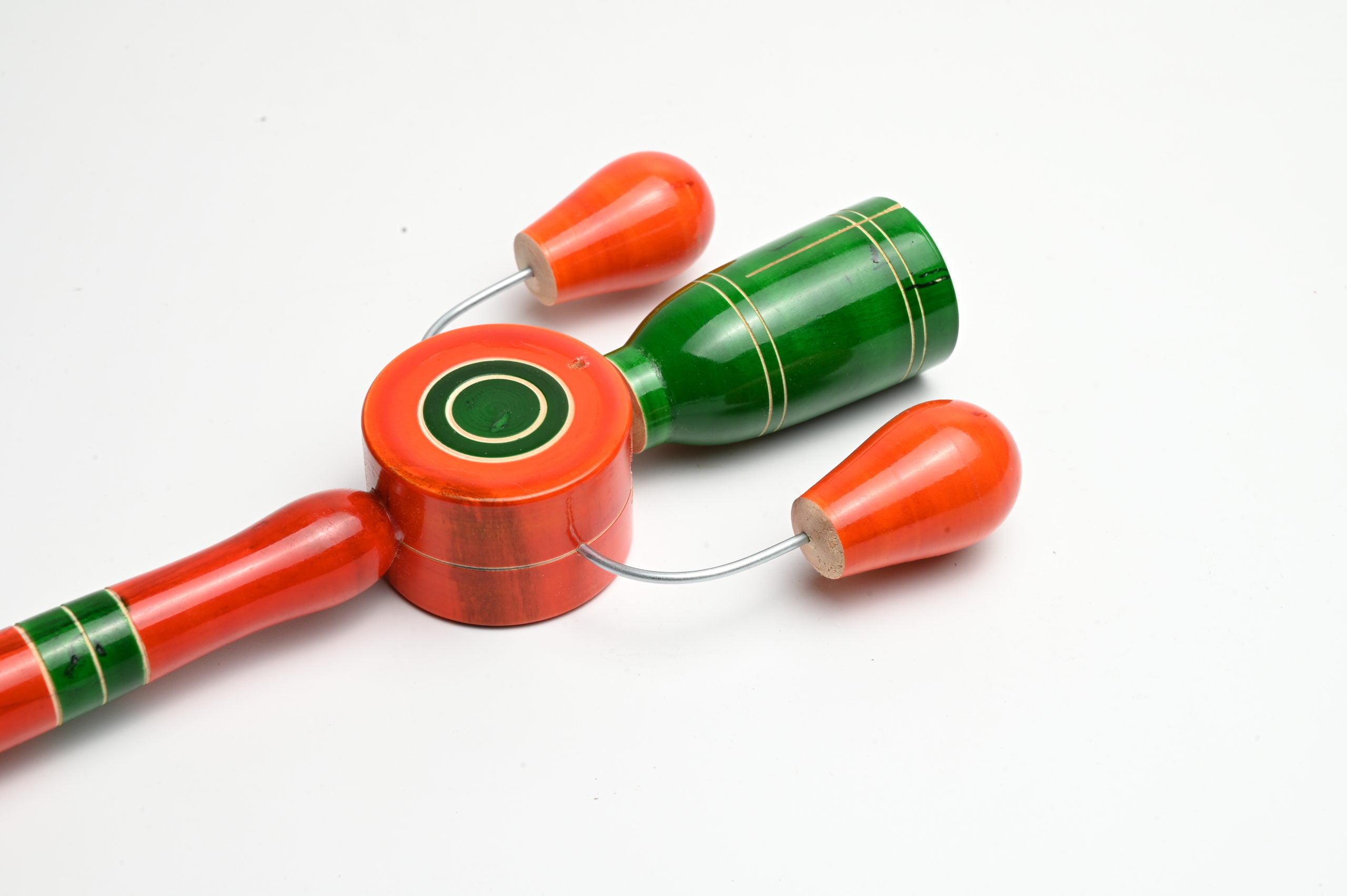
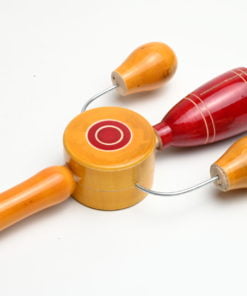
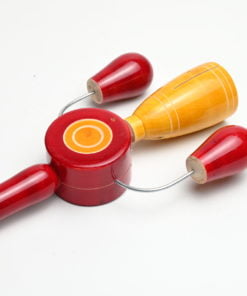
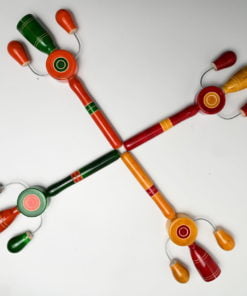
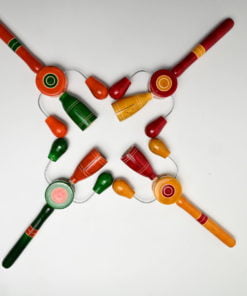
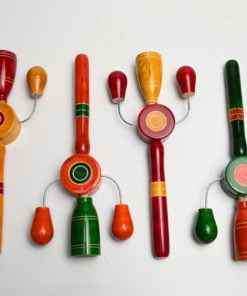
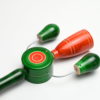
Long before plastic rattles with batteries and electronic sound chips, Indian children had the Tik-Tik — a handcrafted wooden rattle that produces a satisfying rhythmic “tik-tik-tik” when you spin the handle between your palms. Two teardrop-shaped wooden beaters hang on wires from a central drum. Rotate the handle and the beaters swing outward, striking the drum on both sides in a natural, percussive rhythm — as fast or as slow as the child wants. Flip it over, and there’s a built-in whistle at the end of the handle for a completely different kind of sound play. It’s two musical instruments in one toy — a drum and a whistle — with zero batteries, zero electronics, and zero plastic. Every component is lathe-turned from solid wood by Indian artisans, finished in vibrant green and red-orange lac with fine decorative pinstripes and concentric circle patterns on the drum face. At 200g, it’s lightweight enough for small hands but substantial enough to feel like a real instrument. This is the toy that Indian grandmothers remember from their own childhoods — and it works just as well today as it did a hundred years ago.
Handcrafted by Indian Artisans
Eco-Friendly Solid Wood
Non-Toxic Lac Finish
Ships via DHL / UPS
Spin, Strike, Whistle — Simple Physics, Endless Delight
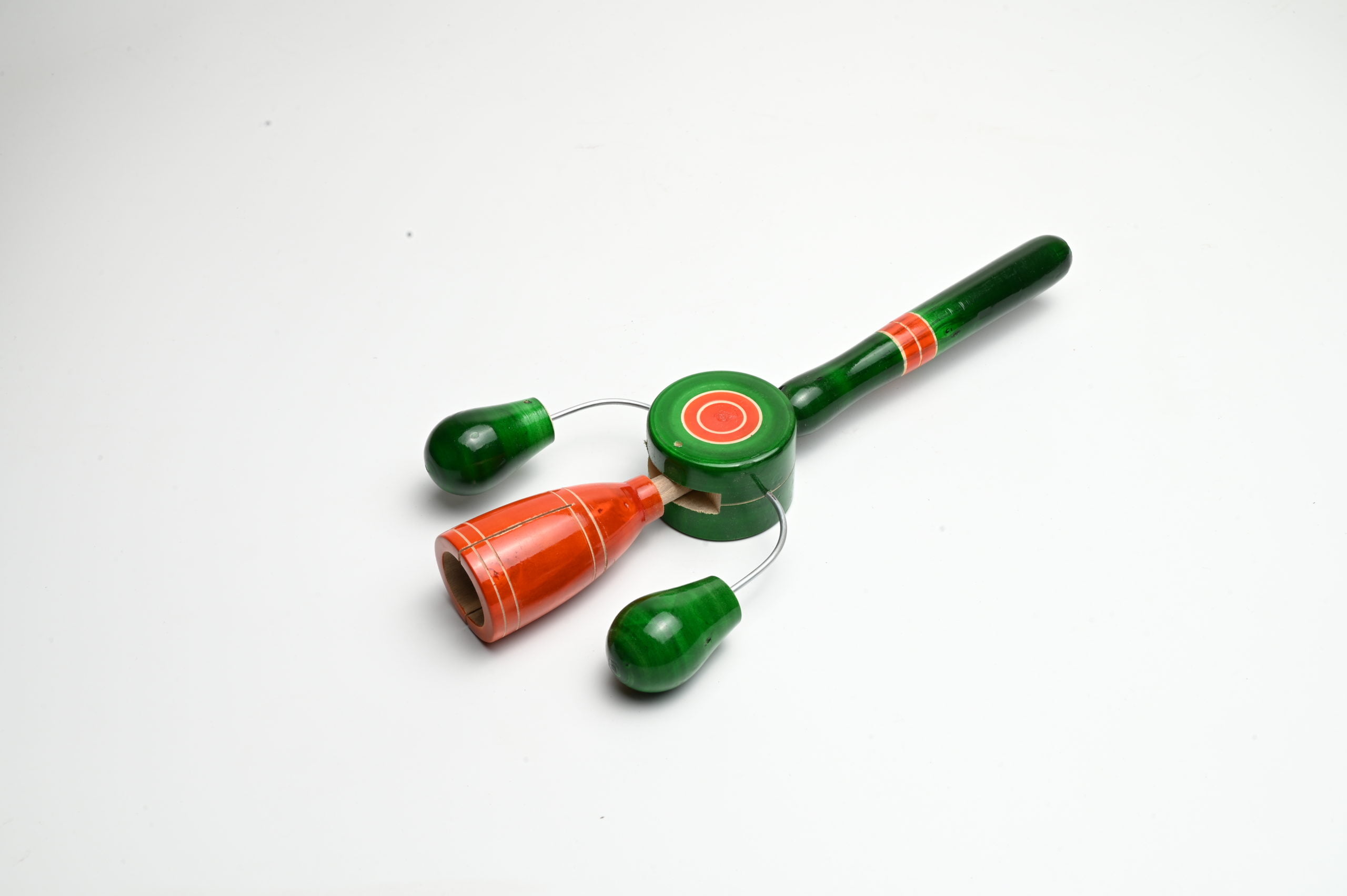
The Tik-Tik rattle is an elegant piece of acoustic engineering disguised as a simple children’s toy. At its centre is a cylindrical wooden drum — lathe-turned and decorated with concentric red and cream circles on the face. Two teardrop-shaped wooden beaters are attached to the drum via thin metal wires, one on each side. When the child holds the handle and rotates it between their palms (rolling it back and forth), the beaters swing outward due to centrifugal force and strike the flat faces of the drum — producing the characteristic “tik-tik-tik-tik” sound that gives the toy its name. The speed and rhythm of the sound are entirely controlled by the child: spin slowly for a gentle, spaced-out tapping, spin fast for a rapid, continuous percussion. This cause-and-effect relationship — “I move my hands, the sound changes” — is deeply satisfying for young children and teaches fundamental principles of physics (rotational motion, centrifugal force, momentum) through pure play. At the opposite end of the handle, a built-in wooden whistle adds a second instrument — so the child can alternate between rhythmic drumming and melodic whistling, or combine both in their own improvisational compositions.
What Your Child Gains — Through Sound & Movement
Auditory Development
Sound is one of the primary channels through which infants and toddlers learn about the world. The Tik-Tik rattle produces two distinct types of sound — the percussive “tik-tik” of wood striking wood, and the tonal whistle at the handle end. These different sound textures stimulate auditory processing, help children distinguish between rhythmic and melodic sounds, and lay the foundation for musical awareness. Unlike electronic toys that produce pre-recorded sounds at fixed volumes, the Tik-Tik’s volume and tempo respond directly to the child’s actions — teaching them that they are the source and controller of sound, not a passive listener.
Bilateral Motor Coordination
Spinning the rattle handle between both palms requires bilateral coordination — using both hands together in a synchronised, alternating motion. This is a critical developmental skill: the same neural pathways used for bilateral hand coordination are later required for writing, tying shoelaces, cutting with scissors, playing musical instruments, and dozens of other everyday tasks. The Tik-Tik provides a natural, enjoyable way to develop this skill from as early as 12 months. Children start with rough, uncoordinated spins and gradually refine their technique — a visible progression that builds motor confidence.
Cause & Effect Understanding
“I spin the handle → the beaters hit the drum → sound happens.” This three-step cause-and-effect chain is one of the most important cognitive concepts a young child can learn. It’s the foundation of scientific thinking: actions produce predictable, observable consequences. The Tik-Tik makes this relationship tangible, immediate, and repeatable. The child controls the speed (spin faster = more sound), the duration (stop spinning = silence), and the rhythm (change direction = different pattern). Every play session reinforces the understanding that they can deliberately influence their environment through intentional action.
Rhythm & Tempo Awareness
Rhythm is a fundamental cognitive skill that extends far beyond music — it’s linked to speech fluency, reading ability, mathematical pattern recognition, and motor planning. When a child spins the Tik-Tik at different speeds, they’re experimenting with tempo: fast, slow, accelerating, decelerating, stopping, starting. They begin to internalise the concept of regular beats and intervals. Many early childhood music educators use simple percussion instruments like rattles and drums as the entry point for rhythmic education — the Tik-Tik serves exactly this function, without the formality of a “music lesson.”
Oral Motor & Breath Control (Whistle)
The built-in whistle at the handle end provides a completely different kind of developmental exercise. Blowing a whistle requires controlled exhalation — the child must shape their lips into an “O,” direct a focused stream of air, and sustain the breath for a continuous tone. These oral motor skills are directly relevant to speech development, articulation clarity, and respiratory strength. Speech therapists frequently use whistles and blowing exercises as therapeutic tools for children with speech delays or articulation difficulties. With the Tik-Tik, this therapy happens naturally during play.
Screen-Free, Battery-Free Joy
The Tik-Tik rattle has been entertaining Indian children for generations — long before screens, apps, or electronic toys existed. It works today exactly as it worked a hundred years ago: through the simple interaction of a child’s hands, solid wood, and the physics of rotational motion. No batteries to replace, no screens to crack, no apps to update, no volume buttons to accidentally max out at bedtime. The sound is organic and wooden — pleasant, not grating — and the child can stop it instantly by simply stopping their hands. Parents who have survived the relentless electronic beeping of plastic toys will understand the quiet relief of a toy that sounds the way a toy should sound.
Every Component, Handcrafted
Central Drum with Concentric Circle Art
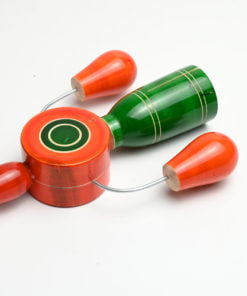
The heart of the rattle is a cylindrical drum — lathe-turned from solid wood, painted in deep forest green lac with a decorative face of concentric circles in red-orange and cream. These concentric circles aren’t just decorative; they’re a signature of Indian lathe-turning — created by pressing pigment-tipped tools against the spinning piece, producing perfectly symmetrical rings that no freehand painting could achieve. The drum is compact and proportioned to produce a clear, resonant “tik” when struck by the beaters — not too loud for indoor play, not too quiet to be satisfying.
Twin Teardrop Beaters on Wire
Two teardrop-shaped wooden beaters — glossy green, lathe-turned, smooth and rounded — hang from thin metal wires attached to the drum. The teardrop shape is both aesthetic and functional: the weighted bulbous end provides the momentum to swing outward and strike the drum, while the tapered end attaches to the wire. The wire length is precisely calibrated so the beaters reach the drum face at the optimal angle for a clean strike. When the handle spins, the beaters swing in alternating arcs — left-right-left-right — creating the rhythmic double-tap pattern that gives the toy its “tik-tik” name.
Built-In Whistle Handle
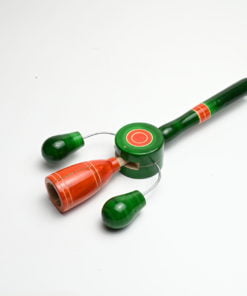
The long handle serves a dual purpose: it’s the grip for spinning the rattle, AND it’s a working whistle. The handle end is hollowed out with a precise air channel and sound hole — blow into it and you get a clear, high-pitched wooden whistle tone. The handle itself is finished in the same deep green lac with red-orange accent bands and fine decorative pinstripes. It’s long enough for comfortable two-handed spinning (rolling between the palms) and the smooth lacquer surface allows easy rotation without friction or splinters.
Vibrant Green & Red-Orange Lac Finish
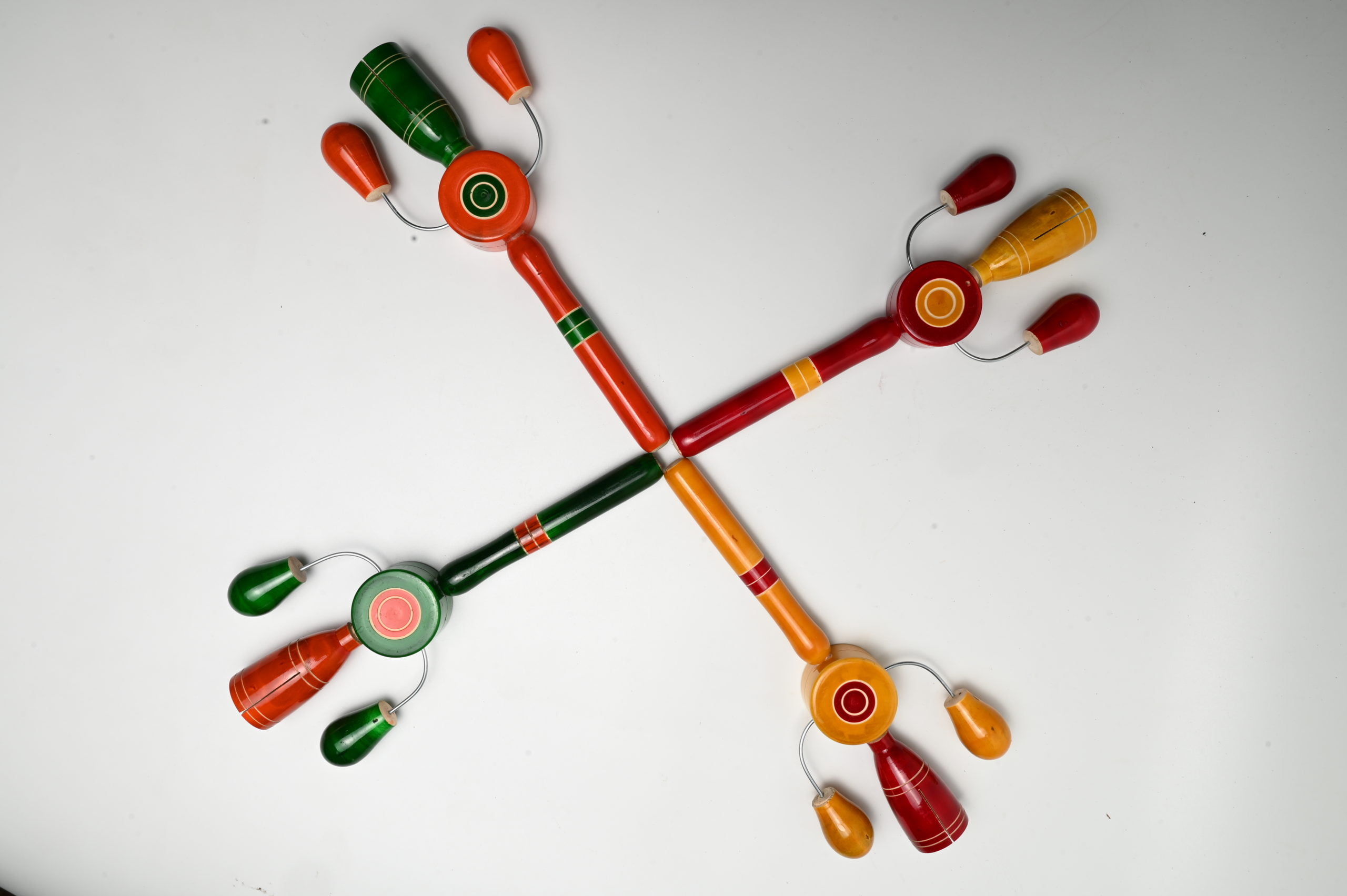
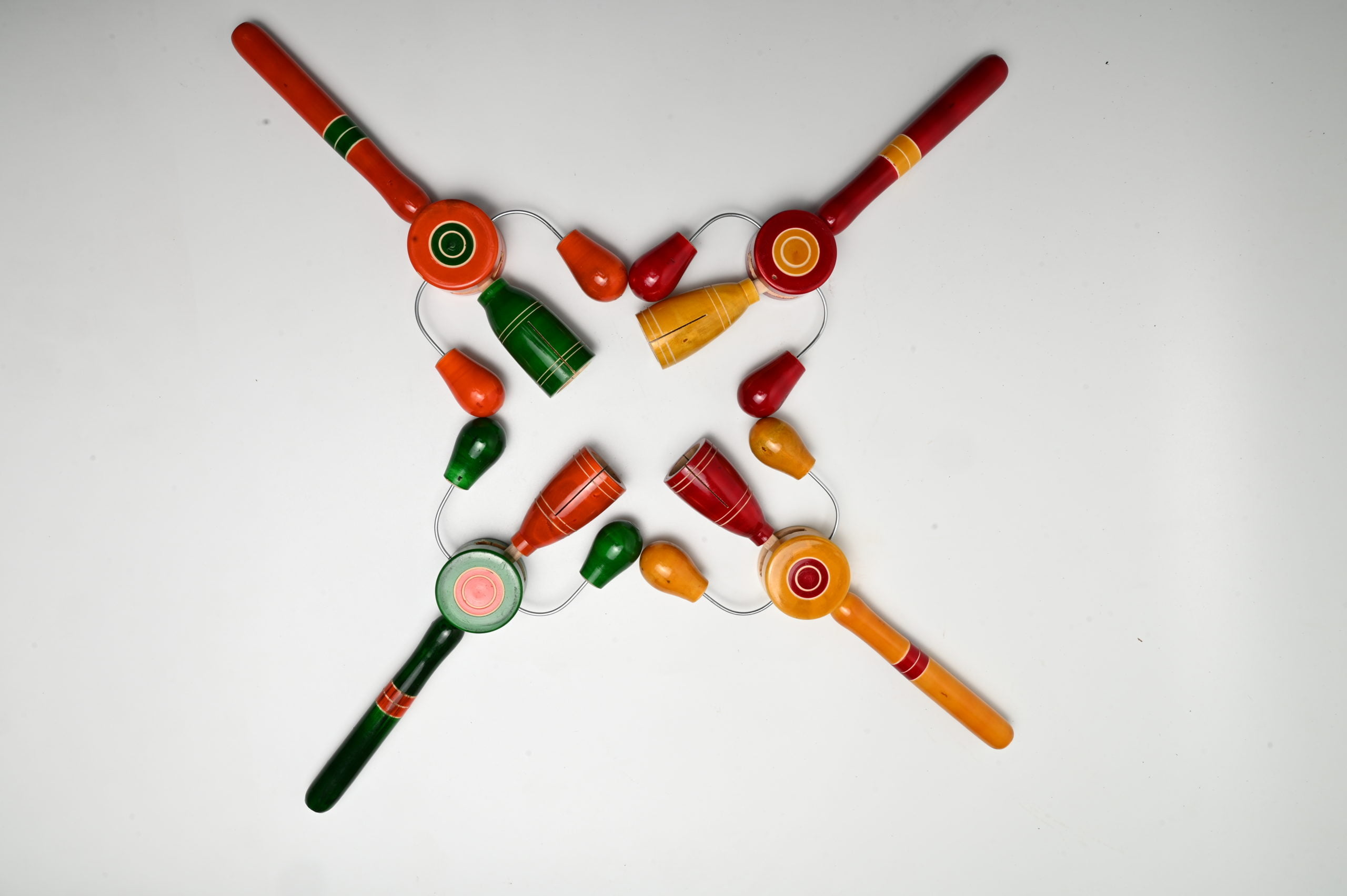
The entire toy is coated in traditional lac (natural shellac) — applied on the spinning lathe using the friction-heat technique unique to Indian wood-turning. The colour scheme is bold and striking: deep forest green as the primary colour on the handle, drum body, and beaters, with vivid red-orange accents on the drum attachment, the red-orange bell-shaped element above the drum, and the concentric circle artwork. Cream-coloured pinstripes add fine detailing throughout. Lac is a natural, non-toxic resin — food-safe, skin-safe, and free from the synthetic chemicals found in industrial paints. It produces a glossy, warm finish that’s tactile and visually beautiful.
What You’re Getting
Tik-Tik Rattle + Whistle
Dual-function musical toy
Solid Turned Wood
Lathe-shaped from hardwood
Green / Red-Orange / Cream
Natural lac (shellac) finish
Ages 1+
Suitable for toddlers with supervision
200g (0.44 lb)
Lightweight for small hands
Made in India
Traditional artisan craft
Child-Safe
Non-toxic lac, smooth rounded edges
Eco-Friendly
Biodegradable wood & natural lac
Ships Worldwide
USA
5–7 Days
FREE OVER $99
UK
5–7 Days
FREE OVER $99
Canada
5–7 Days
FREE OVER $99
Ships worldwide via DHL/UPS. Shipping info →
Common Questions
The toy is made entirely from solid wood finished with natural lac (shellac) — a non-toxic, food-safe resin that’s been used on children’s toys in India for centuries. There are no small removable parts that could be a choking hazard — the beaters are firmly attached via metal wire and cannot be easily detached by a child. All edges are smooth, rounded, and polished. For babies under 12 months, we recommend supervised play only — an adult or older sibling can spin the rattle while the baby watches and listens (the visual and auditory stimulation is valuable even before the child can operate it themselves). From around 12–18 months, most toddlers can begin to grip the handle and attempt spinning. The whistle function is best suited for children aged 2+ who have developed sufficient breath control. For the whistle end specifically, ensure children are supervised during use — as with any whistle or blowing toy.
Honest answer: it’s audible and percussive, but it’s not ear-splitting. The “tik-tik” sound is wood striking wood — a natural, organic tone that is vastly more tolerable than the electronic beeping, chirping, and jingle-repeating of plastic toys. The volume is proportional to the spin speed: gentle, slow spinning produces a quiet, spaced tapping; vigorous fast spinning produces a louder, continuous percussion. The child controls the volume entirely through their own effort — and they can stop it instantly by stopping their hands (unlike electronic toys with stuck-on sound loops). The whistle is a clear, high-pitched tone — typical of a small wooden whistle. Is it silent? No. Is it the kind of sound that makes you want to hide the toy after 10 minutes? Also no. It’s genuinely one of the more pleasant-sounding children’s toys you’ll encounter.
The Tik-Tik rattle has a surprisingly wide useful age range. 6–12 months: The child can’t operate it yet, but an adult spinning it provides captivating visual (the beaters swinging) and auditory (tik-tik rhythm) stimulation. 12–24 months: Toddlers begin gripping the handle and making their first attempts at spinning — even imprecise movements produce some sound, which is rewarding. 2–4 years: Children develop enough bilateral coordination to spin consistently and produce steady rhythms. They discover the whistle and begin alternating between drumming and blowing. 4–7 years: Children use it as a genuine percussion instrument — experimenting with tempo, rhythm patterns, and incorporating it into imaginative play and “music performances.” Some families keep it even beyond these ages as a decorative object or cultural keepsake.
The Tik-Tik (also spelled “Tik Tik” or “Tikki”) is one of India’s oldest traditional toys — part of the same family of handcrafted wooden toys that includes spinning tops, pull-along animals, kitchen play sets (Choppu Saman), and the famous Marapachi Bommai dolls. These toys have been made by artisan communities across India for generations, with major centres in Channapatna (Karnataka), Kondapalli (Andhra Pradesh), Varanasi (Uttar Pradesh), and Etikoppaka (Andhra Pradesh). The Tik-Tik rattle is a spin drum — a category of toy instrument found across many cultures worldwide (the Japanese “den-den daiko” is a close cousin). In Indian culture, rattles and drums are among the first objects given to infants — there’s a deep traditional understanding that rhythmic sound stimulates brain development and emotional regulation, a belief that modern neuroscience has thoroughly validated.
It’s an exceptional gift — especially for first birthdays, baby showers, Diwali, and any occasion where you want to give something meaningful rather than something disposable. The Tik-Tik rattle has instant visual appeal (vibrant green and red-orange, glossy lacquer finish, beautiful concentric circle artwork), it’s interactive from the moment it’s unwrapped (spin it once and every child in the room wants a turn), and it carries cultural significance as a traditional Indian artisan toy. For families living abroad, it’s a tangible connection to Indian heritage and craft. For non-Indian families, it’s a fascinating and beautiful introduction to a toy-making tradition they’ve likely never encountered. Unlike plastic gifts that get forgotten within days, handcrafted wooden toys tend to become keepsakes — the kind of object that sits on a shelf for years and gets brought out to show the next generation.


Reviews
There are no reviews yet.