
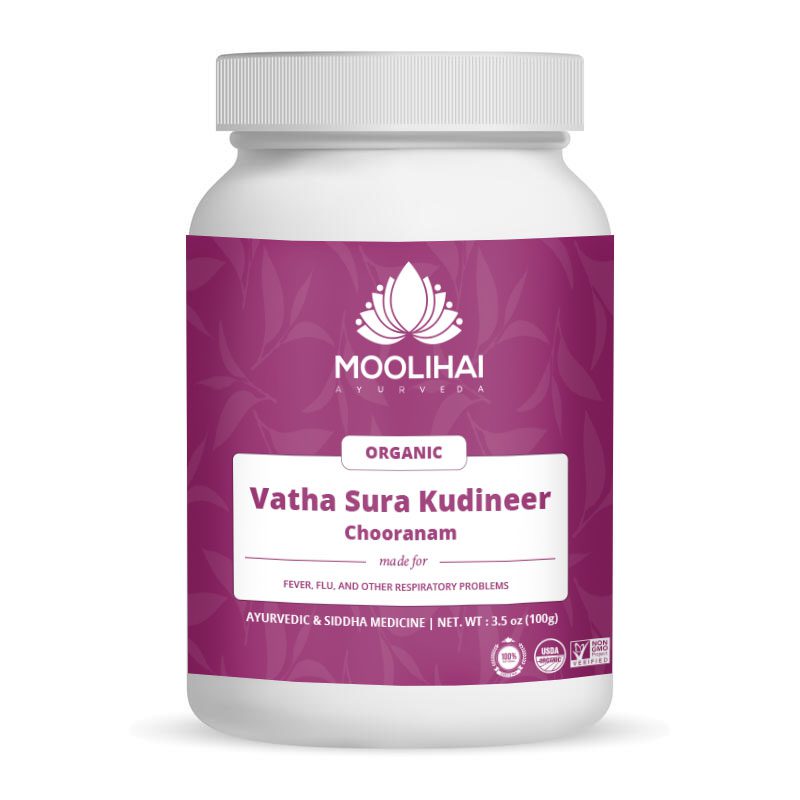
Classical Siddha Formulation · Polyherbal Kudineer (Decoction Powder) · 100% Herbal · 250 g (8.8 oz)
The 1,000-Year-Old Siddha Fever Formula — 21 Herbs That Tamil Nadu Reaches for When Fever Strikes
“Vatha Sura Kudineer” literally translates to “decoction for Vatha fever” — and it is one of the most important classical formulations in the Siddha medical system. Referenced in the Siddha Formulary of India (Part 1) and attributed to the ancient Siddha sage Theraiyar, this polyherbal chooranam (coarse powder) contains approximately 21 synergistic herbs — each selected for its antipyretic, anti-inflammatory, analgesic, or immunomodulatory properties. In Siddha medicine, “Vatha Suram” refers to fevers characterised by body pain, joint stiffness, rigors (shivering), and respiratory distress — symptoms that align with what modern medicine recognises in viral fevers like chikungunya, dengue, influenza, and respiratory infections. During every major fever epidemic in Tamil Nadu — from chikungunya in 2006 to swine flu and the COVID-19 pandemic — Siddha physicians across the state prescribed Vatha Sura Kudineer alongside Kabasura Kudineer as front-line traditional remedies. 5.0★ rated. 250g pack — enough for 50 preparations.
What Is Vatha Sura Kudineer?
A classical Siddha polyherbal decoction formula, referenced in the Siddha Formulary of India and backed by modern pharmacological research.
A Classical Siddha Prescription — Not a Modern Invention
Vatha Sura Kudineer (வாத சுர குடிநீர்) is not a recent creation — it is a classical formulation from the Siddha medical tradition, attributed to the ancient sage Theraiyar and officially referenced in the Siddha Formulary of India, Part 1 — the government-published compendium of authenticated Siddha medicines. “Kudineer” means decoction (a herbal preparation made by boiling herbs in water). “Sura” or “Suram” means fever. “Vatha” refers to the Vatha (Vali) dosha — one of the three fundamental humours in Siddha medicine. When Vatha is deranged, it produces fevers characterised by severe body pain, joint stiffness and swelling, rigors (shaking chills), constipation, insomnia, and skin discolouration. This formulation was specifically designed to address these Vatha-type fever symptoms using a synergistic combination of approximately 21 medicinal herbs.
Modern Science Confirms What Siddha Knew
What makes Vatha Sura Kudineer particularly noteworthy is the depth of modern scientific validation its ingredients have received. Published research in peer-reviewed journals has confirmed that the herbs in this formulation predominantly possess antiviral, antipyretic (fever-reducing), anti-inflammatory, analgesic (pain-relieving), antimicrobial, immunomodulatory, and antioxidant activities. The formulation also contains natural bioenhancers — piperine from long pepper and gingerol from ginger — which may improve the absorption and bioavailability of the other herbal compounds. Toxicity studies of the individual ingredients have confirmed they are safe for human administration at recommended doses. This convergence of traditional Siddha wisdom and modern pharmacological evidence is what gives practitioners confidence in prescribing this formulation during fever epidemics.
The Herbs Inside This Formulation
Approximately 21 herbs in equal proportion — each with documented pharmacological activity. Here are some of the key ingredients and their roles.
Thippili (Long Pepper)
Piper longum — one of the most important herbs in Siddha medicine. The root (Thippili Moolam) is used in this formulation for its potent anti-asthmatic, anti-inflammatory, and bioenhancing properties. Piperine, its active compound, increases the absorption and bioavailability of all other herbs in the formula — effectively making the entire decoction more potent. Traditionally used for chronic bronchitis, asthma, cough, respiratory infections, and digestive disorders.
Chukku (Dry Ginger)
Zingiber officinale — the universal warming herb found in virtually every fever-fighting formulation across Asian medicine systems. Gingerol and shogaol provide antipyretic, anti-inflammatory, and anti-nausea action. In vitro studies have demonstrated antiviral activity against chikungunya virus specifically. Ginger also acts as a natural bioenhancer alongside piperine, improving the overall absorption of the formulation’s active compounds.
Nilavembu (Andrographis)
Andrographis paniculata — called the “King of Bitters” and the single most prescribed herb during fever epidemics in Tamil Nadu. Andrographolide, its primary active compound, has demonstrated potent antipyretic, anti-inflammatory, antiviral, and immunomodulatory activities in clinical studies. It is the lead ingredient in the famous Nilavembu Kudineer — the formulation that Tamil Nadu deployed statewide during the 2006 chikungunya epidemic.
Milagu (Black Pepper)
Piper nigrum — traditionally used for cough, cold, dyspnea, throat diseases, and intermittent fevers. Piperine provides thermogenic (heat-generating) action that helps break fever, along with antimicrobial and anti-inflammatory properties. Like long pepper, black pepper acts as a bioenhancer — increasing the efficacy of other herbs in the formulation.
Kodiveli (Plumbago)
Plumbago zeylanica — a powerful herb used in Siddha for chronic rheumatoid arthritis, skin diseases, nervous system disorders, and stubborn chronic conditions. It provides strong anti-inflammatory and analgesic action, which is critical for the joint pain and body aches that characterise Vatha-type fevers. Also used to correct chronic menstrual disorders and support digestive fire (Agni).
Peramutti (Pavonia)
Pavonia odorata — an indigenous Indian medicinal plant used in Siddha and Ayurveda as a cooling, diaphoretic (sweat-inducing), diuretic, and demulcent herb. It helps reduce fever through promoting perspiration — the body’s natural cooling mechanism. Also prescribed as an astringent and tonic for inflammation and haemorrhage.
Vishnukranthi (Evolvulus)
Evolvulus alsinoides — used in Siddha for nervous debility, memory loss, and mental clarity. Its inclusion addresses the neurological symptoms of Vatha-type fevers — confusion, restlessness, insomnia, and cognitive fog. Also used as a blood purifier, brain tonic, and in the management of chronic bronchitis and asthma.
Satakuppai (Dill)
Anethum sowa — a carminative herb that addresses the digestive symptoms associated with Vatha fever — flatulence, colic, loss of appetite, and abdominal discomfort. Its antispasmodic properties help relieve muscle cramps and intestinal spasms. Also provides antimicrobial and antioxidant support to the overall formulation.
What Siddha Physicians Prescribe It For
Vali Suram (Vatha Fevers)
The primary indication — fevers caused by deranged Vatha dosha, characterised by body pain, joint pain and swelling, rigors (shaking chills), stiffness, constipation, and disturbed sleep. In modern terms, this symptom profile aligns closely with viral fevers where musculoskeletal symptoms predominate — chikungunya, dengue, and influenza-like illness. Siddha physicians consider this the first-line formulation when a patient presents with fever accompanied by significant body and joint pain.
Natukka Suram (Fever with Rigor)
Fevers accompanied by intense shivering or shaking chills — a hallmark of Vatha-type fever. The warming, thermogenic herbs in the formulation (ginger, black pepper, long pepper) specifically address this symptom by generating internal heat, improving circulation, and breaking the rigor cycle. The anti-inflammatory and analgesic herbs simultaneously address the pain and stiffness that accompany the chills.
Viral Fever & Respiratory Infections
During the chikungunya outbreak (2006), swine flu (H1N1), and the COVID-19 pandemic, Siddha physicians across Tamil Nadu prescribed Vatha Sura Kudineer alongside Kabasura Kudineer as traditional preventive and therapeutic support for viral infections with respiratory and musculoskeletal symptoms. Published pharmacological studies have confirmed antiviral activity in multiple ingredients of this formulation. The AYUSH department of the Indian government included Siddha kudineer formulations in its recommended preventive protocols during these epidemics.
Joint Pain & Inflammatory Conditions
Because Vatha Suram’s defining feature is musculoskeletal pain and stiffness, the formulation is heavily weighted toward anti-inflammatory and analgesic herbs. All of the approximately 21 ingredients have demonstrated anti-inflammatory activity in pharmacological studies. This makes the formulation useful not only during active fever episodes but also for managing the lingering joint pain and stiffness that can persist for weeks or months after viral fevers like chikungunya — a condition known as post-chikungunya arthralgia.
Immune Support & Prevention
Beyond active fever treatment, Siddha practitioners prescribe Vatha Sura Kudineer preventively during epidemic seasons — monsoon, post-monsoon, and any period when viral fevers are circulating in the community. The immunomodulatory herbs in the formulation may help strengthen the body’s first-line immune defences. Multiple ingredients show adaptogenic properties, helping the body maintain resilience during periods of increased viral exposure. This preventive use is particularly common in Tamil Nadu during monsoon season.
Digestive & Metabolic Support
In Siddha theory, Vatha-type illness is associated with digestive sluggishness (mandagni) and the accumulation of “aamam” (metabolic toxins) that block the body’s channels. Several herbs in this formulation — ginger, long pepper, black pepper, dill — are powerful digestive stimulants that restore metabolic fire, clear channel blockages, and support the body’s natural detoxification processes. This addresses the loss of appetite, nausea, and constipation that often accompany Vatha-type fevers.
Preparing the Kudineer (Decoction)
Standard Preparation (Per the Siddha Formulary)
Take 5 grams of the chooranam (approximately 1 teaspoon). Add to 300 ml of water in a saucepan. Bring to a boil, then reduce heat and simmer until the water reduces to approximately 30 ml — this is a 10:1 reduction, which is the classical kudineer preparation method. Strain the liquid through a fine cloth or strainer to remove the herbal residue. The resulting decoction will be dark, concentrated, and strongly herbal in taste. Add honey to taste if desired. Take 30 ml of this decoction twice daily — morning and evening, preferably before meals. Follow your physician’s specific instructions if they differ from this standard dosage.
With Honey (Recommended Adjuvant)
The Siddha Formulary specifically recommends honey as the adjuvant (anupaanam) for this preparation. After preparing the decoction as described above, allow it to cool to a drinkable temperature — not hot, as heat destroys honey’s beneficial enzymes — then stir in 1–2 teaspoons of honey. Moolihai’s Marthandam Honey or Ginger Infused Honey are natural pairings. The honey serves multiple purposes: it improves the taste of the bitter decoction, provides its own antimicrobial properties, acts as a natural preservative, and in Siddha theory, honey is considered a yogavahi (carrier) that enhances the absorption and delivery of herbal compounds throughout the body.
Preventive Use During Fever Season
During monsoon season, epidemic outbreaks, or when viral fevers are circulating in your community, Siddha practitioners recommend taking the kudineer once daily as a preventive measure. Use the same 5g-to-300ml preparation, reduced to 30ml, taken once in the morning before food. This lower-frequency preventive dosage provides ongoing immunomodulatory support without the intensity of the twice-daily therapeutic dose. Many Tamil Nadu families prepare kudineer as a household practice during monsoon months — it’s as culturally embedded as drinking kashayam in Kerala or haldi doodh in North India. Combine with Moolihai’s Turmeric Ashwagandha Herbal Tea for a comprehensive daily immune-support routine.
What Our Customers Say
Rated 5.0 ★ from 2 verified reviews.
“Impressive packaging, sturdy and secure”
At a Glance
Net Weight
250 g (8.8 oz)
Form
Chooranam (Coarse Herbal Powder) — for Decoction
Origin
India
Reference
Siddha Formulary of India, Part 1 (Theraiyar Kudineer)
Ingredients
~21 Polyherbal Ingredients · 100% Herbal · No Chemicals
Key Actions
Antipyretic · Anti-Inflammatory · Analgesic · Antiviral · Immunomodulatory
Dosage
5g in 300ml water → reduce to 30ml · Twice daily with honey
Yield
~50 preparations per 250g pack
From Tamil Nadu to Your Doorstep
United States
5–7 business days via DHL/UPS Express
United Kingdom
5–7 business days via DHL/UPS Express
Canada
5–7 business days via DHL/UPS Express
Frequently Asked Questions
These are two different classical Siddha formulations that target different types of fever — and Siddha physicians often prescribe them together during epidemics. Vatha Sura Kudineer (this product) targets Vatha-type fevers — characterised by severe body pain, joint pain, stiffness, rigors (shaking chills), and musculoskeletal symptoms. Think chikungunya-like symptoms where the pain and stiffness are the dominant complaint. Kabasura Kudineer targets Kapha-type fevers — characterised by respiratory congestion, cough, phlegm, cold, and watery symptoms. Think cold/flu-like symptoms where respiratory distress is the dominant complaint. During COVID-19, Siddha physicians often prescribed both together because COVID presented with both respiratory (Kapha) and musculoskeletal (Vatha) symptoms. If your fever is primarily accompanied by body/joint pain → Vatha Sura Kudineer. If primarily accompanied by cough/congestion → Kabasura Kudineer. If both → consult a Siddha physician about combining them. Moolihai also sells Kabasura Kudineer separately.
If you are taking modern medicines prescribed by your doctor, always inform both your allopathic doctor and your Siddha physician. As a general guideline: take your modern medicine first, wait 30 minutes, then take the kudineer decoction — or as directed by your physician. Some herbal compounds can interact with pharmaceutical drugs, and timing separation helps reduce interaction risk. This is particularly important if you’re on blood thinners (some herbs in the formulation have mild anticoagulant properties), blood pressure medications, diabetes medications, or immunosuppressants. During the COVID-19 pandemic, many integrative practitioners successfully combined Siddha kudineer formulations with allopathic treatment under medical supervision — but self-medication without professional guidance is not recommended.
Both uses are traditional and supported by Siddha practice. Therapeutic use (active fever): Take the full dose (30ml of reduced decoction) twice daily until fever and symptoms resolve — typically 3–7 days, or as directed by your physician. Preventive use (during fever season): Take the same preparation once daily in the morning during monsoon season, epidemic outbreaks, or when viral fevers are circulating in your area. Many Tamil Nadu families adopt this as a seasonal household practice during high-risk months (October–January). The immunomodulatory herbs in the formulation may help strengthen your body’s defences during periods of increased viral exposure. Preventive use can be continued for 2–4 weeks at a time during high-risk periods.
Children: The standard adult dose is not appropriate for children. For children aged 5–12, Siddha practitioners typically prescribe a reduced dose — often half the adult quantity. For children under 5, consult a qualified Siddha physician for age-appropriate dosing. The formulation contains potent herbs that require proper dosage adjustment for smaller body weights. Pregnant and breastfeeding women: Several herbs in this formulation (notably Plumbago zeylanica / Kodiveli) may have uterine-stimulating or emmenagogue properties. Do not take this formulation during pregnancy without explicit approval from your obstetrician and Siddha physician. During breastfeeding, consult your healthcare provider before use. This precaution applies to all polyherbal Siddha formulations during pregnancy.
The 10:1 reduction is not arbitrary — it’s a precise pharmaceutical technique that has been refined over centuries of Siddha practice. The extended boiling serves multiple purposes: it extracts the full spectrum of active compounds from the coarse herb powder (many bioactive molecules require sustained heat to release from plant cell walls); it concentrates the therapeutic compounds into a small, potent dose; and the evaporation process removes volatile compounds that may be irritating in larger quantities while retaining the heat-stable therapeutic molecules. Think of it like reducing a stock in French cooking — the flavour (and in this case, the medicinal potency) intensifies dramatically through concentration. The resulting 30ml dose is a highly concentrated herbal extract — far more potent per millilitre than a simple herbal tea. This is a fundamental difference between a kudineer and a casual herbal infusion.
Store the dry chooranam powder in an airtight container in a cool, dry place away from direct sunlight, moisture, and strong odours. The powder retains its potency for 12–18 months when stored properly. Do not store in the refrigerator — the moisture cycling when opening and closing the container in a humid refrigerator environment can cause clumping and degradation. Keep the container tightly sealed after each use. If the powder develops an unusual smell, visible mould, or significant colour change, discard and replace. The prepared decoction (once boiled and reduced) should be consumed immediately — do not store the liquid form, as it lacks preservatives and will degrade rapidly. Prepare fresh decoction for each dose. At 5g per preparation, the 250g pack provides approximately 50 preparations — enough for 25 days of therapeutic (twice daily) use or 50 days of preventive (once daily) use.
Disclaimer: These statements have not been evaluated by the Food and Drug Administration (FDA) or the Indian Medical Association. This product is not intended to diagnose, treat, cure, or prevent any disease, including COVID-19, chikungunya, dengue, or influenza. The information provided is based on classical Siddha medical literature (Siddha Formulary of India, Part 1) and published pharmacological research. This is a traditional Siddha formulation — please consult a qualified Siddha physician or healthcare provider before use, especially if you are pregnant, breastfeeding, taking prescription medications, or have pre-existing medical conditions. Do not self-medicate. Not recommended during pregnancy. If you are experiencing fever or symptoms of viral infection, seek professional medical attention. Siddha medicine is intended as a complementary approach and should not replace emergency medical care. Individual results may vary.
Greyson (verified owner) –
Good
Jeremiah (verified owner) –
Impressive packaging, sturdy and secure