
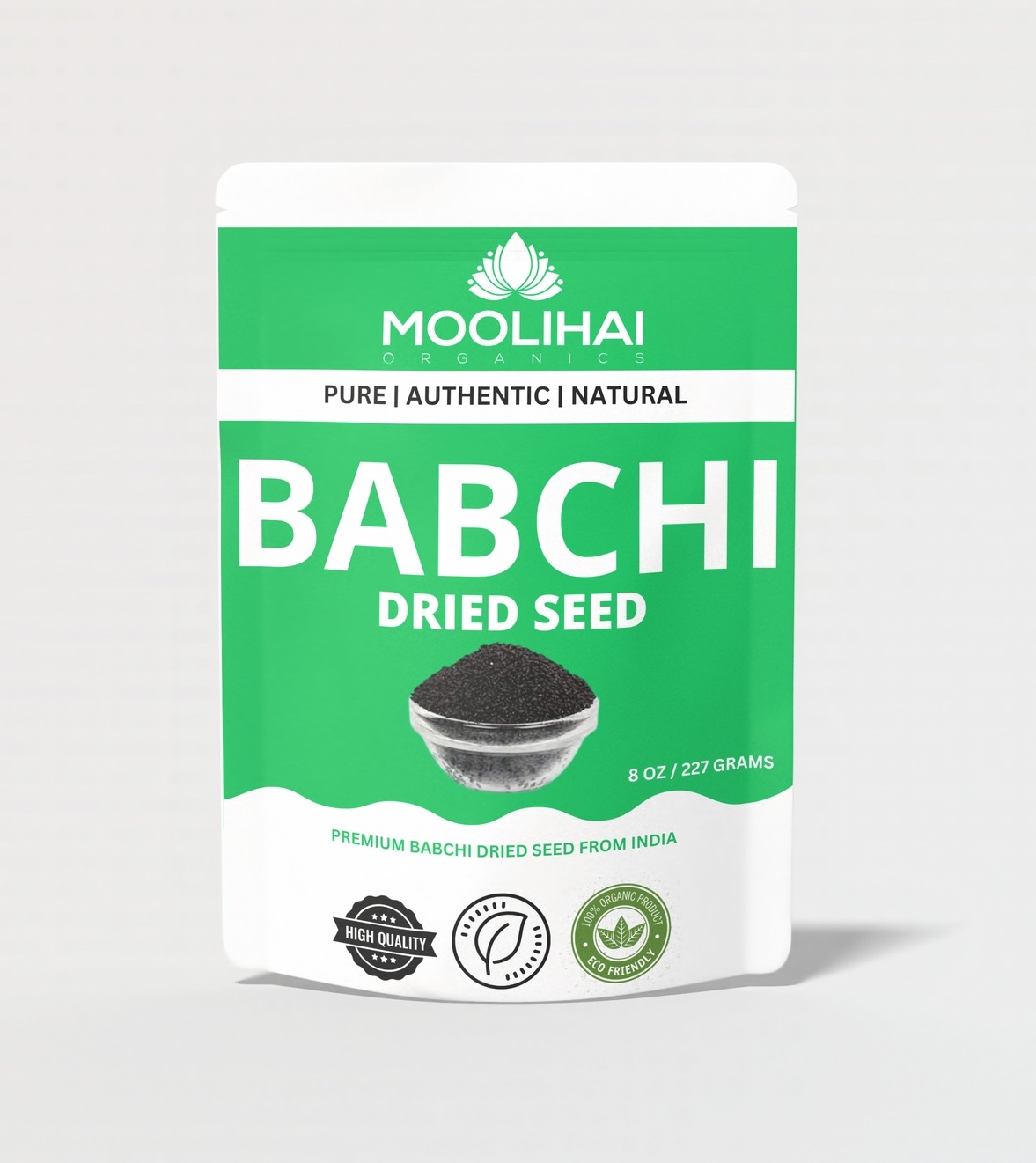
Psoralea corylifolia · Babchi Dried Seeds · கர்போக அரிசி
The Ancient Vitiligo & Skin Pigmentation Herb — Babchi Seeds
100% pure, whole dried Babchi seeds (Karboga Arisi). One of the most powerful herbs in Siddha and Ayurvedic medicine for vitiligo (leucoderma), white patches, and skin re-pigmentation. Contains psoralen — the same compound used in modern medical PUVA phototherapy — and bakuchiol, the plant-based retinol alternative now valued worldwide for anti-ageing skincare. Sourced from India. Available in 100g and 1kg packs.
100% Whole Dried Seeds
FSSAI Certified
Contains Psoralen & Bakuchiol
Ships via DHL / UPS
Why Babchi Seeds Are the #1 Vitiligo Herb
Babchi (Psoralea corylifolia) contains two extraordinary compounds. Psoralen increases the skin’s sensitivity to UV light, stimulating melanocyte activity — the same principle behind medical PUVA phototherapy used by dermatologists. Bakuchiol is now recognised globally as a plant-based retinol alternative for anti-ageing, collagen support, and skin renewal — without the irritation of synthetic retinol.
Vitiligo & Leucoderma (White Patches)
Babchi is the single most important herb in Siddha and Ayurvedic medicine for vitiligo — the condition where skin loses pigmentation in patches. Psoralen in babchi seeds stimulates melanocyte (pigment cell) activity, encouraging re-pigmentation of white patches. This is the traditional method: babchi seed paste or oil is applied to affected areas, followed by controlled, brief sun exposure. Modern dermatology’s PUVA therapy uses the same compound — synthetic psoralen + UVA light. Babchi is the natural, original source.
Skin Re-Pigmentation Support
Beyond vitiligo, babchi seeds are traditionally used for any condition involving loss of skin pigmentation — hypopigmentation, post-inflammatory depigmentation, and uneven skin tone. The psoralen-mediated stimulation of melanin production works on a cellular level. Results require patience and consistency — traditional practitioners recommend 3–6 months of regular application combined with controlled morning sunlight exposure for visible progress.
Bakuchiol — Natural Retinol Alternative
Babchi seeds are the primary natural source of bakuchiol — a meroterpene that has exploded in global skincare as a plant-based retinol. Clinical studies have shown bakuchiol improves fine lines, pigmentation, elasticity, and overall photodamage comparable to retinol, but without the irritation, peeling, or sun sensitivity that retinol causes. This makes babchi seeds a dual-purpose herb: medicinal psoralen for pigmentation disorders, and cosmetic bakuchiol for anti-ageing.
Psoriasis & Skin Conditions
In Siddha medicine, babchi is also used for psoriasis, eczema, and other inflammatory skin conditions. Psoralen has immunomodulatory properties that may help calm the overactive immune response involved in psoriasis. External application as a paste or oil, combined with controlled sunlight, is the traditional approach. This overlaps with modern dermatological use of psoralen for psoriasis (PUVA therapy).
Bone & Joint Health (Traditional Use)
Ayurvedic texts describe babchi as a bone-strengthening herb (asthi dhatu). Bakuchiol has been studied for its potential osteoblastic (bone-building) activity. Traditional practitioners recommend babchi internally for osteoporosis support and bone density — though this application requires qualified practitioner guidance and is not a replacement for medical treatment.
Antimicrobial & Wound Healing
Babchi seed extracts have demonstrated antibacterial, antifungal, and anti-inflammatory activity in studies. The seeds are traditionally used in pastes for wounds, skin infections, and ringworm. The combination of antimicrobial action and skin-regenerating properties makes babchi useful for skin conditions where both infection control and healing are needed.
Ways to Use Babchi Seeds
External Paste (Vitiligo / White Patches)
Soak seeds overnight in water. Grind into a fine paste the next morning. Apply the paste directly to depigmented (white) patches. Leave on for 30–60 minutes. For traditional phototherapy: apply in the evening, then expose the area to gentle early morning sunlight (before 9 AM) for 10–15 minutes the next day. Repeat daily. Consistency over months is key — this is not an overnight remedy. Some practitioners mix the paste with coconut oil or sesame oil for easier application.
Babchi Seed Oil (Infusion)
Crush or coarsely grind seeds and infuse in coconut oil or sesame oil (1:4 ratio — 1 part seeds to 4 parts oil). Heat gently on low flame for 30–40 minutes, strain, and cool. Apply this oil to affected areas. The oil form is easier to apply daily and absorbs better than paste. Store in a dark glass bottle. This is the most common traditional preparation for long-term vitiligo management.
Internal Use (Practitioner-Guided Only)
Some Siddha and Ayurvedic practitioners prescribe babchi seeds internally — typically powdered and taken in small doses (¼ to ½ teaspoon) with ghee, honey, or warm water. Internal use supports the external treatment from within. However, internal use of babchi requires supervision by a qualified practitioner. Psoralen can affect the liver at high doses. Do not self-prescribe internal babchi without professional guidance.
What You’re Getting
100g / 1kg
Available sizes
Whole Dried Seeds
Raw, unprocessed
India
Origin
FSSAI Certified
Quality assured
Psoralen + Bakuchiol
Key active compounds
No Additives
Pure seeds only
Grind or Soak
Preparation required
From $11.99
100g pack
Ships Worldwide
USA
5–7 Days
FREE OVER $99
UK
5–7 Days
FREE OVER $99
Canada
5–7 Days
FREE OVER $99
Ships worldwide via DHL/UPS. Shipping info →
Common Questions
Babchi (Psoralea corylifolia) is one of the oldest documented treatments for vitiligo in both Ayurvedic and Siddha systems. Its active compound, psoralen, stimulates melanocyte activity — the same mechanism used in modern medical PUVA phototherapy. Clinical studies have shown that psoralen combined with controlled UV exposure can promote re-pigmentation. However, results vary significantly between individuals, depend on the type and extent of vitiligo, and require months of consistent application. Babchi is not a guaranteed cure — it’s a traditional treatment with a scientific basis. Consult a dermatologist alongside herbal treatment for best results.
Re-pigmentation is a slow process. Traditional Siddha practitioners advise a minimum of 3–6 months of consistent, daily application before evaluating results. Some patients see early signs (pinkish tone in white patches, tiny brown dots appearing) within 6–8 weeks. Full or partial re-pigmentation may take 6–12 months or longer, depending on the size, location, and age of the patches. Facial patches tend to respond faster than patches on hands and feet. Consistency and patience are essential — skipping days significantly reduces effectiveness.
Babchi is a potent herb and must be used carefully. External side effects: Photosensitivity is the primary concern — psoralen makes treated skin extremely sensitive to sunlight. Overexposure causes sunburn, blistering, or hyperpigmentation (darkening beyond normal). Always control sun exposure carefully. Internal side effects: Psoralen can be hepatotoxic (liver-damaging) at high doses. Internal use should only be under qualified practitioner supervision. Not recommended for: Pregnant or nursing women, children under 12, people with liver disease, or those on photosensitising medications. Always patch test before full application.
This product is whole, dried babchi seeds — the raw herb. You can grind them into paste, infuse them into oil at home, or powder them for various preparations. Pre-made babchi oil is the seeds already extracted/infused into a carrier oil, ready for direct application. Seeds give you more flexibility — you can make fresh paste (stronger, short-term use), prepare your own oil (control the concentration), or powder them for internal use under practitioner guidance. Seeds also store longer than prepared oil.
Bakuchiol is a meroterpene compound found naturally in babchi seeds. In recent years, it has gained massive popularity in global skincare as a plant-based alternative to retinol. Clinical studies have shown it produces comparable anti-ageing results — reducing fine lines, improving skin elasticity, and evening out pigmentation — without the irritation, peeling, and extreme sun sensitivity that retinol causes. This means babchi seeds have two distinct value propositions: psoralen for medical skin conditions (vitiligo, psoriasis) and bakuchiol for cosmetic anti-ageing. The same seed, two different worlds of benefit.
Store in an airtight container in a cool, dry place away from direct sunlight and moisture. Whole dried seeds store well for 12–18 months. Once ground into powder, use within 3–4 months for maximum potency — freshly ground is always more effective. If you prepare babchi oil at home, store in a dark glass bottle and use within 3–6 months. The 1kg pack is ideal if you’re on a long-term treatment protocol, as vitiligo management requires months of consistent use.
*Disclaimer: This product is a traditional herbal ingredient and has not been evaluated by the FDA or Indian Medical Association. It is not intended to diagnose, treat, cure, or prevent any disease, including vitiligo or psoriasis. Babchi seeds contain psoralen, a potent photosensitising compound — improper use can cause skin burns, blistering, or hyperpigmentation. Always patch test before use. Do not expose treated skin to prolonged sunlight without guidance. Internal use should only be undertaken under the supervision of a qualified Ayurvedic or Siddha practitioner. Not recommended for pregnant or nursing women, children under 12, or those with liver conditions. Consult a dermatologist or healthcare provider before use. Individual results vary significantly.

Reviews
There are no reviews yet.