
Handcrafted Wooden Toy · 12 Colourful Stacking Rings · Joker Topper · ASTM Certified
The Classic Toy That Never Needs Batteries — 12 Vibrant Rings, One Smiling Clown, Endless Learning
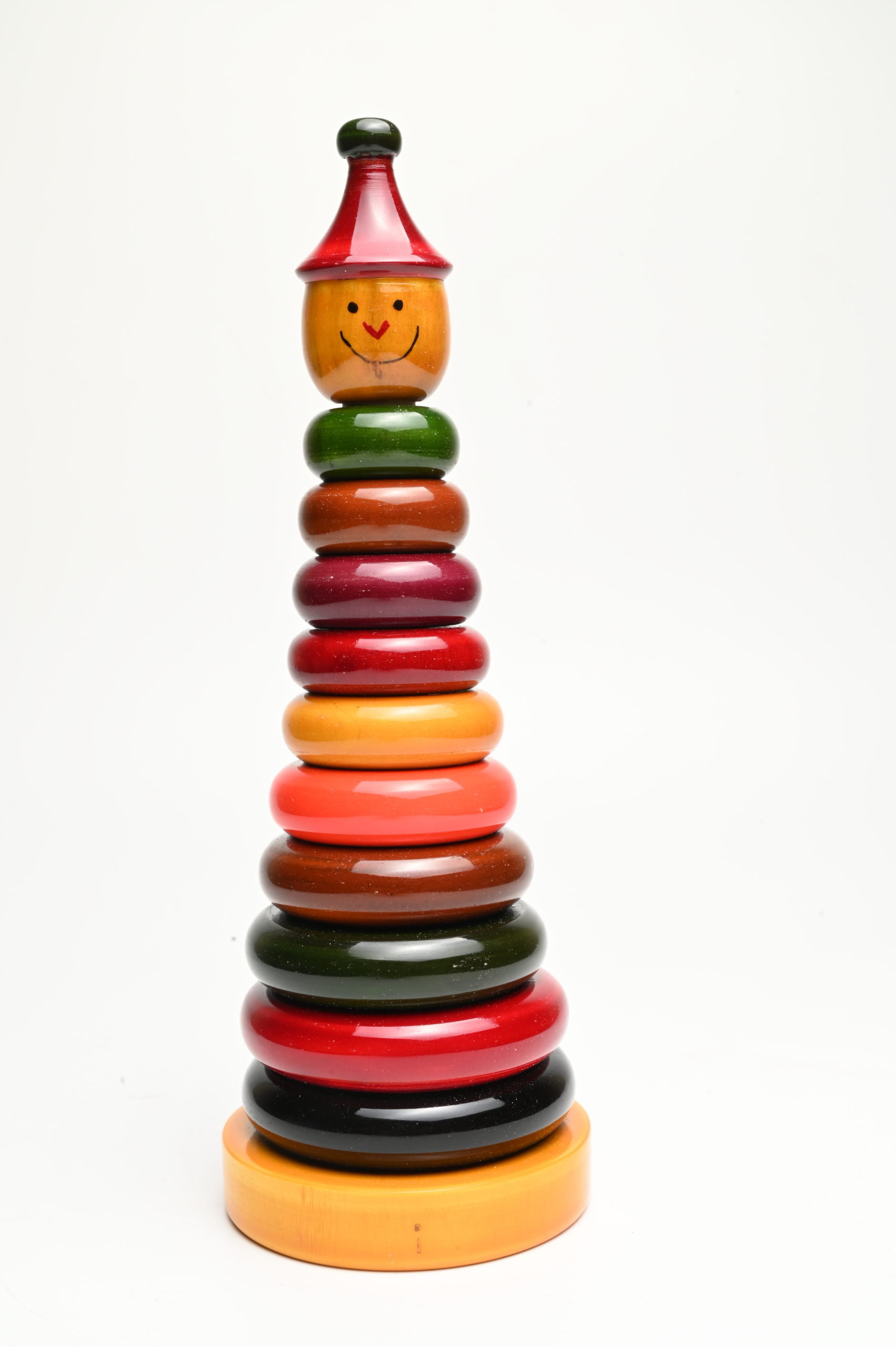
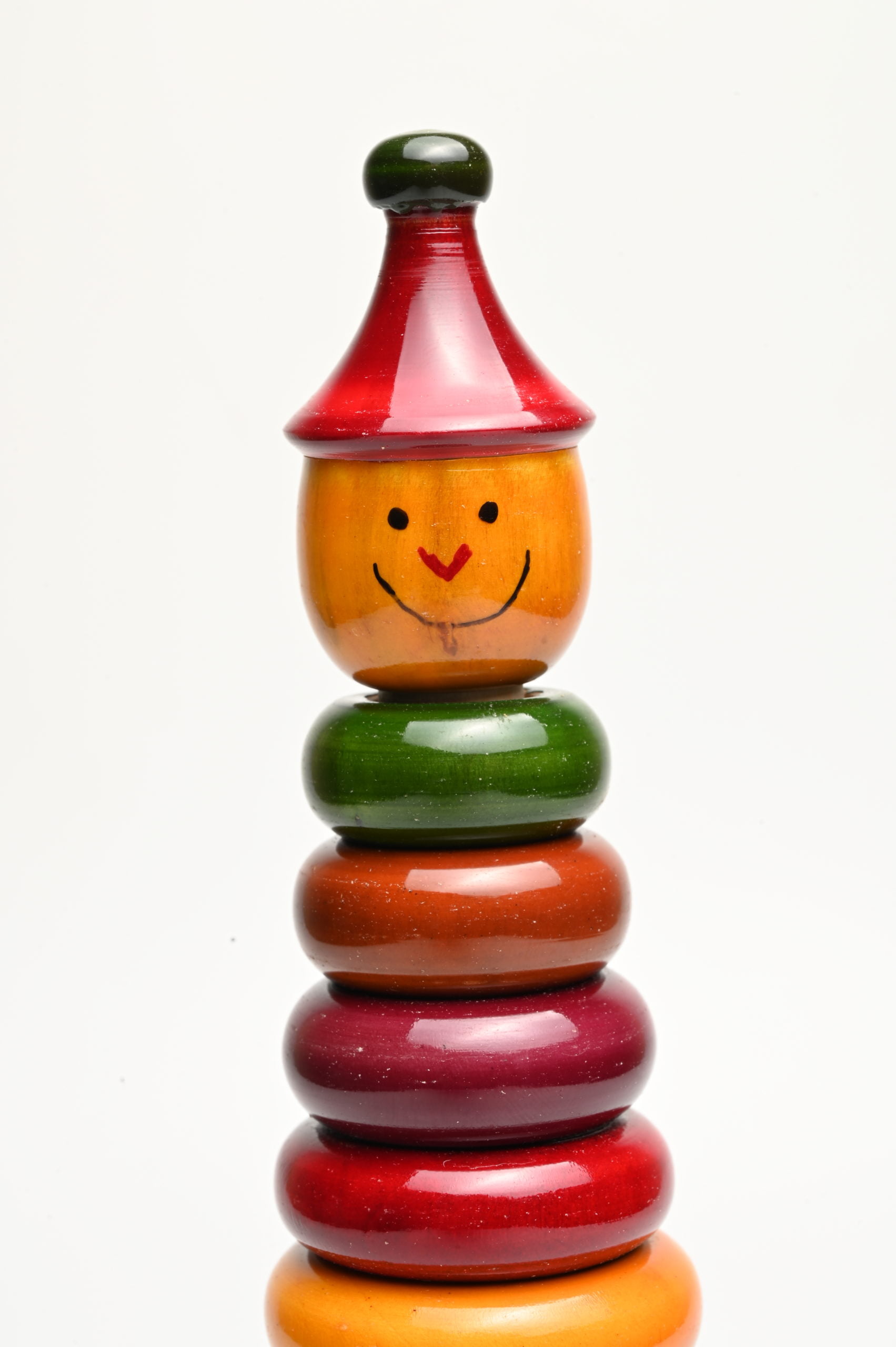
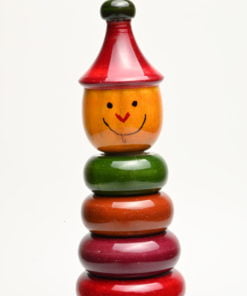
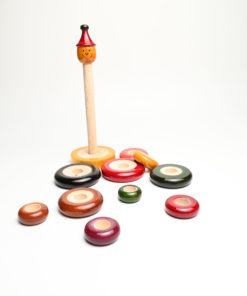
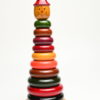
Before screens, before batteries, before plastic — there was this. A solid wooden base, a central peg, and a stack of beautifully lacquered rings in graduated sizes that teach a child about size, colour, sequence, and coordination through the simplest, most satisfying form of play. This handcrafted Indian wooden pyramid comes with 12 brightly coloured rings — deep green, rich maroon, warm brown, vibrant red, orange, yellow, and black — topped with a hand-painted smiling clown head wearing a pointed red hat. Every ring is smooth, chunky enough for small hands to grip, and coated in non-toxic, lead-free, eco-friendly paint that’s safe even if your toddler puts them in their mouth. ASTM international toy safety certified. This is the kind of toy that gets handed down from sibling to sibling, generation to generation.
ASTM Toy Safety Certified
Non-Toxic · Lead-Free Paint
Handcrafted in India
Ships via DHL / UPS / FedEx
Why This Classic Never Goes Out of Style
A toy that has been engaging children for generations — now handcrafted in India with modern safety standards and traditional craftsmanship.
Handcrafted from Solid Indian Wood
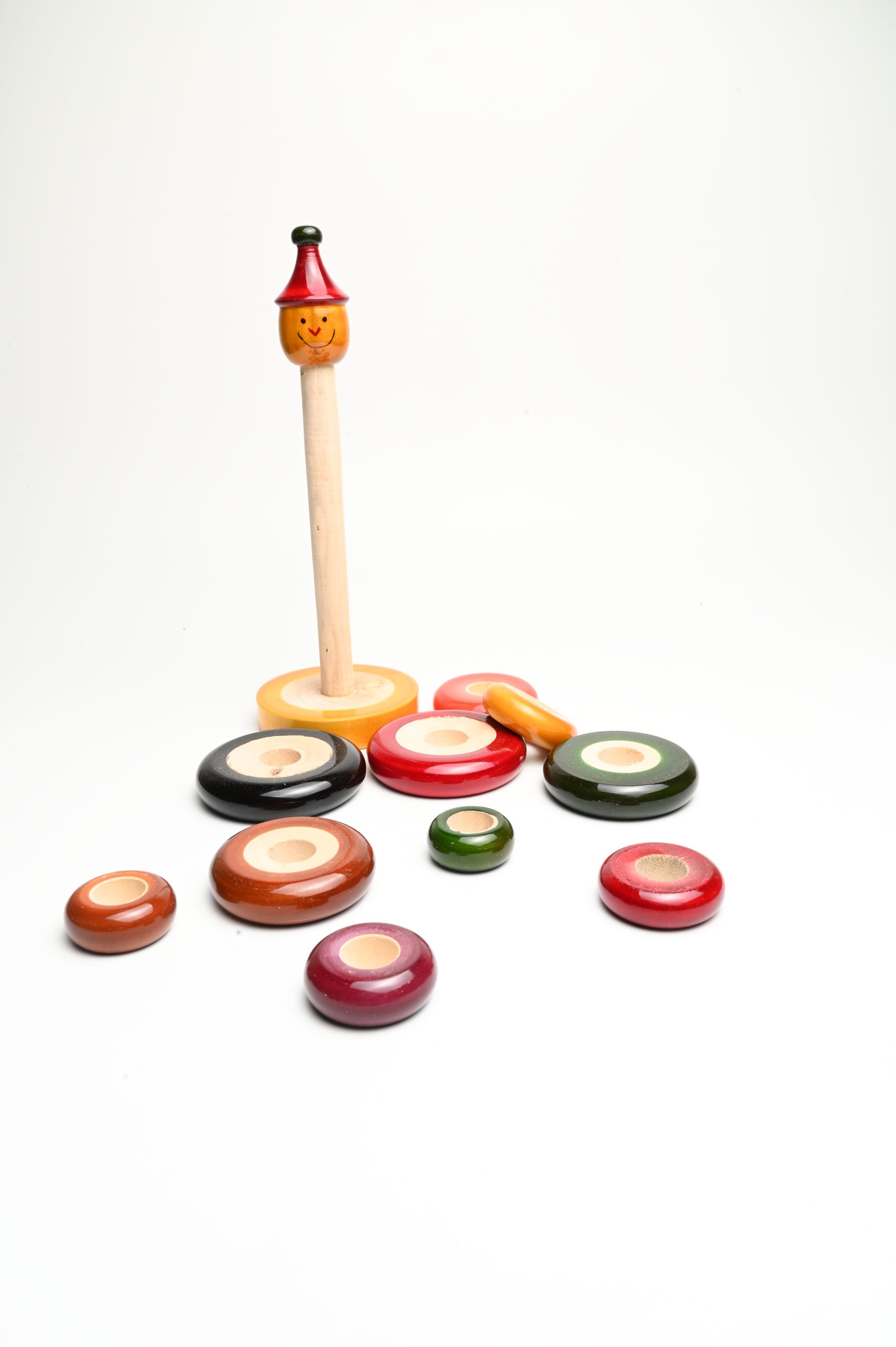
Each pyramid set is made from superior-quality solid wood, hand-turned and hand-finished by Indian craftsmen. The base is a sturdy, flat-bottomed disc that won’t tip over during play, with a smooth central peg onto which the 12 graduated rings stack. The rings are individually turned, sanded smooth (no rough edges, splinters, or sharp corners), and coated in vibrant lacquer paint in a gorgeous palette: deep forest green, rich chocolate brown, warm maroon, bright cherry red, vivid orange, sunny yellow, and glossy black. The crowning piece is a hand-painted smiling clown head with a pointed red hat — a charming, whimsical touch that transforms a learning tool into a character toy children form an attachment to. The weight and heft of real wood gives the toy a satisfying, substantial feel that plastic simply cannot replicate.
Safety First — Certified & Tested
Every parent’s first question about a colourful wooden toy is: “Is the paint safe?” The answer is an emphatic yes. The coloured coatings used on this toy are non-toxic, lead-free, and eco-friendly — tested and certified to ASTM International toy safety standards. This means the paint has been independently verified to be safe even for the inevitable moment when your toddler puts a ring in their mouth. The wood itself is natural and untreated with any harmful chemicals. The rings are deliberately chunky and oversized — too large to be a choking hazard for toddlers, and easy for small hands to grip and manipulate. There are no small detachable parts, no batteries, no electronic components, and no sharp edges. It’s about as safe as a toy can be.
What Your Child Learns While Playing
Size & Sequencing
The 12 rings graduate from largest (at the base) to smallest (at the top). Stacking them in the correct order requires the child to visually compare sizes, understand the concept of “bigger” and “smaller,” and sequence objects from largest to smallest. This is an early mathematical skill — seriation — that forms the foundation for later understanding of number lines, measurement, and ordered data. Children learn this intuitively through trial and error: if a large ring is placed above a small one, the pyramid looks wrong and may topple. The natural consequence teaches self-correction without adult intervention.
Colour Recognition
With 12 rings in distinct colours — green, brown, maroon, red, orange, yellow, and black — the toy provides a rich colour vocabulary for toddlers. Parents can name colours as children pick up each ring, turning play into a natural colour-learning conversation. As children progress, you can ask them to find specific colours, sort rings by colour families (warm vs cool), or create patterns. The vibrant, glossy lacquer finish makes each colour vivid and easy to distinguish — much more engaging than colour flashcards. Children as young as 12–18 months begin associating colour names with the physical rings they hold.
Fine Motor Skills & Hand-Eye Coordination
The simple act of picking up a ring, aligning the hole with the peg, and sliding it down requires precise hand-eye coordination and fine motor control. For toddlers, this is genuinely challenging — it demands visual focus, spatial awareness, grip strength, and controlled arm movement all working together. Repetitive stacking builds muscle memory and dexterity that transfers to later skills like writing, buttoning clothes, using utensils, and manipulating tools. The chunky ring size is deliberately designed for developing hands — large enough to grip easily but small enough to require deliberate placement.
Spatial Reasoning & Problem Solving
How does a ring fit onto a peg? What happens if the large ring goes on top? Why does the pyramid look different when rings are in the wrong order? These are spatial reasoning questions that toddlers solve physically before they can articulate them verbally. The toy teaches cause-and-effect relationships, three-dimensional thinking, and the concept of stable vs unstable structures. Children who regularly play with stacking and building toys develop stronger spatial reasoning skills — a cognitive ability strongly linked to success in mathematics, science, and engineering later in life.
Early Counting & Numbers
Twelve rings provide a natural counting opportunity from 1 to 12. Count each ring as it goes on the peg. Count them as you take them off. Count how many are left. “You’ve stacked 7 rings — how many more to go?” This effortless, play-based introduction to numbers is exactly what early childhood educators recommend. The physical act of placing one ring at a time reinforces one-to-one correspondence — the foundational concept that each number represents one object. By the time a child reaches preschool, they’ve already internalised basic counting through hundreds of repetitions with this toy.
Focus, Patience & Persistence
Completing a 12-ring stack requires sustained attention — something increasingly rare in a world of instant-gratification screen entertainment. The toy naturally builds attention span because the reward (a complete, beautiful pyramid with the smiling clown on top) requires the patience to place all 12 rings. When a ring goes on crooked or the stack topples, the child learns persistence — try again, adjust, complete the task. This cycle of attempt, failure, adjustment, and success builds resilience and frustration tolerance that extends far beyond toy play. Montessori and Waldorf educators prize exactly this type of open-ended, self-correcting activity.
Imaginative & Social Play
Beyond the intended stacking use, children inevitably invent their own games with the rings — rolling them across the floor, wearing them as bracelets, building towers alongside other toys, using the clown head as a character in pretend play, or sorting rings into groups for imaginary cooking and shopping games. The simplicity of the design invites open-ended creativity rather than dictating a single way to play. When siblings or friends play together, the toy naturally creates sharing, turn-taking, and cooperative building opportunities — essential social skills for toddlers and preschoolers.
Screen-Free & Sustainable
No batteries. No charging. No screen. No ads. No updates. No subscription. Just a child, a stack of rings, and their own imagination. In an age where the average toddler is exposed to 2–3 hours of screen time daily, a wooden stacking toy offers something screens cannot: tactile feedback, three-dimensional manipulation, weight and texture awareness, and a genuine sense of physical accomplishment. The toy is also fully sustainable — natural wood, eco-friendly paint, biodegradable at end of life, and built to survive years of play (and be passed on to the next child). It’s the anti-plastic, anti-disposable toy that early childhood experts universally recommend.
At a Glance
Material
Solid Natural Wood — Hand-Turned
Includes
12 Coloured Rings + Joker/Clown Topper + Wood Base
Colours
Green, Brown, Maroon, Red, Orange, Yellow, Black
Weight
200 g (0.44 lbs)
Safety
ASTM Certified · Non-Toxic · Lead-Free Paint
Origin
India — Handcrafted
Age Range
12 Months and Up
Sustainability
Eco-Friendly · No Plastic · Biodegradable
From India to Your Doorstep
United States
5–7 business days via DHL/UPS Express
United Kingdom
5–7 business days via DHL/UPS Express
Canada
5–7 business days via DHL/UPS Express
Frequently Asked Questions
Yes — this is the most important question for parents and we want to answer it thoroughly. The coloured coatings on every ring and the clown topper are non-toxic, lead-free, and eco-friendly. The materials have been tested and certified to ASTM International toy safety standards — the same standard used by major toy brands worldwide. ASTM testing covers not just lead content but also other heavy metals, phthalates, and harmful chemical compounds. The paint is specifically formulated for children’s toys and is safe for oral contact. That said, the toy is not designed as a teething item — if your child is in a heavy mouthing phase, supervise play as you would with any toy. The rings are large and chunky, so they cannot be swallowed or lodged in a child’s throat.
The toy is designed for children aged approximately 12 months and up, but engagement evolves as the child grows. 12–18 months: Babies will grip, hold, mouth, and bang the rings — exploring texture, weight, and sound. They may not stack them correctly but will begin to understand the concept of “putting on” and “taking off.” 18–24 months: Toddlers begin stacking rings, though not necessarily in size order. They’ll enjoy the repetition of building and toppling the tower. 2–3 years: Children begin understanding size order and can stack the rings correctly from largest to smallest. Colour naming becomes a natural part of play. 3–5 years: Children use the toy for counting, colour sorting, pattern-making, and imaginative play. The toy remains engaging across this entire developmental range — which is unusual for children’s toys and makes it excellent value.
The difference is in quality, sensory experience, durability, and safety. Material: Solid wood has weight, warmth, and texture that plastic cannot replicate — children can feel the difference, and the sensory richness of natural materials is important for tactile development. Plastic stacking toys feel hollow, light, and cheap by comparison. Durability: This wooden pyramid will survive years of throwing, dropping, and rough play. Plastic toys crack, break, and fade. Safety: No BPA, no phthalates, no microplastic shedding. Non-toxic certified paint vs potentially unknown plastic compounds. Aesthetics: The hand-turned wood, vibrant lacquer colours, and hand-painted clown head are genuinely beautiful — this is a toy you won’t mind having visible in your living room, and it makes a stunning baby shower or birthday gift. Sustainability: Wood is biodegradable; plastic sits in landfills for centuries. 12 rings vs the typical 5–8 in plastic sets gives more developmental range.
The lacquer finish used on these rings is durable and resistant to normal wear. Under typical play conditions — stacking, dropping, handling — the colours will remain vibrant for years. However, prolonged exposure to direct sunlight (for example, leaving the toy on a windowsill for weeks) may cause gradual fading over time, as with any natural paint product. Frequent immersion in water is also not recommended — while occasional cleaning with a damp cloth is fine, soaking the toy can cause the wood to swell and the finish to deteriorate. Store indoors, away from direct sunlight and moisture, and the toy will maintain its colour and finish for the duration of its useful life — which, given the durability of solid wood, is many years.
It’s an excellent gift — and one that stands out from the typical pile of plastic toys and stuffed animals. The handcrafted Indian wood, vibrant colours, and smiling clown topper make it visually striking and memorable. It’s practical (the child will actually use it for years), educational (builds half a dozen developmental skills), safe (ASTM certified, non-toxic), and culturally meaningful (handcrafted by Indian artisans using traditional woodworking techniques). It also pairs beautifully with other Moolihai children’s products — the Marapachi Bommai dolls, the Mara Choppu Saman (wooden kitchen set), or a set of Moolihai’s organic baby-care products like the Araignaan Kayiru. It’s the kind of gift that says “I chose this thoughtfully” rather than “I grabbed this off a shelf.”
Wipe each ring and the base with a slightly damp cloth — that’s all that’s needed for regular cleaning. If a ring gets particularly dirty (food, mud, etc.), use a cloth dampened with mild soapy water, wipe clean, and immediately dry with a towel. Do not submerge the toy in water, put it in the dishwasher, or use harsh chemical cleaners — wood absorbs moisture, which can cause swelling, warping, or paint deterioration. Do not use alcohol-based wipes or sanitising sprays directly on the painted surfaces. For disinfecting during illness, a cloth dampened with a very mild vinegar-water solution (1 part white vinegar to 10 parts water) is safe for wood. Allow the toy to air-dry completely after any cleaning. With this minimal care, the pyramid will stay vibrant and smooth for years of play.
Safety Notice: This toy is designed for children aged 12 months and above. Adult supervision is recommended during play, particularly for children under 3 years. While the rings are designed to be too large for choking, always supervise young children during play with any toy. Paint and materials are non-toxic, lead-free, and ASTM International certified. This is a handcrafted product — minor variations in colour, grain, and finish between individual pieces are normal and reflect the handmade nature of the item. Not suitable for children who may be allergic to wood or natural lacquer. Inspect the toy periodically for wear and discontinue use if any part becomes damaged or develops rough edges.


Reviews
There are no reviews yet.