
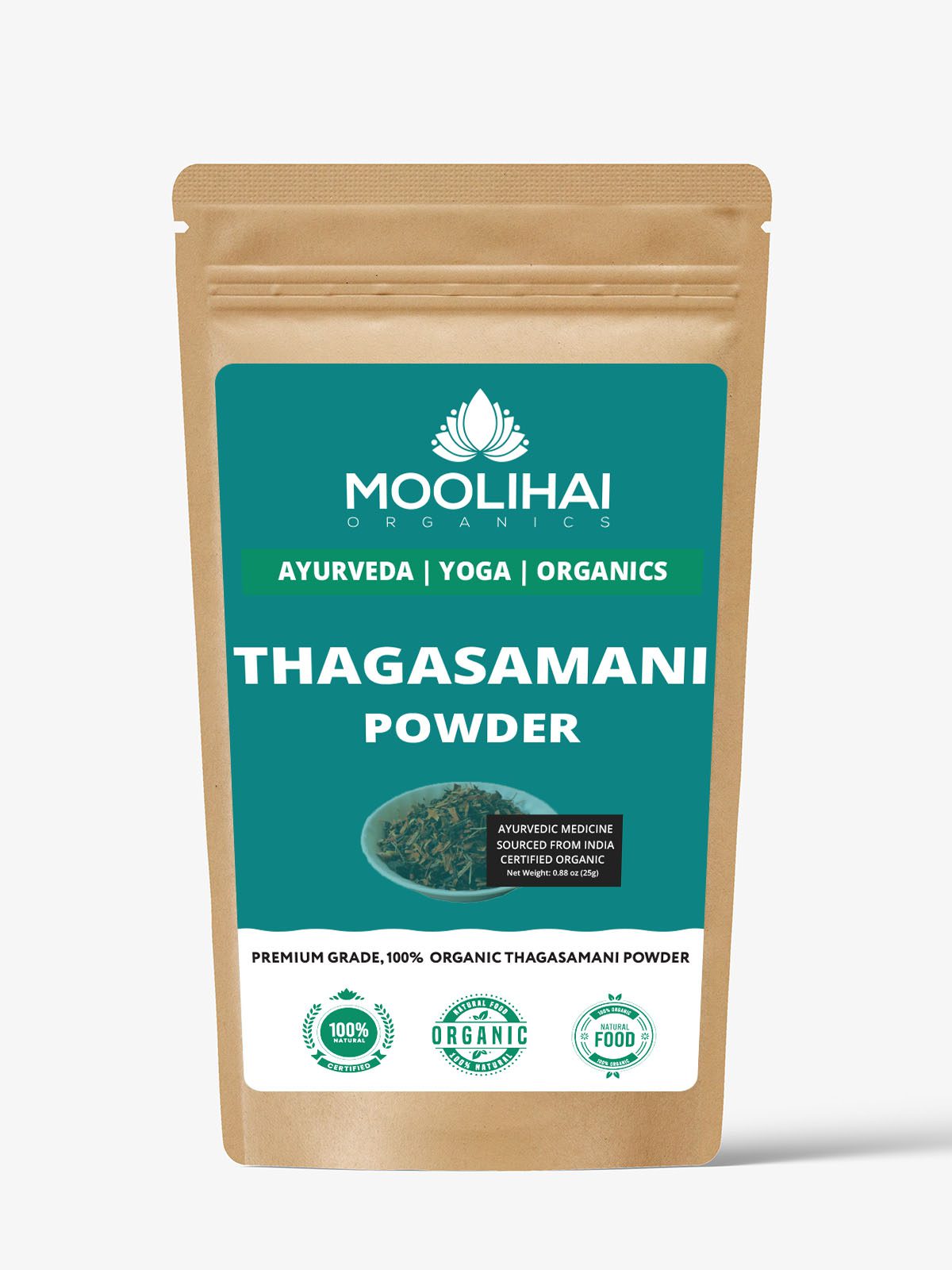
Karingali · Nannari · Ramacham · Traditional Siddha Cooling Blend · 100g (3.5 oz)
Thagasamani — The Siddha Cooling Drink Powder That Turns Your Water into Medicine
In the hottest months across Tamil Nadu, when the sun pushes body temperature past comfort and the blood feels like it’s running warm, Siddha households reach for Thagasamani (தகசமணி). A spoonful of this powder stirred into boiled water transforms plain drinking water into a cooling, blood-purifying, gut-calming herbal drink that has been part of South Indian wellness routines for generations. The powder is a blend of three specific herbs — Karingali (heartwood of Acacia catechu), Nannari root (Hemidesmus indicus, Indian sarsaparilla), and Ramacham (Vetiveria zizanioides, vetiver root) — each selected for its cooling, cleansing, and digestive properties. This is not a tea or a juice. It’s a Siddha formulation designed to be consumed as daily drinking water — slowly, throughout the day — so that the body stays cool, the blood stays clean, and the digestive and urinary systems function without strain.
Traditional Siddha Formula
3-Herb Cooling Blend
100% Natural · No Additives
Ships via DHL / UPS
What’s Inside Thagasamani Powder
Karingali — Acacia Catechu (Heartwood)
Karingali is the dark, dense heartwood of the Acacia catechu tree — the same tree whose extract (katha/catechu) is used in paan across India. The heartwood is rich in catechins and tannins, both of which are powerful astringents and antioxidants. In Siddha medicine, Karingali is classified as a natural coolant — it reduces Pitta (body heat) and is prescribed for conditions associated with excess internal heat: burning sensation during urination, acid reflux, skin heat rashes, and fevers. When boiled in water, the catechins leach into the liquid, creating a mildly astringent, cooling drink that calms the digestive tract and supports kidney and liver function.
Nannari Root — Hemidesmus Indicus (Indian Sarsaparilla)
Nannari is one of the most beloved cooling herbs in South India — Nannari sherbet is a staple summer drink sold by street vendors across Tamil Nadu, Kerala, and Karnataka. The root of Hemidesmus indicus is a blood purifier in both Siddha and Ayurveda — it helps the body clear metabolic waste, toxins, and excess heat from the bloodstream. The effect is gradual and cumulative: daily Nannari consumption over weeks results in clearer skin, reduced body odour, less internal heat, and improved urinary function. In Thagasamani, the Nannari root provides the blood-purifying backbone of the formula and adds a mild, pleasant sweetness to the water that makes it enjoyable to drink throughout the day.
Ramacham — Vetiveria Zizanioides (Vetiver Root)
Vetiver root is one of the most cooling substances in Indian traditional medicine — it’s the same root woven into curtains and mats that are dampened to cool rooms during summer. When consumed in water, vetiver calms the digestive system, supports healthy urinary function, and has a grounding, calming effect on the nervous system. In Siddha classification, vetiver is “Sheeta Virya” (cooling potency) — it pacifies Pitta dosha and reduces inflammatory heat throughout the body. The root also contributes a distinctive earthy, clean aroma to the water that South Indians associate with summer, relief, and home. Moolihai also sells Vetiver Essential Oil and Vetiver Powder separately for aromatic and topical use — but in Thagasamani, the vetiver is consumed internally as part of the cooling drink.
What Daily Thagasamani Water Does for Your Body
Body Cooling
Reduces internal heat, calms Pitta dosha
Blood Purification
Nannari clears toxins and metabolic waste
Digestive Wellness
Calms acid reflux, bloating, constipation
Urinary Tract Health
Supports kidney function, reduces burning
Clearer Skin
Blood purification reflects on the skin
Antioxidant
Catechins from Karingali protect cells
Calming
Vetiver’s grounding effect on the nervous system
Summer Essential
Hot climate daily hydration companion
From Powder to Daily Drinking Water
Boil and Stir
Bring 2 litres of water to a full boil. Add 1 teaspoon of Thagasamani Powder. Stir well. Let it simmer for 2–3 minutes, then turn off the heat. The water will take on a light colour and a subtle earthy-sweet aroma from the Nannari and Vetiver. Cover and let it cool to room temperature or refrigerate.
Strain (Optional) and Store
If fine particles bother you, strain through a fine cloth or sieve. Most people drink it with the particles settled at the bottom and simply stop before the last sip. Transfer to a jug or water bottle. Store in the fridge during summer for a chilled cooling drink, or at room temperature if you prefer.
Drink Throughout the Day
This is not a single-dose medicine you take and forget. The intention is to replace your regular drinking water with this herbal water for the duration of the day. Sip it the same way you’d drink water — with meals, between meals, whenever you’re thirsty. The herbs work gently and cumulatively. One teaspoon in 2 litres is mild enough to drink all day without any strong medicinal taste. Prepare a fresh batch daily, especially during summer. In South Indian households, Thagasamani water is made fresh every morning during the hot months (March–June) and served to the entire family.
What You’re Getting
100g (3.5 oz)
Single pack
3-Herb Blend
Karingali + Nannari + Ramacham
India
Traditional Siddha formulation
No Additives
No sugar, preservatives, or colours
Diluted Use
1 tsp per 2 litres of water
~100 Days Supply
At 1 teaspoon daily
Family Use
One batch serves the whole household
Category
Health Care / Siddha Formulation
Ships Worldwide
USA
5–7 Days
FREE OVER $99
UK
5–7 Days
FREE OVER $99
Canada
5–7 Days
FREE OVER $99
Ships worldwide via DHL/UPS. Shipping info →
Common Questions
At 1 teaspoon per 2 litres, the flavour is very mild. The dominant note is a subtle earthiness from the vetiver, with a faint natural sweetness from the Nannari root. There is no bitterness, no sharpness, and no medicinal harshness. The water tastes like slightly flavoured herbal water — clean, refreshing, and easy to drink all day. If you’ve had Nannari sherbet from a street vendor in Tamil Nadu, the aroma will be faintly familiar, though far more diluted. Children, elderly family members, and people who dislike strong herbal flavours all drink Thagasamani water without complaint. That’s the point — it’s meant to replace water, not sit next to it as a separate medicine.
Traditionally, Thagasamani water is most commonly prepared during the hot summer months (March–June in India) when excess body heat, dehydration, urinary burning, and heat rashes are at their peak. During cooler months, the body doesn’t generate as much internal heat, so the cooling benefit is less needed. That said, the blood-purifying and digestive benefits apply year-round. Some Siddha practitioners recommend daily use throughout the year for people with chronic Pitta imbalance (those who run hot, have frequent acid reflux, or tend toward inflammatory conditions). For temperate/cold climates (UK, Canada, northern US), body cooling may be unnecessary during winter — use your judgment based on your body’s heat levels.
Related but different. Nannari sherbet (nannari sarbath) is a sweet summer drink made from Nannari root syrup — heavy on sugar, served cold, bought as a refreshment. Thagasamani is a three-herb medicinal blend (Karingali + Nannari + Vetiver) designed for daily consumption as drinking water, with no added sugar. The Nannari component overlaps, but Thagasamani adds Karingali (for its catechin-rich astringent and cooling action) and Ramacham/Vetiver (for digestive and urinary support). Think of Nannari sherbet as the flavoured drink and Thagasamani as the daily medicine water — same family, different purpose and composition.
Yes — at the standard dilution (1 teaspoon per 2 litres), Thagasamani water is mild enough for the entire household. In South Indian families, the morning batch is prepared in a large pot and everyone — adults, teenagers, children, and elderly members — drinks from the same supply throughout the day. For children under 5, the dilution is already very gentle, but if you’re introducing it for the first time, start with a smaller amount mixed with their regular water and observe. All three herbs (Karingali, Nannari, Vetiver) have long histories of safe use across all age groups in traditional South Indian households.
At the highly diluted concentration used for daily drinking water (1 teaspoon in 2 litres, consumed over a full day), the individual herb doses are very small. Nannari root and Vetiver are both commonly consumed by pregnant women in South India as part of traditional cooling drinks during summer, at similar dilutions. Karingali (Acacia catechu) is astringent and generally considered safe at low doses. That said, pregnancy always warrants extra caution with any herbal preparation — consult your OB-GYN or a Siddha practitioner before making Thagasamani your daily water during pregnancy. If you’re already accustomed to it pre-pregnancy, the risk at this dilution is considered low in traditional practice.
At 1 teaspoon (~1g) per day, 100g lasts approximately 100 days — over 3 months of daily use. If you’re preparing it for a family (same 1 teaspoon per 2 litres, shared among household members), the consumption rate is the same because you’re not increasing the dose, just sharing the same batch. This makes Thagasamani one of the most cost-effective daily health routines in the entire catalog — a single 100g pack covers an entire summer season for one household.
*Thagasamani is a traditional Siddha herbal blend for daily consumption as cooling drinking water. The herbs (Acacia catechu, Hemidesmus indicus, Vetiveria zizanioides) have been used in South Indian households for generations. Not intended to diagnose, treat, cure, or prevent any disease. The cooling, blood-purifying, digestive, and urinary benefits described are based on traditional Siddha and Ayurvedic knowledge. Consult your healthcare provider before use if you are pregnant, breastfeeding, or on medication. People with known allergies to any of the three ingredients should avoid this product. Store in a cool, dry place. Individual results vary.
Reviews
There are no reviews yet.