


Other Common Names:
Scientific Name: Terminalia Chebula
English Name: Ink Nut, Chebulie
Tamil Name: Kadukkai Pinju / கடுக்காய் பிஞ்சு
Malayalam Name: Katukkai / കാട്ടുകൈ
Telugu Name: Karakkaya / కరక్కాయ
Hindi Name: Harad / हरड़
Description:
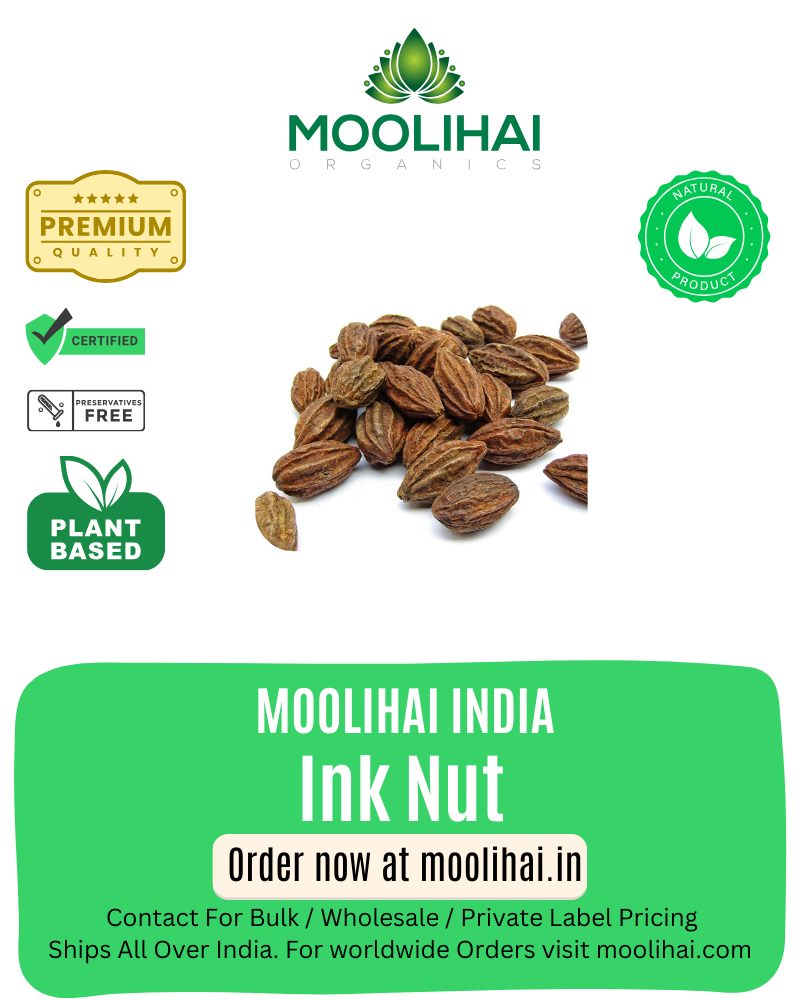
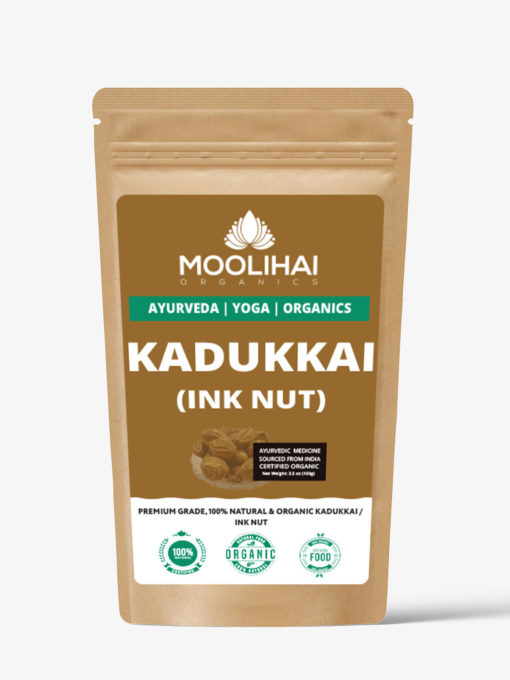
Terminalia Chebula is the botanical name of an ink nut or chebula that belongs to the Combretaceae family. Ink nut is a deciduous tree that grows up to 30 meters in height. Ink nuts are grown in tropical and subtropical regions of India, Nepal, China, Sri Lanka, Malaysia, and Vietnam. Dried ink nuts are often called Chebulic myrobalan. Dried ink nut is one of the most popular Ayurvedic medicines since ancient times. Dried ink nuts are rich in Vitamin C and have anti-inflammatory and antioxidant properties.
Health Benefits:
- Dried ink nuts help to treat gastrointestinal disorders like esophagitis, heartburn, diarrhea, flatulence, peptic ulcer, gastroesophageal reflux disease, indigestion, constipation, etc.
- Dried ink nuts help to cure asthma.
- Regular consumption of dried ink nuts helps to treat frequent urination.
- Dried ink nuts help to treat eye-related diseases.
- Dried ink nuts help to treat diabetes, piles, jaundice, and heart disease.
- Dried ink nuts help to treat various skin diseases like acne, pimples, rashes, etc.
- Dried ink nuts help to burn excess fat and reduce weight.
Dosage of Dried Ink Nut:
- Take 3 to 6 grams of dried ink nut powder and mix it with water and 12 grams of jaggery. Consume the mixture twice a day to cure hyperacidity.
- Take 1 to 3 grams of dried ink nut powder and mix it with 250 grams of long pepper. Consume it with warm water to eliminate toxins from the body.






Reviews
There are no reviews yet.